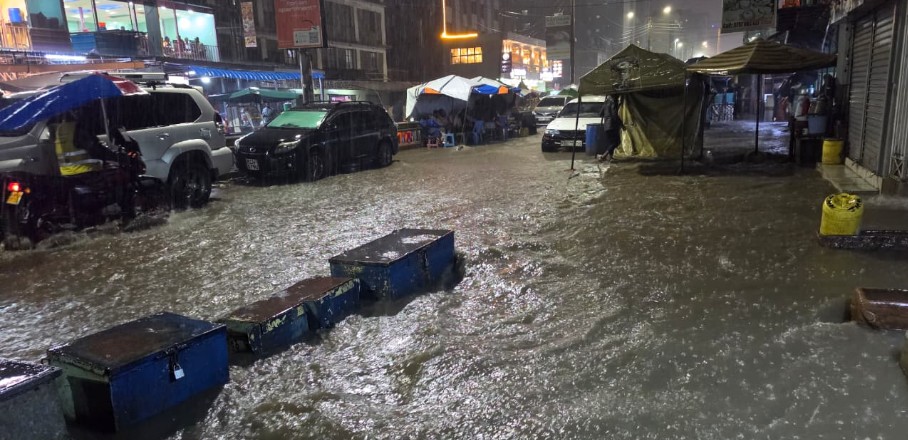
The government is overhauling its disaster financing system after floods in 2023 and 2024 caused losses estimated at Sh187.82 billion and slowed Kenya’s economic recovery.
According to the Disaster Risk Financing Strategy 2026-2030 by the National Treasury, the move follows growing concerns that floods, droughts and other disasters are becoming costly events that can affect public finances and economic growth if not properly planned for.
“In recent years, overlapping shocks have intensified both economic and fiscal fluctuations. Specifically, the Covid-19 pandemic, the 2021-2023 drought and the 2020 desert locust invasion resulted in a decline in GDP growth from 5 per cent in 2019 down to 0.3 per cent in 2020. These impacts were further exacerbated by the severe floods in October-December 2023 (short rains) and in March-May 2024 (long rains), which caused total damages and losses estimated at Sh187.82 billion, further straining public finances and slowing economic recovery,” reads the report.
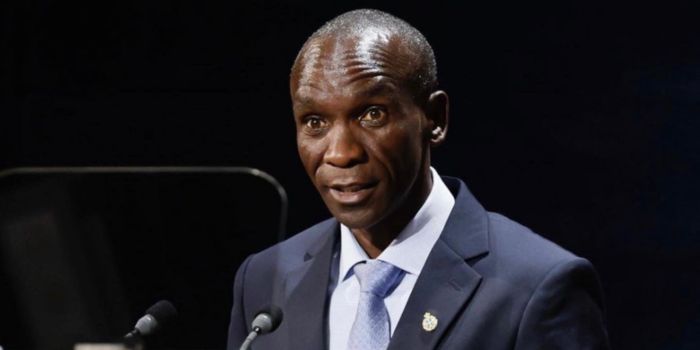
Treasury CS John Mbadi said the strategy seeks to move the country away from relying on emergency relief, donor appeals and unplanned budget reallocations whenever disasters occur, towards insurance and other pre-arranged financing mechanisms that can provide funds before crises worsen.
He added that the new approach will also strengthen the ability of national and county governments to manage disaster risks through predictable financing arrangements.
“The goal of the DRF Strategy 2026-2030 is to enhance the financial capacity of national and county governments to effectively manage disaster risks across the disaster risk management (DRM) continuum to protect the most vulnerable, safeguard development goals, build resilience and ensure fiscal stability,” Mbadi said.
“It transitions from reactive spending to a proactive, layered risk financing model that strategically combines risk reduction, risk retention, and risk transfer to manage diverse disaster profiles more efficiently.”
The strategy will also ensure resources are available before disasters happen, allowing faster response and reducing pressure on public finances.
Under the new plan, the government will focus on financing all stages of disaster management, including prevention, preparedness, response, recovery and reconstruction.
The strategy replaces a system where the government often seeks emergency funding after disasters through appeals, supplementary budgets or shifting money from planned development programmes.
“By integrating disaster risk into every stage of the budget cycle and diversifying its portfolio of risk reduction, retention, and transfer instruments, the Government of Kenya is taking the necessary steps to safeguard its economic future,” Mbadi said.
Additionally, the Treasury plans to increase the use of contingency funds, contingent credit lines and insurance tools that can be activated automatically when specific disaster levels are reached.
The aim is to ensure money is released quickly without waiting for new budget approvals, donor support or emergency fundraising.
Through the proposed risk layering framework, major but less frequent disasters such as severe floods, droughts and epidemics will be managed through insurance and other risk-transfer mechanisms.
Smaller and more regular disasters will continue to be financed through emergency funds and budget reserves.
The Treasury noted that the strategy is designed to provide “rapid and reliable liquidity after a disaster” while reducing dependence on temporary funding solutions after emergencies occur.
The new approach comes as concerns grow over the country’s current disaster financing model, which has mainly focused on responding after disasters instead of preparing and reducing risks before they happen.
The Treasury states that although Kenya has introduced several disaster financing tools over the past decade, most protection has focused on drought, leaving floods and other risks with limited coverage.
“Coverage remains uneven,” reads the report, noting that financing mechanisms are still largely focused on drought response.
The strategy also highlights that protection against floods, landslides, epidemics, fires and other hazards remains limited despite rising exposure to these disasters.
To address the challenge, Kenya Re has proposed the creation of a national flood insurance pool that would bring together the government, insurance companies, reinsurers and capital market investors through a public-private partnership.
Under the proposal, Kenya Re would serve as the residual reinsurer and administrator of the pool, while licensed insurers offering property insurance would transfer flood risks to the scheme in exchange for standardised reinsurance protection.












































Comments
Sign in with Google to comment, reply, and like comments.
Continue with Google