Malaria surge unlikely in western Kenya this season, early-warning report finds
Kenyan climate and health agencies forecast no malaria epidemics in Kakamega, Kisii and Nandi for December 2025–January 2026, citing low rainfall and higher temperatures that limit mosquito breeding.
Malaria surge in western Kenya is unlikely this season, as low rainfall and rising temperatures have created unfavourable conditions for mosquitoes, according to a joint early-warning report.
The bulletin, compiled by the Kenya Meteorological Department (KMD), Ministry of Health, and Kenya Medical Research Institute (KEMRI), indicates that Kakamega, Kisii, and Nandi counties are unlikely to experience malaria epidemics in December 2025 and January 2026.
More To Read
- Kenya Met forecasts intermittent showers, cold nights over next five days
- Met Department forecasts wet, sunny conditions across Kenya in next five days
- KEMRI, Health Ministry warn of potential malaria outbreak in Kakamega
- More rain, possible flooding expected across Kenya this week- Met
- Five-day forecast predicts intense rainfall across the country
- Heavy rains, gusty winds expected across Kenya
These counties typically record sharp increases in malaria cases during March–May and again during the October–December rainy season, when standing water provides ideal breeding grounds for mosquitoes.
In arid and semi-arid areas, malaria peaks are often shorter but more intense, occurring immediately after rainfall events.
The malaria forecast relies on November climate data and could change if weather patterns shift.
“The analysis is based on observed climate data (temperature and rainfall) and model simulations that estimate the percentage risk of malaria transmission. Overall, the results indicate no risk of malaria epidemic across the three areas during the forecast period (December and January),” said Mary Githinji, deputy director of Meteorological Application Services at KMD, as quoted by The Star.
She stressed that the model is meant for guidance and should not be the only source for public health decisions.
“Malaria transmission dynamics are influenced by numerous factors, including temperature, rainfall and human behaviour. Continuous monitoring and updates to the predictive models are essential for accurate assessments,” Githinji added.
Entomologists note that malaria depends heavily on stagnant water, which is currently scarce in these counties.
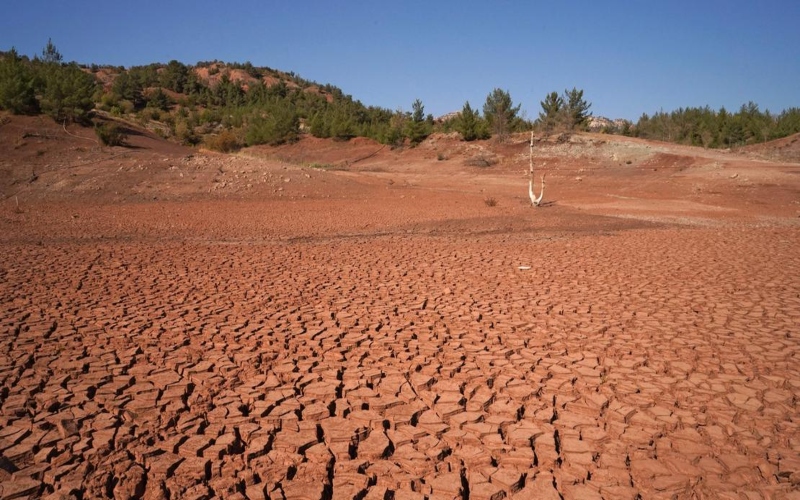
The model shows that rainfall dropped while temperatures increased, creating conditions that limit both mosquito larvae survival and malaria parasite development.
According to Edward Muriuki, acting director of meteorological services, November, usually the peak month for the October–December rains, recorded unusually low rainfall.
“November is typically the peak of the OND rains, yet most parts of Kenya received less than 40 per cent of their long-term means for the month,” he said.
This rainfall shortfall is linked to La Niña and a negative Indian Ocean Dipole (IOD), both of which reduce rainfall in East Africa.
“La Niña is currently underway, with cooler-than-normal ocean temperatures across the central and east-central Pacific and matching atmospheric patterns over the tropical Pacific. These conditions are expected to continue through December 2025 to February 2026,” Muriuki explained.
He further noted that La Niña usually brings drier-than-normal weather to parts of East Africa, though its effects can vary.
The IOD, a shift of warm and cool waters in the Indian Ocean, also influences rainfall patterns. When warm waters are near East Africa (Positive IOD), rain increases, but when warm waters shift toward Indonesia (Negative IOD), drought conditions are more likely.
Top Stories Today