At least 20 Kenyans are reported to be currently trapped in online scamming compounds operating near Myanmar’s border with Thailand, according to a new report by the Civil Society Network for Human Trafficking Victim Assistance (CSNHTV).
The report released Tuesday adds that other nationalities trapped include: around 1,600 Chinese, some 200 Burmese, 20 Thais, as well as citizens from the Philippines, Taiwan, Malaysia, Brazil, Russia, Kenya, Uganda, Rwanda, and Zimbabwe.
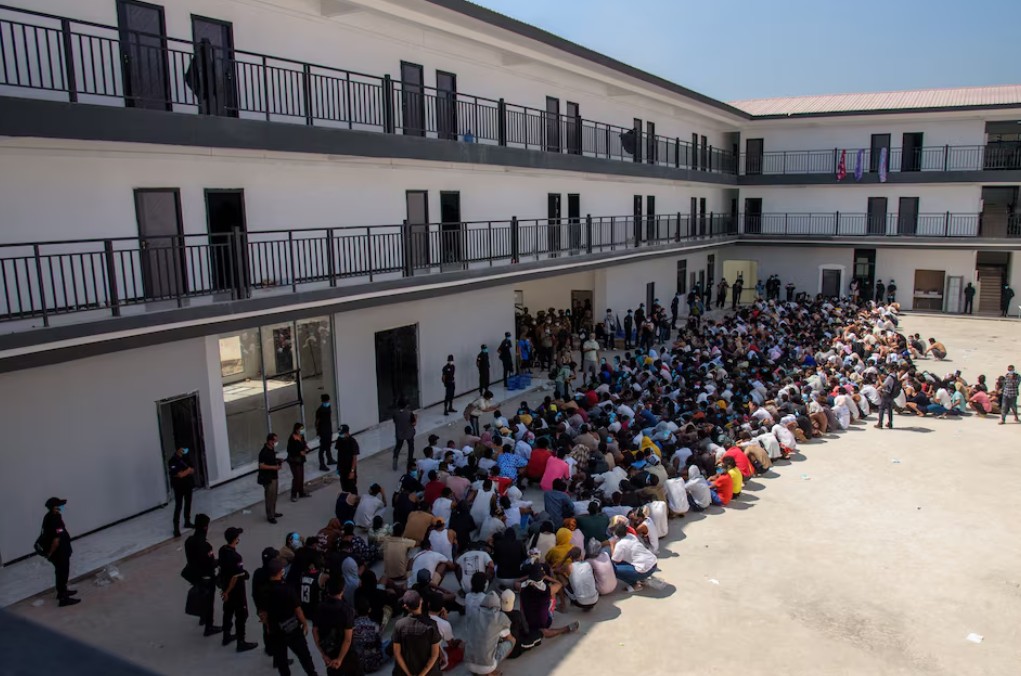
On Monday, the organisation wrote to Thai police urging them to take action and assist the foreigners who it said are being held at four locations inside areas controlled by a Myanmar Democratic Karen Buddhist Army (DKBA) militia.
According to the United Nations, scam centres in Southeast Asia, including those in Myanmar and Cambodia, run illegal online schemes that defraud people worldwide and generate billions of dollars of annual revenues.
Many of these facilities, such as those along parts of the Myanmar-Thailand border, are operated by foreign nationals trafficked there by criminal gangs, often working in oppressive environments and subjected to abuse.
A regional crackdown on the syndicate saw Thai police pull out some 5,000 people from sprawling scam hubs in Myanmar's Myawaddy area, but with the new report, it is clear that large-scale illegal operations have continued.
“Many of these compounds have yet to be dismantled or subjected to rescue operations to free all remaining victims. As a result, these syndicates continue to engage in online fraud and human trafficking, causing harm to victims around the world, particularly in the United States and Europe,” the organisation added.
Last month, the Global Initiative against Transnational Organised Crime (GI-TOC) exposed how scam centres have become global, industrial-scale businesses, aiding criminals in stealing at least $1 trillion a year.
The report titled ‘A World of Deceit', the scammers benefit from advanced technological tools, political protection and sophisticated money laundering techniques to steal $1 trillion a year, equivalent to almost one per cent of global Gross Domestic Product (GDP).
“What emerges is a complex criminal industry that is evolving at pace, powered by high-tech tools, corrupt state actors and a multitude of workers in various states of exploitation. Only by addressing this system as a whole can the world hope to turn the tables on scammers,” said the report.
A few days before the report was released, Prime Cabinet Secretary Musalia Mudavadi had told Parliament that over 751 Kenyans had been rescued in Myanmar alone between 2022 and 2026.
Of these, 615 have been repatriated, 39 are imprisoned for illegal entry and repeat cybercrime offences, while 97 remain in detention in Thailand awaiting deportation after crossing borders.
"The remaining are in the process of being repatriated as more others continue to leave the scam compounds," he added.












































Comments
Sign in with Google to comment, reply, and like comments.
Continue with Google