United Opposition rejects IEBC election plan, demands fresh talks before 2027 polls

Listen
Read this story aloud
Listen to the clean text version of this article.
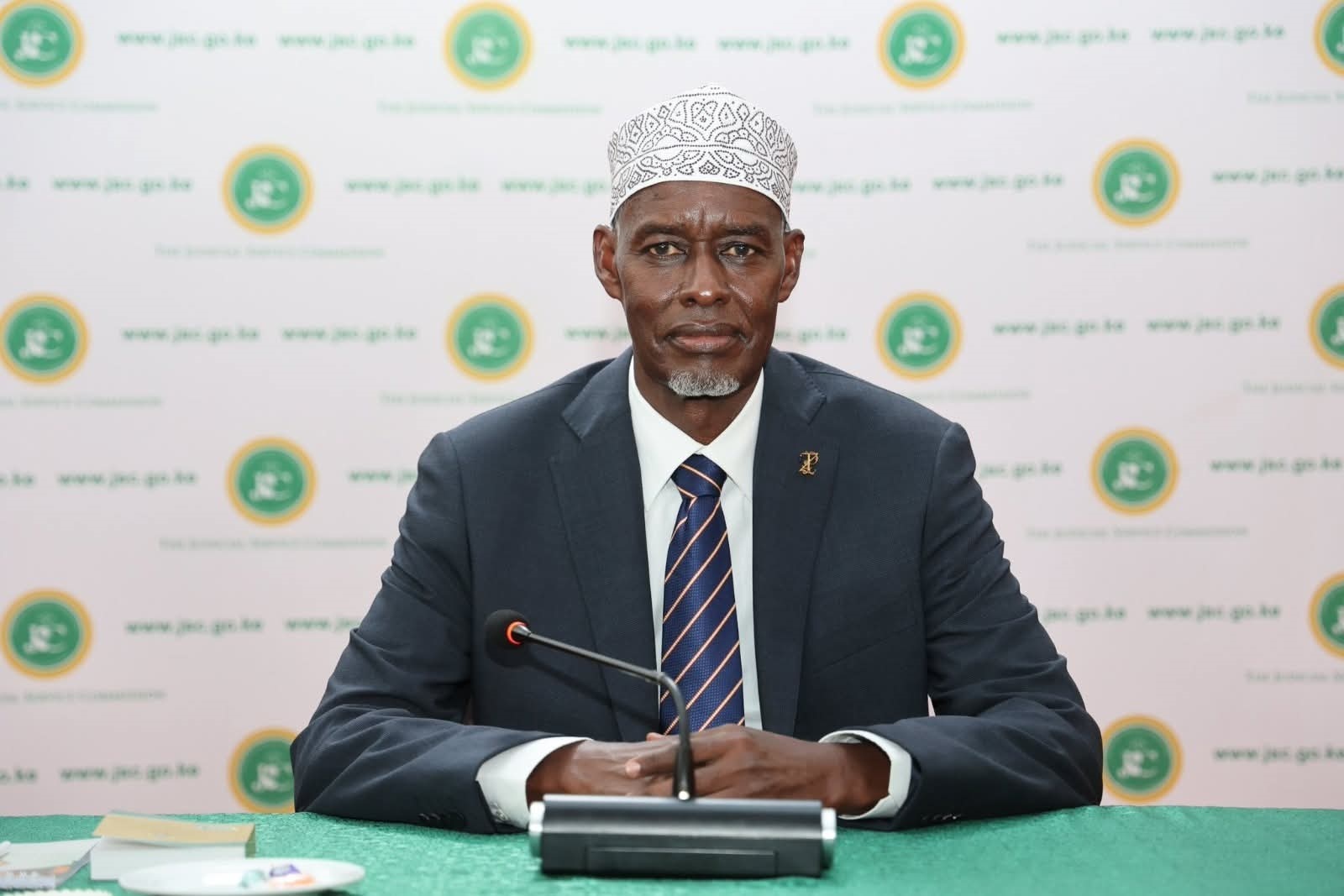
Former Attorney General Justin Muturi, who is also allied to the Opposition, said they were sidelined and kept in the dark over the 2027 polls, adding that their letters to the commission seeking engagement were ignored.
The United Opposition has dismissed the Independent Electoral and Boundaries Commission (IEBC) election preparedness plan, citing limited stakeholder involvement and a lack of adequate public consultation before its implementation.
Speaking on Wednesday during the launch of the plan, former Attorney General (AG) Justin Muturi, who is also allied to the Opposition, said they were sidelined and kept in the dark over the 2027 polls, adding that their letters to the commission seeking engagement were ignored.
Muturi said elections should not be planned behind closed doors, arguing that the process belongs to Kenyans, not only the IEBC Secretariat, officials, consultants or vendors involved in managing elections.
More To Read
- Public officers seeking 2027 seats have until February 9 to resign as IEBC sets August 10 as election date
- Kalonzo-Sifuna ticket sparks excitement among Ruto critics as opposition unity intensifies ahead of 2027
- Court of Appeal judges set to elect new president to succeed Justice Daniel Musinga
- Gachagua hails 40 MPs who voted no to 2026 Finance Bill
- Over 60 teachers write to KUPPET seeking transfers following political tensions ahead of Ol Kalou by-election
- IEBC clerk denies fraud charges over alleged fake academic certificates in hiring scandal
“Elections belong to the people of Kenya. They do not belong to the IEBC Secretariat. They do not belong to a few officials sitting in boardrooms. They do not belong to consultants, vendors, or bureaucrats. They belong to the sovereign people of Kenya whose votes determine the future of this nation,” Muturi said.
He questioned the decision by the electoral agency to launch the Elections Operations Plan without meaningful involvement of stakeholders who would be affected by the decisions made ahead of the 2027 General Election.
Muturi said the plan was not an internal document but a key framework that would determine how elections would be conducted, how disputes would be handled, how technology would be used, how voters would be verified and how results would be transmitted.
Latest Stories
- Court awards businessman Sh15 million for malicious prosecution over multivitamin shipment
- United Opposition faults IEBC over silence on electoral reform talks
- 140 arrested as police crack down on juvenile gangs in Garissa
- Activist Bob Njagi arrested over alleged plans to incite June 25 protests in Kitengela
The former AG added that presenting the plan as a finished product without proper engagement could affect public confidence in the electoral process.
“The attempt to rush the launch of this plan raises serious concerns. Public confidence is not built through secrecy. Credibility is not achieved through exclusion. Trust is not earned by informing stakeholders after decisions have already been made,” Muturi said.
He added that the IEBC must understand that legitimacy comes from involving stakeholders and ensuring their views are considered during the planning process. He dismissed claims that limited consultations were caused by financial challenges, saying the cost of engaging stakeholders was lower compared to the consequences of a disputed election.
“We reject any suggestion that stakeholder consultations were not conducted because of financial constraints. That explanation is neither convincing nor responsible. The cost of consultation is insignificant compared to the cost of a disputed election,” he said.
Muturi warned that Kenya could not afford another election whose credibility is questioned before voting takes place due to concerns around transparency and public participation.
“The cost of bringing stakeholders together is insignificant compared to the billions of shillings lost through election petitions, political instability, economic uncertainty, and declining public confidence in democratic institutions. Kenya cannot afford another electoral process whose credibility is questioned before it even begins,” Muturi said.
The opposition-linked politician also raised concerns over the integrity of the voter register, saying the process should begin by examining the credibility of the population database used to generate voter records.
“We cannot continue discussing voter register audits while ignoring the integrity of the source population database,” he said, noting that weaknesses in the Integrated Population Registration Database could affect the voter register, insisting that the population database should first undergo an independent audit.
“The principle is straightforward: garbage in, garbage out. If irregular records exist in the Integrated Population Registration Database, those same irregularities will eventually contaminate the voter register. A credible voter register can only emerge from a credible population database,” he said.
He called for transparency in the audit process, saying political parties, civil society organisations, religious organisations, professional bodies, election experts and citizens should be allowed to observe and verify the exercise.
“Private companies cannot be allowed to conduct audits of critical national databases without independent oversight. Democracy requires verification, not blind trust,” Muturi said.
Muturi also raised concerns over election technology, calling for transparency and accountability in systems used during elections.
He also called for secure results transmission and wider electoral reforms, saying accountability should extend beyond IEBC commissioners to the Secretariat responsible for election operations. He urged the IEBC to halt the launch of the Elections Operations Plan and hold fresh consultations with stakeholders.
“Today, we call upon the IEBC to halt the launch of the Elections Operations Plan and initiate a genuine, inclusive, and transparent stakeholder consultation process,” he said.
However, IEBC Chairperson Erastus Ethekon dismissed claims that the Opposition was excluded, saying stakeholders were invited to participate.
“We invited all, they came, saw and gave their input. There was public participation. It is a very costly affair, but we have done our best,” Ethekon said.
He added that the Strategic Plan was developed through extensive consultations and reflected stakeholder contributions.
“This Strategic Plan is the product of extensive consultations and contributions from our stakeholders that shaped a roadmap that reflects the aspirations of the Kenyan people and gives practical expression to our national values of participation, inclusivity, transparency, accountability, and good governance,” Ethekon said.
Top Stories Today
















































Comments
Sign in with Google to comment, reply, and like comments.
Continue with Google