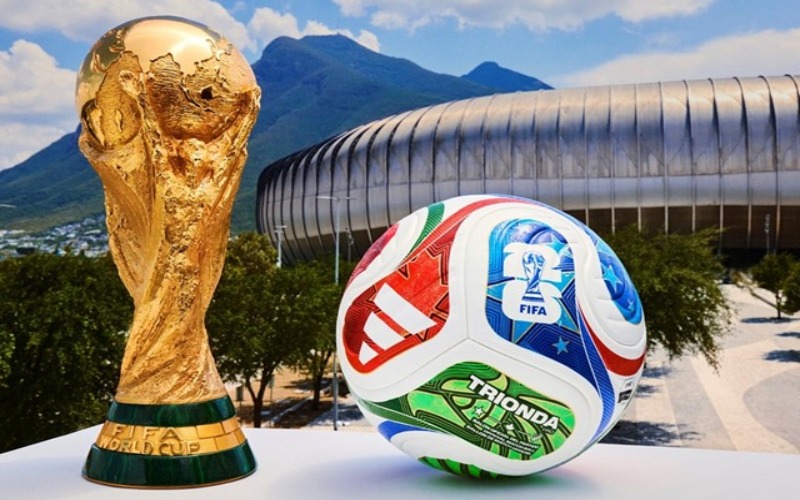
The Global Initiative Against Organised Transnational Crime (GI‑TOC) has warned that the 2026 FIFA World Cup could become a major target for money laundering, illegal betting, match manipulation, and other financial crimes due to the rapid growth of cryptocurrency‑based prediction markets.
In a report titled Betting on Impunity, GI‑TOC highlighted that as regulators struggle to keep pace with new crypto‑powered prediction markets allowing users to wager on sporting outcomes, these platforms could be exploited by criminal networks to launder illicit money, manipulate betting markets through insider information, profit from match‑fixing, and move funds across borders outside traditional banking oversight.
This year’s World Cup is expected to trigger a surge in global betting volumes, estimated to exceed $50 billion (Sh6.48 trillion), up from around $35 billion (Sh4.54 trillion) in 2022, with growth particularly pronounced in emerging markets.
As prediction markets process billions of dollars weekly, the report stated, there is a risk that criminal groups are using cryptocurrency, e‑wallets, and electronic payment services to facilitate their activities.
“The scale and reach of football finance make it an attractive channel for these illicit flows. For criminal actors, prediction markets present three distinct opportunities. They can serve as money laundering channels, converting illicit funds into apparently legitimate winnings; they are vulnerable to insider trading; and they are exposed to result manipulation, where the underlying event itself is compromised to guarantee a payout,” the report noted.
According to GI‑TOC, illegal betting has long served as a conduit for money laundering, competition manipulation, and the exploitation of gaps between national regulatory frameworks.
“Traditional betting‑related money laundering is a well‑established industry. Criminal proceeds are placed on a betting platform, and winnings are withdrawn as apparently legitimate income. More sophisticated schemes use networks of accounts to place offsetting bets, thereby converting criminal funds into withdrawable balances while limiting losses. Online gambling is fast, remote, and frequently operates across borders, making it difficult for authorities to track transactions and apply standard anti‑money laundering controls,” the report noted.
Now, newer and less regulated forms of online wagering present additional challenges, entering territory that existing enforcement tools were not designed to address.
“The challenge is compounded by regulatory inconsistencies. Activities prohibited in one jurisdiction may be legal in another, creating opportunities for operators to exploit differences between national frameworks. This has tangible consequences. In 2025, for example, the analytics firm Sport Radar detected 1,116 suspicious matches worldwide, across markets with widely varying levels of regulatory oversight, with football the most severely affected,” GI‑TOC added.
According to the United Nations Office on Drugs and Crime (UNODC), up to $1.7 trillion (Sh220.3 trillion) is wagered on illicit betting markets annually.
The report said these transactions and proceeds of illicit betting move through a fragmented infrastructure that complicates oversight and makes end‑to‑end monitoring far more difficult for any single regulator or institution.
“Alternative payment systems methods other than cash or card transactions create opportunities for concealment. In Kenya, for instance, mobile money is widely used for betting deposits and withdrawals, and in 2025, Safaricom, the country’s largest telecommunications provider, disclosed that it had detected money laundering through betting platforms and international money transfers,” the report pointed out.
It added that prediction markets such as Polymarket and Kalshi have grown rapidly, handling billions of dollars in monthly trades increasingly linked to sports betting.
"Kalshi operates under US regulations and applies strict identity checks, but Polymarket’s larger international platform remains largely unregulated, raising concerns over anonymity, money laundering, and market manipulation. Researchers estimate that wash trading accounts for a significant share of activity on some platforms, with many users operating through unidentified crypto wallets," the organisation said.
Additionally, it noted that concerns have intensified following FIFA’s partnership with ADI Predict Street as the official prediction market platform for the 2026 World Cup.
FIFA maintains that the deal includes integrity monitoring measures, but critics warn the endorsement could accelerate the adoption of crypto‑based betting platforms that regulators in many countries are still struggling to oversee.
"The World Cup is the most immediate test case for these challenges. However, the issue extends well beyond any single event. The task for regulators is to monitor individual prediction market platforms while also tracking the wider financial infrastructure through which funds move."
"While efforts to protect the integrity of the game itself are underway, the payment systems and market structures surrounding it are developing faster than the frameworks meant to govern them, which will leave regulators struggling to stay onside," the organisation stated.





































Comments
Sign in with Google to comment, reply, and like comments.
Continue with Google