The government is on the spot for allocating Sh101.37 billion under the “Other Operating Expenses” category in the proposed 2026/2027 national budget, amid concerns that the funds have not been linked to specific programmes, votes or identifiable purposes as required by law.
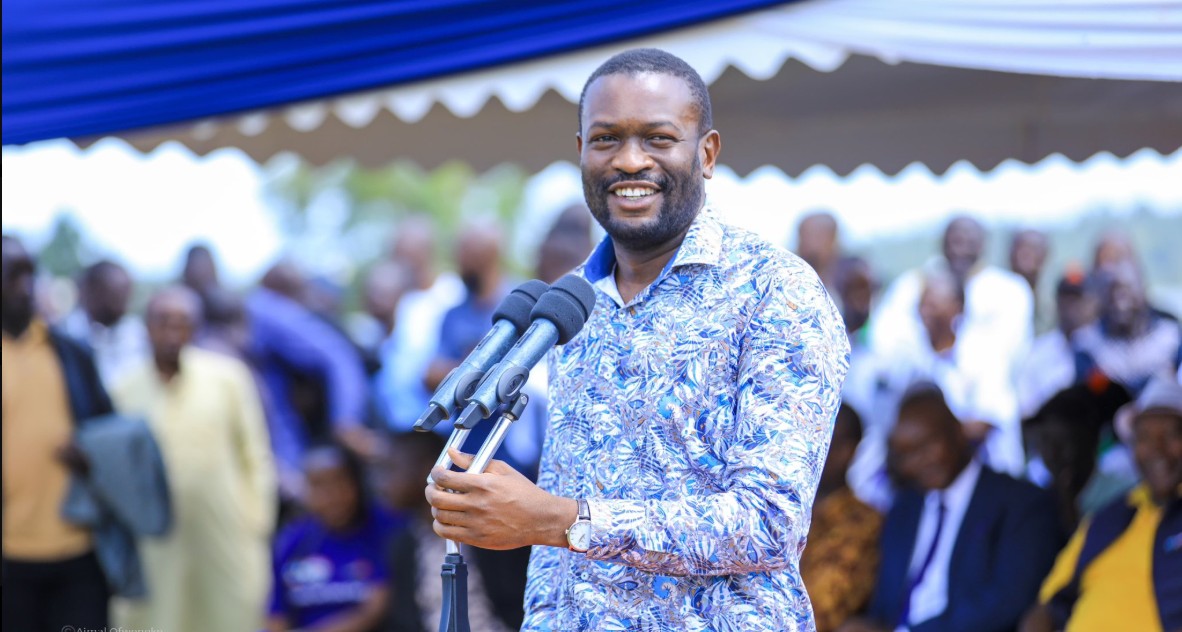
Busia Senator Okiya Omtatah raised concerns over the allocation, saying the money has been placed under a vague expenditure category that lacks transparency and accountability.
In a statement, Omtatah said his review of the proposed National Government Budget for the 2026/2027 financial year established that the Sh101.37 billion comprises Sh26.39 billion in development expenditure and Sh74.97 billion in recurrent expenditure.
He said instead of being assigned to clear programmes and activities, the funds had been grouped under the “Other Operating Expenses” category.
“Instead of being allocated to clearly defined programmes and activities, these funds have been grouped under the vague and undefined ‘Other Operating Expenses’ category,” he said, noting that the issue has continued from previous budgets, pointing out that the 2025/2026 financial year budget had Sh116.26 billion allocated under the same category.
The amount included Sh23.89 billion in development expenditure and Sh92.36 billion in recurrent expenditure.
He further noted that projections for the next two financial years show that the allocation is expected to continue, with Sh98.37 billion projected for 2027/2028 and Sh100.85 billion for 2028/2029.
“Budget formulation involves the costing of specific programmes or items within a cost centre. It is therefore conceptually impossible to establish the cost of unidentified programmes or items described as ‘Other Operating Expenses’,” Omtatah said.
“Consequently, since the approximately Sh98.37 billion and Sh100.85 billion forward budgets for the two financial years can only be arbitrary figures not tied to any activities, Kenyans will be taxed heavily to finance these fictitious budgets.”
The Senator said all major classified operating expenses, including salaries, allowances, rental costs, hospitality supplies and services, training expenses, office supplies, fuel and vehicle maintenance, had already received allocations.
Omtatah argued that the remaining funds placed under “Other Operating Expenses” raise questions over their intended use.
He cited allocations in several government departments, saying State House had Sh3.51 billion under “Other Operating Expenses” against classified operating expenses of Sh7.37 billion.
The State Department for Internal Security and National Administration headquarters had Sh10.35 billion under the category against classified operating expenses of Sh4.7 billion, while the National Treasury had Sh13.01 billion compared to classified operating expenses of Sh7.17 billion.
“Consequently, tens of billions of shillings continue to be allocated annually under the ‘Other Operating Expenses’ category - a category that lacks the specificity, transparency, and accountability required by law,” he said. “This practice undermines fiscal discipline, erodes public trust, and imposes an unjustifiable burden on Kenyan taxpayers.”
The Senator accused the allocations of violating provisions of the Constitution, the Public Finance Management Act and the Public Finance Management Regulations, 2015.
He cited Article 221(2)(b) of the Constitution, which requires budget estimates submitted to the National Assembly to be presented in the form and procedure prescribed by law.
Omtatah also referred to Section 38 of the Public Finance Management Act, which requires budget estimates to include all estimated expenditure by vote and programme, clearly identifying recurrent and development spending.
He said the Public Finance Management Regulations require appropriations to be made for a specific purpose, programme or item of expenditure.
“Large, untied allocations under vague headings like ‘Other Operating Expenses’ violate these requirements by undermining the principles of specificity, accuracy, and performance orientation,” he said.
He added that the allocations weaken Parliament’s ability to scrutinise public spending and create opportunities for irregular expenditure.
“Public funds cannot lawfully be appropriated without clearly identifying the vote, programme, purpose, and expected outcomes for which they are intended,” Omtatah said.
The Senator also linked the disputed allocation to the Finance Bill 2026, which he said was approved by the National Assembly with proposed tax changes expected to raise about Sh98.5 billion.
“Strikingly, this Sh98.5 billion is less than the Sh101.37 billion currently allocated to the opaque ‘Other Operating Expenses’ in the FY 2026/2027 estimates,” he said.
He said the situation was similar in the previous financial year, where Sh116.26 billion was allocated under the category, while the Finance Bill 2025 was expected to raise about Sh30 billion.
“This reveals a glaring truth: existing taxation rates are already more than sufficient to finance the FY 2026/2027 national budget. There is absolutely no basis for imposing on Kenyans the taxes contained in the recently approved Finance Bill 2026,” Omtatah said.
“If the National Assembly does its constitutional duty and thoroughly cleanses the budget estimates to eliminate such budgeted corruption, Kenyans would not need to be taxed an extra shilling. Therefore, the Finance Bill, 2026, must be withdrawn forthwith.”
Omtatah said a wider review of the budget could reveal more savings beyond the Sh101.37 billion allocation.
“Moreover, this is merely the tip of the iceberg. Should the National Assembly undertake a truly thorough and intensive budget-cleansing exercise to eradicate all forms of budgeted corruption across every line item, not just ‘Other Operating Expenses’, I conservatively estimate that total savings could amount to much more than Sh101.37 billion,” he said.
“This would not only render the Finance Bill entirely unnecessary but would also provide substantial fiscal space for transformative national development and meaningful tax relief for millions of Kenyans.”
He urged Parliament’s Committee of Supply, sitting as the Committee of the Whole House, to reject the budget estimates in their current form and conduct a review of unclear allocations.
“It must not approve the FY 2026/2027 Budget Estimates in their current form, nor should it allow the Finance Bill it approved to stand while such massive inefficiencies remain unaddressed,” he said.
He emphasised that Parliament has a constitutional duty to protect taxpayers from waste, misuse and misappropriation of public resources.
Despite his concerns, President William Ruto is expected to sign the controversial Finance Bill 2026 into law on Tuesday, June 23, 2026, paving the way for the implementation of legislation that will finance the Sh4.8 trillion national budget for the 2026/27 financial year.
























Comments
Sign in with Google to comment, reply, and like comments.
Continue with Google