Norway has unveiled one of the world's most restrictive education policies on artificial intelligence (AI), announcing a near-complete ban on its use by schoolchildren.
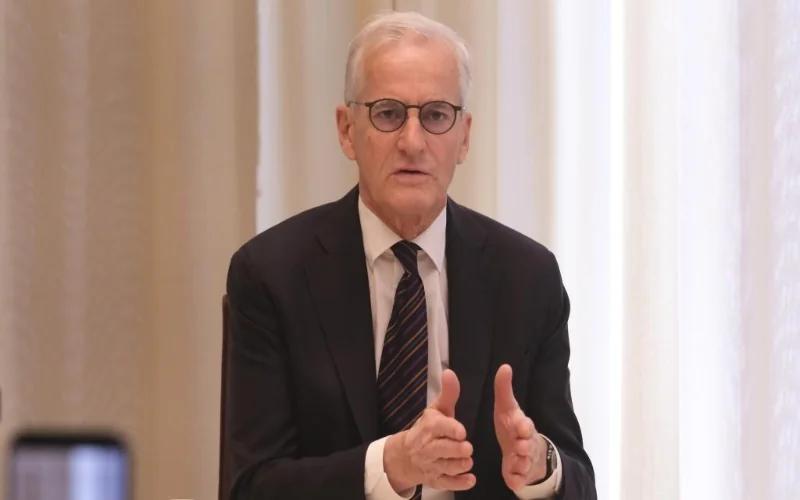
Prime Minister Jonas Gahr Stoere said the move is aimed at protecting foundational learning skills and ensuring children develop core academic abilities before relying on AI.
"The most important thing in school is that our children learn to read, write and do mathematics," Stoere said while presenting the government's new education strategy.
Under the new policy, children in primary school will face the toughest restrictions on AI use.
The government plans to prohibit most use of generative AI tools for pupils aged 6 to 13, arguing that students in these years should focus on developing literacy, numeracy, critical thinking and independent problem-solving skills.
Students aged 14 to 16 will be allowed limited access under teacher supervision, while older secondary-school students will receive training on responsible and effective AI use as part of their preparation for higher education and future careers.
Concerns over learning and critical thinking
Norwegian officials say the rapid spread of AI-powered chatbots and writing tools has raised concerns among educators.
Authorities fear that students may become overly dependent on AI-generated answers, reducing opportunities to develop essential skills such as reading comprehension, writing ability, reasoning and creativity.
Experts involved in the policy review warned that children who rely heavily on AI risk bypassing key stages of learning that help build long-term knowledge and analytical thinking.
The government argues that technology should support education rather than replace the learning process itself.
The restrictions are part of a wider effort by Norway to reduce digital distractions in schools and strengthen traditional learning methods.
In recent years, Norwegian authorities have introduced stricter rules on smartphone use in classrooms, encouraged greater use of printed textbooks and backed measures designed to improve student concentration and academic performance.
Officials have also expressed support for stronger protections for children online, including tighter regulation of social media platforms and digital services aimed at young users.
It joins a growing list of countries introducing restrictions on emerging technologies and online platforms for minors:
Australia
Canberra introduced legislation in 2024 to restrict social media access for children under 16 and tighten scrutiny of AI systems used by minors.
United Kingdom
Policymakers are considering stronger safeguards around children's access to AI-powered services and social media platforms. Schools continue to debate the appropriate classroom use of generative AI tools.
United States
Several states and federal lawmakers have proposed measures focused on AI safety, age verification and protections for young users interacting with AI chatbots.
France
It has implemented restrictions on smartphone use in schools and is examining the educational impact of AI technologies.
Italy
Italy was among the first countries to scrutinise AI platforms over privacy and child-safety concerns, prompting broader discussions on AI regulation.












































Comments
Sign in with Google to comment, reply, and like comments.
Continue with Google