From traffic intersections that automatically identify suspicious activity to homes fitted with intelligent micro-cameras that track movement in real time,
Artificial intelligence (AI) is rapidly transforming surveillance into an always-on, data-driven system in wide-ranging applications from traffic intersections to homes.
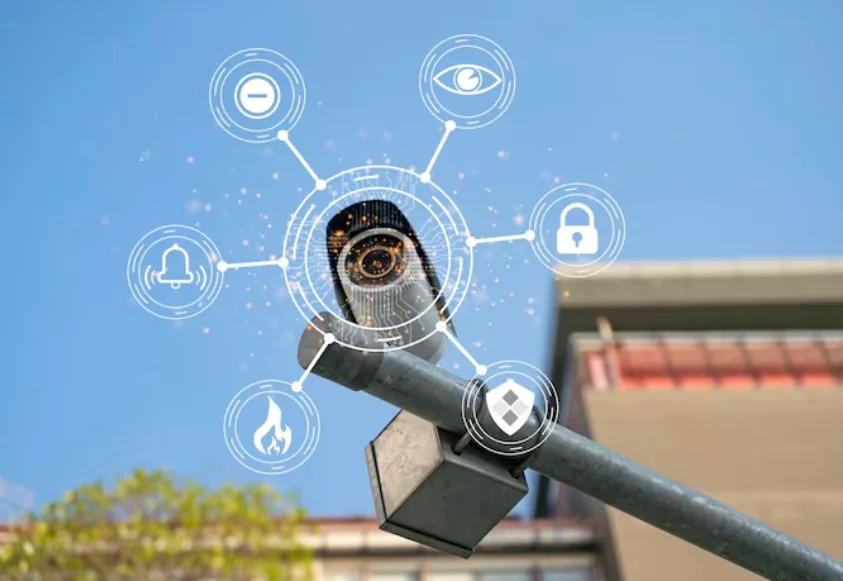
Across urban centres, airports, highways, businesses, and private homes, traditional CCTV is being replaced by AI-powered cameras capable of facial recognition, vehicle tracking, behavioural analysis, and instant threat detection.
This shift was on full display at the AI Everything Kenya 2026 conference, held at the Kenyatta International Convention Centre (KICC), where companies demonstrated surveillance systems designed to do far more than record footage.
From passive CCTV to predictive surveillance
For decades, security cameras served a single function: record video for review after an incident occurred. The new generation of AI surveillance systems is fundamentally different.
Today’s systems can:
Identify faces in real time
Track vehicles across multiple cameras
Detect unusual movement patterns
Flag suspicious behaviour automatically
Send instant alerts to security teams
Integrate biometric access control
In effect, cameras are no longer passive observers; they are becoming real-time decision-making systems.
At the Nairobi summit, several live systems showcased how this technology is already being deployed:
Angani: Cloud-based AI CCTV analytics
Kenyan cloud provider Angani demonstrated AI-powered CCTV analytics processed in the cloud, enabling real-time monitoring across multiple camera feeds and automated detection of anomalies at scale.
ZKTeco East Africa: Smart biometric security systems
ZKTeco East Africa unveiled 4K surveillance systems integrated with facial recognition, biometric authentication, and smart access control, blurring the line between identity verification and surveillance infrastructure.
Red Dot Distribution: “Eagle Watch” AI investigations
Through its Eagle Watch platform, Red Dot Distribution showcased AI-powered digital investigations that analyse surveillance footage, reconstruct events, and map behavioural patterns across large datasets.
Is AI surveillance already happening in Kenya?
Yes. The National Transport and Safety Authority (NTSA) has used automated surveillance tools, including AI-enabled cameras and mobile speed detection systems on major highways.
These systems are designed to capture vehicle registration plates of speeding motorists and generate automated fine notifications linked to registered phone numbers.
In earlier legal challenges, parts of the automated enforcement system faced court scrutiny over due process, data handling, and transparency concerns.
However, enforcement activities linked to digital traffic surveillance have continued, and elements of the system were reactivated in June 2026 following regulatory adjustments and operational reviews.
This illustrates a broader trend: even where AI enforcement tools face legal or public debate, governments are increasingly moving toward automated surveillance-driven compliance systems.
Beyond public infrastructure, surveillance is also becoming smaller, cheaper, and more embedded in everyday environments.
Modern AI-enabled micro-cameras and IoT security devices can now:
Detect motion and distinguish humans from objects
Recognize familiar faces
Send alerts directly to mobile phones
Store footage in cloud systems
Integrate with smart home ecosystems
This means surveillance is no longer limited to visible CCTV installations. It is increasingly embedded in doorbells, streetlights, office systems, retail shelves, and even personal devices.
While this improves convenience and security, it also raises concerns about constant monitoring in private spaces, often without clear awareness of when recording is active or how long data is stored.
For instance, the United Kingdom (UK) has one of the most extensive CCTV networks in the world. It is deployed in public transport systems, stadiums and event security, transport hubs like airports and train stations, as well as pilot facial recognition trials in cities such as London
These systems are used for crowd monitoring and real-time threat detection.
China also operates one of the most advanced AI surveillance ecosystems globally, combining facial recognition across cities, vehicle tracking systems, behavioural analytics and cross-camera identity tracking
Some of Beijing's systems reportedly identify individuals even when partially obscured, using gait analysis, posture recognition, and multi-angle tracking to maintain identity continuity.
The technology is built on a combination of computer vision for object and facial detection, machine learning for pattern recognition and predictive analysis, edge computing for real-time on-device processing, cloud-based AI analytics for large-scale data interpretation, and biometric systems such as facial, iris, and gait recognition that enable advanced identity verification and tracking.
Together, these technologies convert surveillance cameras into intelligent sensing networks.
What happens when surveillance becomes ubiquitous?
As AI surveillance expands into homes, streets, workplaces, and public infrastructure, a new set of risks emerges:
1. Constant visibility
Individuals may be recorded continuously in both public and semi-private spaces, reducing anonymity in daily life.
2. Data Over-Collection
Large volumes of biometric and behavioural data may be stored for long periods, increasing exposure to breaches or misuse.
3. Function Creep
Systems introduced for security may later be used for unrelated purposes such as profiling, marketing, or expanded monitoring.
4. Misidentification risks
AI systems can make errors, particularly in facial recognition under poor lighting, occlusion, or demographic bias conditions.
5. Micro-Surveillance in Private Spaces
Smart home cameras, doorbells, and IoT devices can unintentionally create surveillance environments inside homes, often with limited user awareness of data flows.
Privacy and governance debates in Kenya
At the KICC summit, discussions also focused on digital sovereignty, ethics, and AI governance, with experts emphasising the need for:
Clear data protection rules
Transparent surveillance policies
Independent oversight bodies
Strict limits on biometric data use
Accountability for automated enforcement systems
The central tension remains clear: how to balance improved public safety with the protection of civil liberties.















































Comments
Sign in with Google to comment, reply, and like comments.
Continue with Google