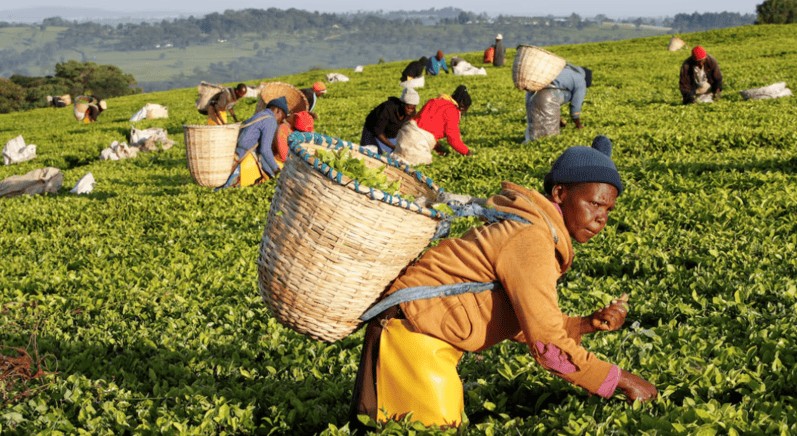
Farmers could soon access State-backed loans through a single institution if Parliament approves a new Bill that seeks to unify government-backed agricultural credit under one institution in a move aimed at improving accountability and reducing duplication in public lending programmes.
The proposal, now before the National Assembly, seeks to restructure how agricultural credit is delivered by transferring lending roles from several State agencies to a single body known as the Kenya Agribusiness Development Corporation (KADCO) Limited.
The Crops Laws (Amendment) Bill, 2026, introduced by Majority Leader Kimani Ichung’wah, proposes to strip lending powers from the Kenya Agricultural and Livestock Research Organisation (KALRO), the Tea Board of Kenya and the Kenya Sugar Board (KSB), while maintaining their regulatory and development roles in their respective sectors.
Under the plan, all agricultural lending will be handled by KADCO, which is being created through the merger of the Agricultural Finance Corporation (AFC) and the Commodities Fund, both of which have historically provided credit to farmers across different value chains.
“This Bill removes those mandates and ensures that the relevant funds under the Sugar Act are channelled to KADCO for lending, completing the alignment of existing agricultural laws with the new institutional framework,” Ichung’wah said in the Bill’s statement of objects and reasons.
If the Bill is passed, legal provisions that currently allow KALRO, the Tea Board and the Kenya Sugar Board to run lending schemes will be repealed, ending their direct involvement in agricultural credit.
The Agricultural Finance Corporation has long supported farmers through loans at a fixed interest rate of 10 per cent, serving small and medium-scale producers across the country. The Commodities Fund, on the other hand, has focused on lending to specific crop value chains such as coffee, sugar and coconut.
KALRO mainly focuses on agricultural research and development of new crop and livestock technologies, while the Tea Board oversees regulation and promotion of the tea sector. The Kenya Sugar Board manages the sugar sub-sector, including licensing, policy implementation and industry development.
Policy makers say consolidating lending under one institution will improve accountability, widen access to credit and ensure better use of public funds in supporting production and value addition in agriculture.
The Kenya Sugar Board currently operates a loan scheme through the Commodities Fund using the Sugar Development Fund (SDF), which is financed by the Sugar Development Levy (SDL). The levy applies to both locally produced and imported sugar.
Local millers are required to pay four per cent of the ex-factory price of sugar by the 10th day of the month following production. Imported sugar is also charged four per cent of the cost, insurance and freight (CIF) value under the East African Community Common External Tariff. CIF refers to the total cost of goods, insurance and freight during transport to the buyer.
However, repayment of loans under the Sugar Development Fund has remained a major challenge, with official figures showing defaults of about Sh3.7 billion by 2024.
To address rising bad loans, the government has tightened lending conditions under the fund, a move expected to slow down loan disbursement.
Farmers seeking sugarcane loans are now subjected to stricter checks on their credit history as part of efforts to reduce further defaults.
The proposed reforms are part of a wider government plan to streamline State corporations by assigning specific functions to dedicated institutions and reducing overlap in mandates.
Once established, KADCO is expected to serve as the main agricultural development finance institution, providing loans to farmers, cooperatives, agribusinesses and processors across various value chains while strengthening oversight of public lending programmes.












































Comments
Sign in with Google to comment, reply, and like comments.
Continue with Google