Members of Parliament have flagged a possible cover-up in the handling of 27,000 metric tonnes of raw sugar linked to Kibos Sugar after an inspection found the refinery to be operating despite earlier claims that it was under repair and not in a position to process any sugar at the time.
The National Assembly Committee on Trade raised the alarm during a site visit carried out as part of an ongoing probe into the importation, storage and processing of the disputed sugar consignment, which has been questioned over safety and traceability concerns.
Legislators said they were taken aback to find the refinery actively processing sugar, just days after being informed that the facility would require about two months of repairs before resuming operations.
According to documents presented before the committee in the last session, Kibos Sugar imported about 27,000 metric tonnes of raw sugar. Out of this, about 3,900 tonnes were taken to Kisumu, while around 2,500 tonnes remained stored at the Inland Container Depot in Nairobi.
Officials from the Kenya Revenue Authority defended the clearance process, stating that the sugar was brought in as industrial raw material meant for refining and not for direct human consumption, and therefore complied with import requirements.
Despite this explanation, MPs maintained that the absence of full production and expiry details raised serious questions over traceability and whether the consignment was fit for safe processing.
Committee Chairperson Bernard Shinali raised concern over possible risk to consumers, noting that the origin and age of the raw sugar could not be independently confirmed.
“It is not known when the extraction of the raw sugar was done, and it is therefore possible that it could already have expired even for processing purposes,” Shinali said.
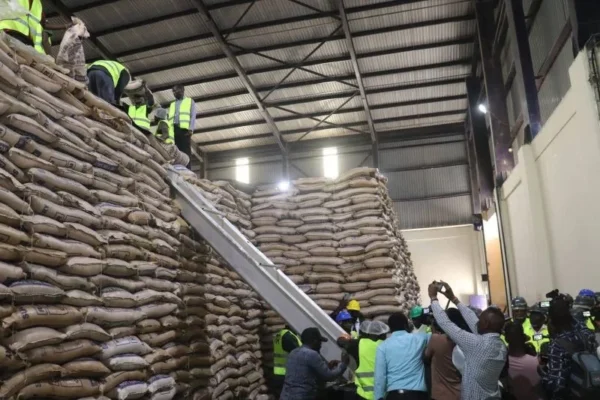 National Assembly Trade Committee members during an inspection at Kibos sugar refinery where the plant was found operating despite earlier claims that it was under repair and not processing sugar. (Photo: Parliament/Facebook)
MPs further questioned the movement of the consignment between different locations, including Nairobi and Kisumu, instead of direct delivery to the refinery, describing the pattern as suspicious and calling for clear accountability.
Gichugu MP Robert Gichimu sought assurances on how the stock would be secured within the system. “How can the stock in the warehouse be safeguarded to ensure it strictly goes to the factory and does not end up in the market in its raw form?” he posed.
Kenya Sugar Board officials told the committee that none of the sugar had been processed, adding that the refinery was not operational due to maintenance works. However, this statement conflicted with what MPs had observed during the inspection, further deepening concerns.
The Head of the Multi-Agency Team, Samuel Kemboi, also faced questions over the movement of large quantities of sugar despite the reported breakdown at the plant, with MPs warning of possible loopholes in regulation and oversight.
Following the concerns, the committee ordered a suspension of all processing-related activities involving the consignment until investigations are completed and full clarity is provided on safety and handling.
“We want any activity in relation to the processing of the said sugar stopped immediately until all investigations are concluded and clarity on the safety of the sugar is ascertained,” Shinali said.
MPs also raised concerns over food safety after noting that the imported sugar bags did not have key details such as manufacturing and expiry dates. They questioned how consumers could be protected if such basic information was missing.
The committee further found that even the processed sugar lacked expiry dates, making it unclear how long the product could remain in circulation and whether it met required food safety standards.
Attention also shifted to the ownership and licensing structure involving Kibos Sugar and Mombasa Sugar Company Limited (MSCL). MPs sought clarity on how a licence issued to Mombasa Sugar Refinery Limited (MSRL) ended up with sugar being received and processed at Kibos facilities.
Company officials told the committee that Kibos was the original name of the business, but it later changed to Mombasa Sugar Company Limited after completing the required legal process for the transition.
Legislators have now demanded more documentation to clearly establish how the sugar moved through the different entities and who was responsible at each stage.




















































Comments
Sign in with Google to comment, reply, and like comments.
Continue with Google