The days of clicking on traffic lights, bicycles and crosswalks to prove you're not a robot could soon be numbered.
Google is testing a new version of its reCAPTCHA security system that asks users to turn on their camera and perform a simple hand gesture to verify they are human.
The feature, called 'Hand Gesture Verification', is part of Google's Cloud reCAPTCHA service and is designed to combat increasingly sophisticated bots powered by artificial intelligence (AI).
Instead of relying solely on image-based challenges, the system uses a person's hand movements to confirm that a real human is interacting with a website.
Google recently published documentation explaining how the experimental feature works, the data it collects and the privacy protections built into the system.
Why is Google changing reCAPTCHA?
For years, reCAPTCHA has been one of the internet's most widely used security tools, asking users to click checkboxes or identify objects in images before accessing websites or submitting forms.
However, rapid advances in AI have made many traditional CAPTCHA systems easier for automated bots to solve.
Cybercriminals increasingly use AI to create fake accounts, scrape websites, spread spam, conduct credential-stuffing attacks and commit online fraud. As these bots become more human-like, technology companies are exploring stronger ways to distinguish people from machines.
Google says Hand Gesture Verification is one of the latest methods being tested to strengthen online security while making it more difficult for automated systems to bypass verification.
How does it work?
When a website enables the feature, users may be asked to allow access to their device's camera.
Once permission is granted, Google prompts the user to perform one or more simple hand gestures in front of the camera.
According to Google, the system analyses one or more short videos of the user's hand and extracts 21 hand landmark coordinates, reference points around the fingers, joints and palm, to verify that the interaction is coming from a real person rather than an automated bot.
Unlike facial recognition systems, the verification focuses only on hand movements and gestures.
What data does Google collect?
Google says the feature has been designed with privacy in mind.
According to the company, the system temporarily records one or more videos of a user's hand during the verification process. These videos are processed only to extract the 21 hand landmark coordinates needed for security verification.
Google says:
• The videos are never linked to a user's identity.
• Audio is never recorded.
• Videos and images are automatically deleted once the verification process is complete.
• The data is used only for security verification.
• Camera permissions and any related data are not transferred to third parties.
The company says all information collected is handled in accordance with its Privacy Policy.
Users remain in control
Because the feature requires access to a device's camera, users must first give explicit permission before the verification begins.
Google says people can manage or revoke camera permissions at any time through their browser settings.
If camera access is denied, websites using the feature may instead fall back to another available verification method.
What about accessibility?
Recognising that not everyone can perform hand gestures, Google says the new system will not replace existing accessibility options.
Users with accessibility needs who cannot complete the hand gesture challenge will continue to have access to traditional visual and audio reCAPTCHA challenges, while Google says it continues to develop more secure and accessible alternatives.
Is everyone getting it?
The feature is still in the testing phase and is not rolling out to all internet users.
Instead, Hand Gesture Verification is currently available only to selected websites and developers using Google Cloud reCAPTCHA. Google has not announced when, or if, it plans to make the feature the default verification method across the web.
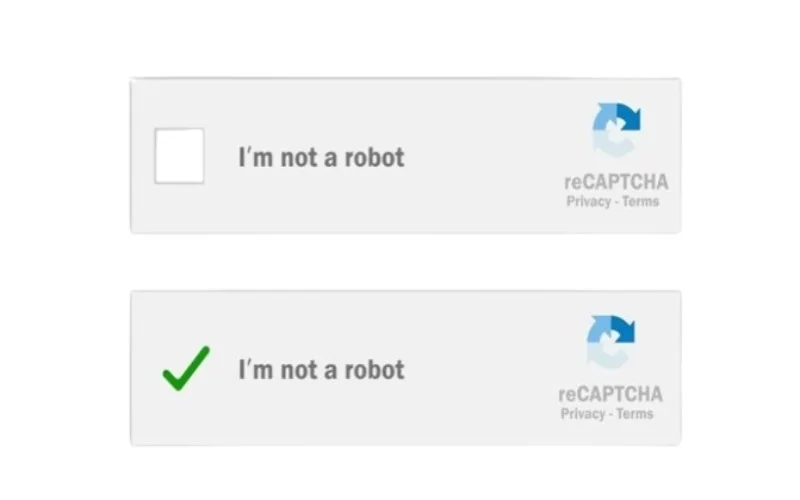
This means most internet users will continue seeing the familiar "I'm not a robot" checkbox or image-selection challenges for now.
Will users in Kenya use it? Eventually, yes, but not immediately, because the feature is still experimental.
If Google expands Hand Gesture Verification to more websites, Kenyan users could begin encountering the camera-based challenge on sites that use Google reCAPTCHA.
Users will not need to install an app or update their browser. The feature will appear automatically on supported websites if Google makes it available more broadly.
As AI systems become increasingly capable of behaving like humans online, traditional CAPTCHA tests are becoming less effective. Technology companies are now exploring more advanced verification methods that rely on behavioural signals rather than image recognition alone.









































Comments
Sign in with Google to comment, reply, and like comments.
Continue with Google