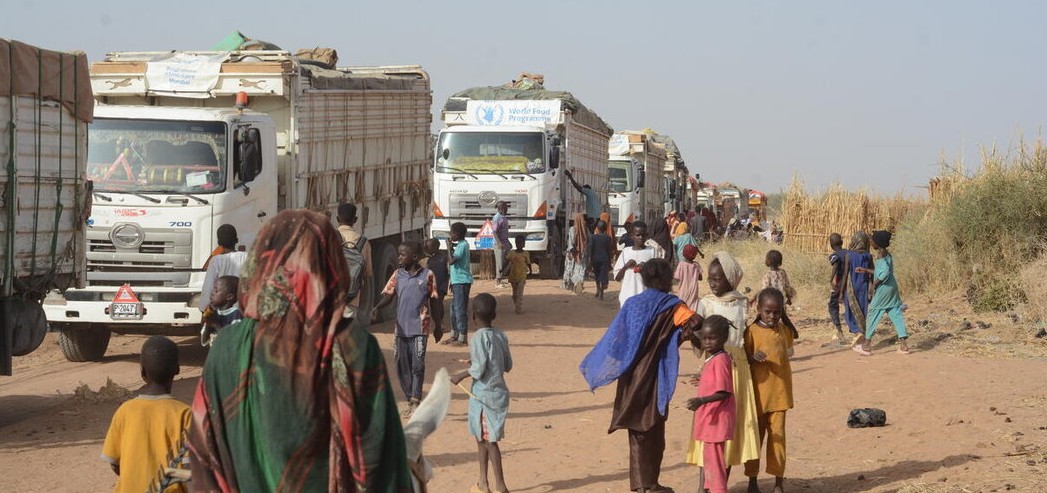
Escalating violence across Sudan’s Blue Nile state has displaced nearly 50,000 people since January, according to new figures released on Tuesday by the International Organisation for Migration (IOM).
IOM's latest Displacement Tracking Matrix (DTM) for Sudan shows that 49,512 people, representing 9,899 households, had fled their homes as of May 4, marking a 77 per cent increase compared to the previous month amid continued insecurity across the region.
The displaced population was spread across seven localities, with the highest concentrations in Ed Damazine (52 per cent), followed by Baw, Geissan, Ar Rusayris, Al Kurmuk, Wad Al Mahi and At Tadamon.
According to IOM, the majority of those displaced are sheltering in informal gathering sites (78 per cent), while others are staying with host families or in public buildings such as schools, reflecting growing pressure on already strained community resources.
“Over half of displaced individuals were recorded across rural areas (57 per cent), compared to 43 per cent who were displaced to urban locations, in Ar Rusayris and Ed Damazine localities,” the update reads.
The situation comes as access to basic services in Blue Nile State remains limited, with a significant share of displaced households reporting challenges in obtaining clean water and healthcare, alongside deteriorating sanitation conditions in displacement sites.
“Most displaced households reported issues with accessing clean water for drinking and cooking (64 per cent). The main reported issues related to water access were water points being too far, water points not functioning, and the insufficient number of water points or the waiting time at water points,” IOM said.
“Approximately two-thirds of displaced households in Blue Nile state (63 per cent) reportedly had a household member with a healthcare need in the last three months. Of these, 64 per cent were reportedly able to access healthcare.”
Blue Nile state has remained an active conflict zone, with ongoing fighting involving the Sudanese Armed Forces, the Rapid Support Forces (RSF) and the Sudan People’s Liberation Movement-North (SPLM-N), which has been engaged in a long-running struggle with the government since 2011 over demands for greater autonomy in South Kordofan and Blue Nile.
The situation has further deteriorated since April 2023, when war erupted between the RSF and SAF. The conflict has since escalated into one of the world’s most severe humanitarian crises, leaving tens of thousands of people dead and forcing an estimated 13 million others from their homes.






















Comments
Sign in with Google to comment, reply, and like comments.
Continue with Google