Somali American and Muslim leaders in Minnesota have accused President Donald Trump of promoting anti-Somali and anti-Muslim rhetoric after he shared a social media post featuring Somali children attending a kindergarten graduation in St. Paul.
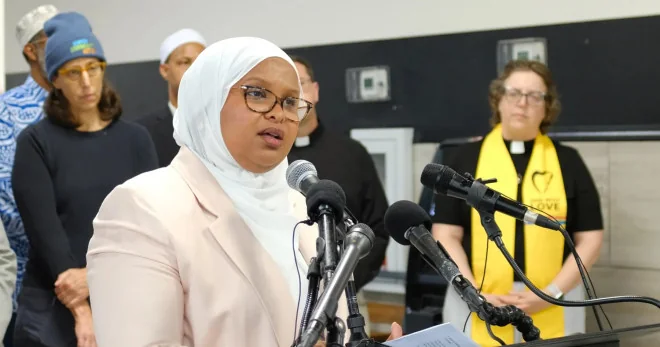
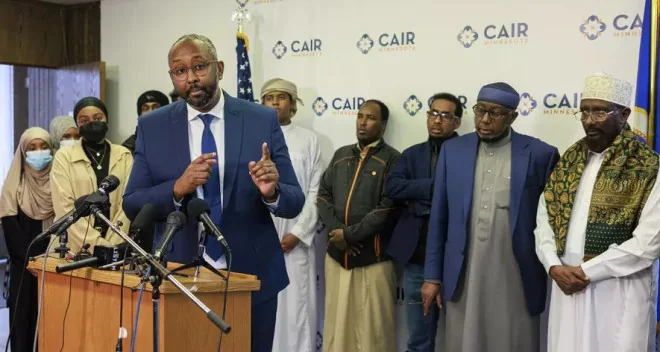
The criticism was voiced during a gathering at Karmel Mall in Minneapolis, where religious leaders, community representatives and public officials said Somali children were being drawn into political debates and warned against using them to advance political narratives.
The controversy began earlier this week when Trump reposted a photograph from a kindergarten graduation ceremony at a K-8 school in St. Paul. The image showed several Somali children, accompanied by a caption originally written by another social media account that read: “Every girl is in a hijab ... in kindergarten.”
Community leaders said the president's decision to share the image had placed children at the centre of a political debate in which they should have no part.
“The highest level of our government is attacking children. Imagine that,” said Imam Yusuf Abdulle, executive director of the Islamic Association of North America.
Abdulle said Muslim children should grow up feeling accepted in both Minnesota and the United States without being judged because of their religious beliefs or clothing.
“Our children deserve to grow up knowing they are fully part of this state and this country, not to be told they do not belong because of what they wear, not to be told they are not as American as their classmates because they wear hijab,” Abdulle said. “That is the Minnesota we believe in. That is the America we hope for.”
Reviving Sisterhood Executive Director Malika Dahir said children should never be turned into political symbols and urged leaders to protect them from becoming the focus of public disputes.
“Children should be our red line,” Dahir said. “They’re not symbols to be exploited. They’re children. Let’s protect them with our words. Let’s protect them with our action.”
Leaders at the meeting said the latest controversy reflected what they described as a continuing pattern of hostility toward Somali Americans and Muslims in the state. They pointed to threatening voicemail messages received by members of the community, as well as the burning of a school bus in May after federal authorities conducted an operation targeting daycare and autism resource centres under investigation over suspected fraud.
“We are here not because of one incident, but a pattern,” Dahir said. “We have stood at podiums like this before. Just a couple of months ago we stood right here after a school bus was set on fire, yet here we are again because this has become a pattern, a pattern that should trouble every one of us.”
The Minnesota chapter of the Council on American-Islamic Relations said the president's social media post had exposed both the children and their school to potential security risks after the image was circulated to a global online audience.
Dahir also appealed to people across the political divide to work together to ensure children are not singled out or used in political disputes.
The reaction came after Ramsey County Sheriff Bob Fletcher said this week that a small group of Somali youths involved in gangs had been linked to more than a dozen killings across the Twin Cities metropolitan area.
Abdisalam Adam, principal of East African Elementary Magnet School in St. Paul, said the actions of a few individuals should not be used to judge an entire community.
“Lumping the Somali community together and naming everything Somali is a big problem that we need to call out,” Adam said.
Minneapolis City Council Vice President Jamal Osman also rejected Fletcher's remarks, saying they painted an unfair picture of Somali youth.
“Somali youth deserve investment, dignity, opportunity and respect — not public officials using their platform to stereotype them,” Osman said.
Community leaders said Trump's public statements and policies during his second term have frequently focused on Somalia and Somali immigrants, arguing that such remarks have contributed to growing hostility toward Somali and Muslim communities across Minnesota.





















Comments
Sign in with Google to comment, reply, and like comments.
Continue with Google