Cameroon Parliament approves return of vice president role
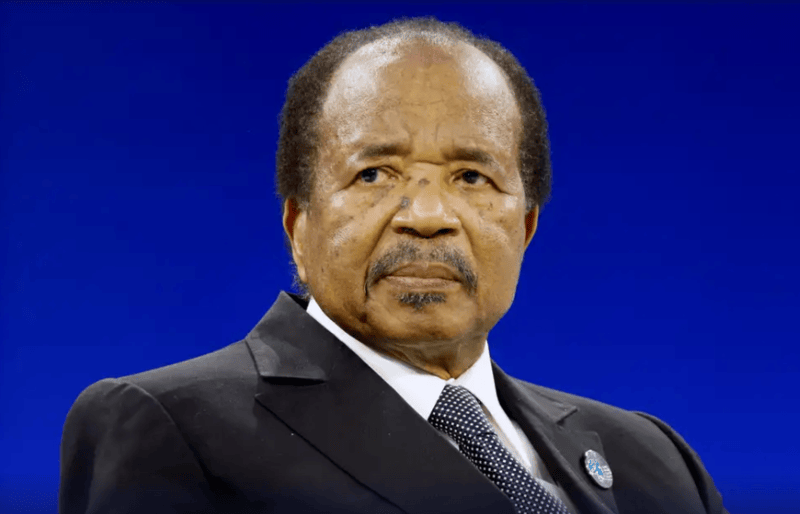
The president will have the power to appoint or remove the vice president. Whoever holds the position would complete the remaining portion of the presidential term if called upon to step in. However, the interim leader would not be allowed to change the constitution or stand in the next election.
Cameroon’s parliament has approved a constitutional amendment bringing back the position of vice president, a role that has not existed in the country’s government for decades.
The measure was adopted on Saturday during a joint sitting of the National Assembly and Senate, where legislators voted 200 in favour, 18 against, with four abstentions. Both chambers are dominated by President Paul Biya’s Cameroon People’s Democratic Movement (CPDM).
The change sets out that a vice president would take over if the head of state dies, steps down, or is unable to continue in office.
More To Read
- Cameroon denies reports about President Paul Biya's health condition
- Cameroon’s sacred and royal animals: Could literature and futures thinking help save them?
- 14 suspected separatist fighters killed in military offensive in Cameroon
- Pope Leo XIV to Cameroon faithful - 'reject violence'
- UK stops issuing student visas for four nations
- Cameroon links opposition leader Ekane’s death in custody to natural causes following autopsy
The president will have the power to appoint or remove the vice president. Whoever holds the position would complete the remaining portion of the presidential term if called upon to step in. However, the interim leader would not be allowed to change the constitution or stand in the next election.
Biya, 93, has been in power since 1982 and is currently the world’s oldest serving president. He was re-elected to an eighth term in October last year, securing 53.66 per cent of the vote, ahead of former ally Issa Tchiroma Bakary, who received 35.19 per cent, and extending his rule to 2032.
The Cameroonian president, who removed presidential term limits in 2008, has long maintained a tight hold on Cameroon’s political landscape, guiding the country through decades marked by economic inequality and growing frustration over governance.
Latest Stories
- Ruto urges Africa to reclaim traditional justice systems as judicial leaders meet in Nairobi
- UN issues new guidelines to protect journalists in armed conflicts
- US-Iran talks in Switzerland postponed as Lebanon strikes threaten fragile peace deal
- Raila Odinga Stadium near completion ahead of 2027 AFCON, says PS Omollo
Government officials argue that the amendment is meant to ensure continuity in leadership and avoid uncertainty in the event of an unexpected vacancy at the top.
Opposition politicians have, however, criticised the move. Joshua Osih, leader of the Social Democratic Front, told Reuters that the change “weakens legitimacy, reinforces centralisation, and ignores a major historical grievance.”
According to Osih, both positions should be filled through a joint election to better reflect the country’s historical divisions between French- and British-administered regions.
The vice presidency existed in earlier years but was scrapped in 1972 following a constitutional referendum. The country last amended its constitution in 2008, when presidential term limits were removed, a decision that triggered protests across the country.
The latest amendment will now be sent to Biya for final approval, which must be completed within 15 days before it becomes law.
Other Topics To Read
Top Stories Today







































Comments
Sign in with Google to comment, reply, and like comments.
Continue with Google