World’s leading carbon credit registry Verra has reinstated the Northern Kenya Grassland Carbon Project (NKRCP), one of Africa’s largest carbon‑credit initiatives, following a months‑long review triggered by a court ruling.
The decision follows a community‑led process in which the Chari Dedha Community in Isiolo County reaffirmed its participation in the project through governance and consent procedures conducted under Kenya’s Community Land Act.
Following reinstatement, the project will continue operating and generating carbon credits, although legal proceedings surrounding its conservancy structures remain unresolved.
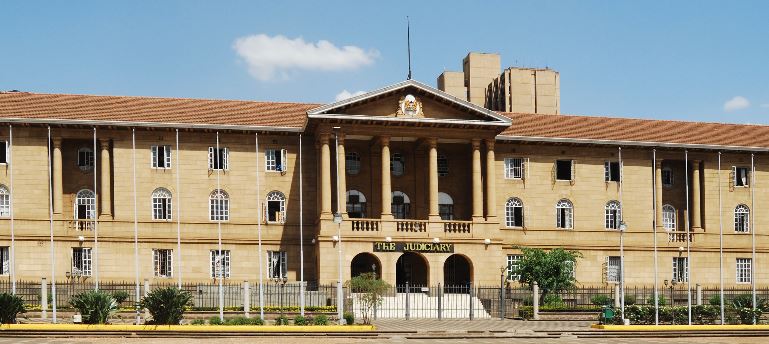
In a statement, Verra said it placed the project, known as Verra Project 1468, under a Quality Control Review (QCR) after a January 2025 court ruling found that the Biliqo Bulesa Conservancy and another conservancy had been established without following legal procedures required on unregistered community land.
The ruling raised questions about land governance, community representation, and compliance with Verra’s ownership and consent requirements since the carbon project operates in an area managed by the conservancy.
“This decision resulted in the project ceasing to be in conformance with ownership requirements under Verra’s rules, triggering the QCR,” Verra stated.
The court ruling has since been appealed by the project proponent, the Northern Rangelands Trust (NRT), together with the affected community conservancies.
Meanwhile, NRT and the conservancies obtained an injunction putting aside execution of the ruling, allowing them to continue operations as the appeal proceeds in court.
Verra said that for NRT to demonstrate the project’s conformance with the Verified Carbon Standard (VCS) Program and the Climate, Community and Biodiversity (CCB) Standards Program, it was required to undertake an independently assessed process to confirm community governance arrangements and demonstrate free, prior, and informed consent (FPIC) in accordance with applicable legal and program requirements.
“NRT worked with the local Chari Dedha Community, which undertook a legally grounded governance and FPIC process under Kenya’s Community Land Act. The process included community registration, the establishment of elected governance structures, extensive community consultations, and a ratification vote involving approximately 1,500 community members that affirmed the community’s participation in and support for the project through transparent, community‑led elected governance structures and decision‑making,” Verra explained.
Additionally, the project’s validation/verification body (VVB) independently assessed the process, including consultations with community members, civil society organisations, researchers, and other stakeholders not affiliated with the project, and concluded that the governance arrangements and FPIC process met the applicable requirements of Verra’s programs.
“Verra reviewed and accepted the VVB’s assessment and reinstated the project. Future verifications will also continue to assess the project’s compliance with the outcome of any ongoing legal proceedings,” Verra adds in the statement.
According to Peter Lekurtut, chairperson of the Transition Committee and member of the Carbon Council, the review process was above reproach.
“The review period has been a transformative journey for the project, strengthening its foundations. Beyond addressing the issues raised by Verra, we have enhanced our free, prior, and informed consent processes through more than 300 community meetings, reinforced our grievance redress mechanisms, and made deliberate efforts to ensure that participating communities continue to realise tangible benefits alongside the carbon sequestration outcomes,” he said.
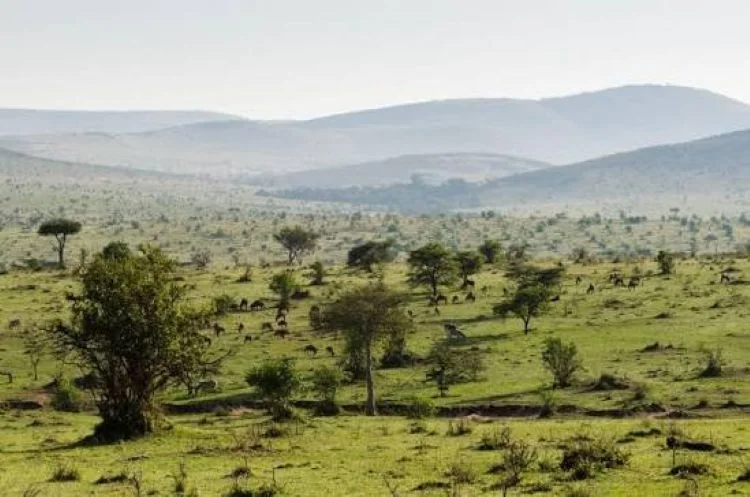
Spanning almost two million hectares, NKRCP is one of the largest carbon removal initiatives globally, designed as a 40‑year programme of nature‑based carbon removal at the landscape scale.
The project, spanning 22 conservancies and 247 communities across northern Kenya, seeks to remove and store carbon in soils while supporting livelihoods, biodiversity, and climate resilience.






























Comments
Sign in with Google to comment, reply, and like comments.
Continue with Google