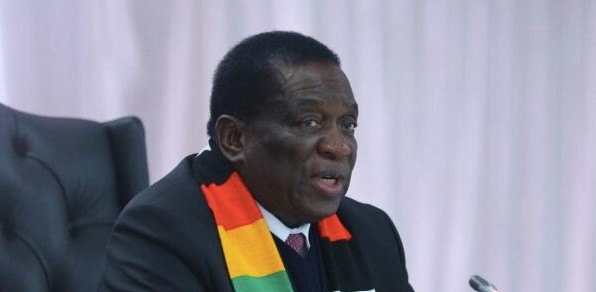
Zimbabwe’s Parliament has approved a constitutional amendment that would extend presidential and parliamentary terms and allow President Emmerson Mnangagwa to remain in office until 2030, marking a major shift in how the country selects its leaders.
Under the proposed changes, presidential and parliamentary terms would be extended from five years to seven.
The bill also removes direct presidential elections, replacing them with a system in which the president would be elected by Members of Parliament (MPs).
The amendment further delays the next general elections, originally scheduled for 2028, pushing them to 2030 to align with the new extended political cycle.
The lower house of Parliament passed the bill after 216 MPs voted in favour and 42 voted against, clearing the two-thirds majority required to amend the constitution. The legislation now moves to the Senate, where it is widely expected to pass before being sent to Mnangagwa for signing into law.
If fully enacted, the amendment would allow Mnangagwa, whose current term is due to end in 2028 under the existing constitution, to remain in office for two additional years.
The amendment is part of a broader constitutional reform drive led by the ruling ZANU-PF party, which has governed Zimbabwe since independence in 1980 and holds a strong parliamentary majority.
Mnangagwa came to power in 2017 after the military-backed removal of long-time leader Robert Mugabe. He went on to win disputed elections in 2018 and 2023, both of which were challenged by opposition parties and observers.
The current constitution, adopted in 2013, limits presidents to two five-year terms and requires that any extension of term limits be approved through a national referendum.
Opposition parties, civil society groups and constitutional lawyers in Zimbabwe have argued that the latest changes bypass the constitutional requirement and should be put to voters, warning that the reforms could weaken democratic accountability by removing direct presidential elections.
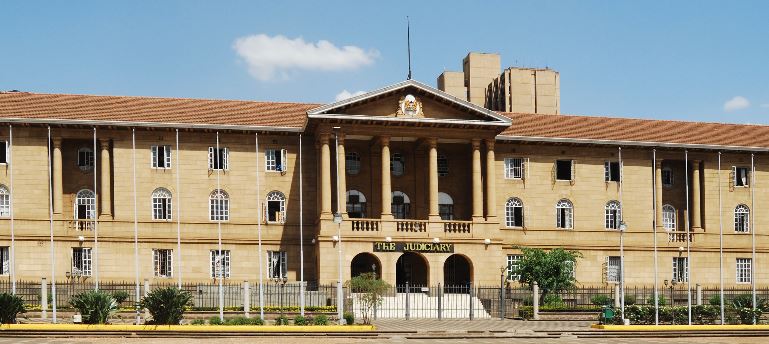
Earlier this week, Zimbabwe’s Constitutional Court dismissed a legal challenge seeking to block the bill, clearing the way for Parliamentary approval.












































Comments
Sign in with Google to comment, reply, and like comments.
Continue with Google