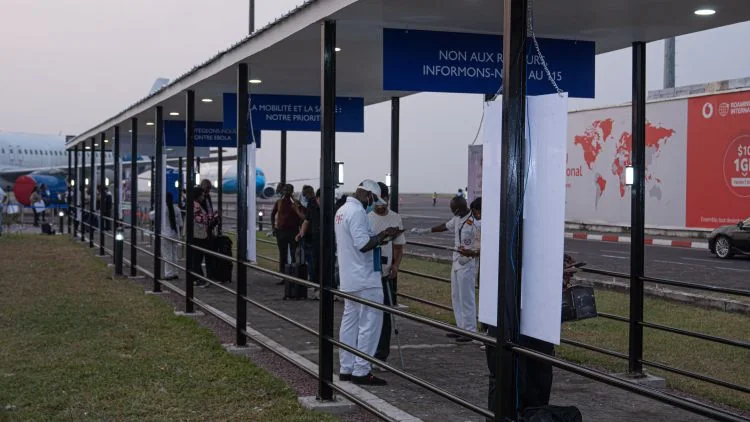
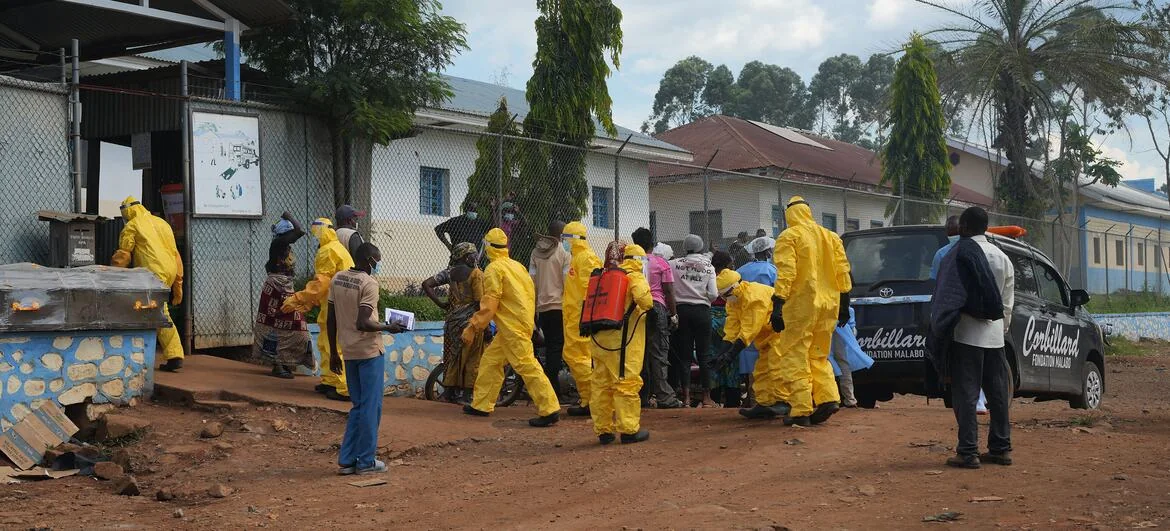
The International Organisation for Migration (IOM) on Friday said it has conducted more than one million health screenings at borders and along key cross-border routes and travel corridors across Ebola-affected and at-risk countries as it scales up its efforts to support the control of an outbreak that has spread across eastern Democratic Republic of the Congo (DRC) and Uganda.
The screening efforts that began mid-April across 110 Points of Entry (PoE), and 43 additional health screening points along major routes, with personnel deployed to high-risk border areas.
These are part of efforts aimed at curbing the spread of the deadly Ebola Bundibugyo Virus (BDBV) from its hotspots across the region through the porous borders.
According to the IOM’s Displacement Tracking Matrix, Ituri Province alone accounts for more than 16,000 people's movement across the dynamic borders every day, thus the need to up the border health leadership in helping to mitigate cross-border transmission.
IOM said the milestone underscores the scale of efforts required to contain Ebola in one of Africa’s most dynamic mobility corridors, where thousands of people cross borders daily for trade, work, family reunification and access to essential services.
“Human mobility is central to both the spread and containment of infectious diseases. With more than one million health screenings already conducted, IOM is working alongside governments and partners to strengthen preparedness and response capacities, protect people on the move, and mitigate cross-border transmission,” said Frantz Celestin, IOM Regional Director for East, Horn and Southern Africa.
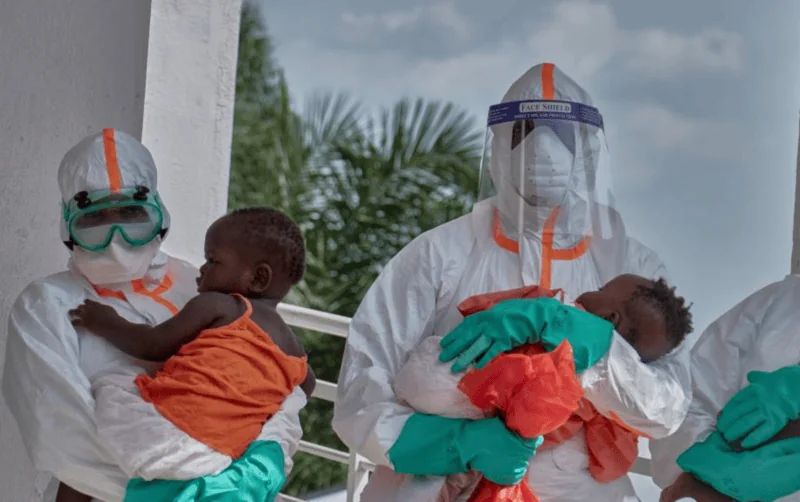
The outbreak, which has spread across North Kivu, South Kivu and Ituri provinces in eastern DRC and confirmed cross-border transmission into Uganda, has now resulted in over 200 deaths and over 856 infections as of June 19, according to the World Health Organisation.
Neighbouring countries, including Burundi, Rwanda and South Sudan, remain at elevated risk due to high levels of population movement along regional migration corridors.
The organisation added that it is also strengthening preparedness in at-risk countries, including Burundi, Ethiopia, Kenya, Rwanda, South Sudan, Tanzania and Zambia, among others, by enhancing surveillance systems at Points of Entry (PoE) and mapping high-risk travel routes and areas of congregation.
“IOM is using mobility data from its population mobility mapping, which helps to prioritise locations for enhanced surveillance and highlight hotspots to strengthen preparedness and response, including contact tracing, risk communication and community engagement, and the referral of suspected cases, allowing response teams to prioritise high-risk areas. Disease surveillance and health screening at borders are critical to containing the disease,” the statement adds.
Additionally, the organisation said it is mobilising additional human, logistical and financial resources to respond to the urgency, complexity and impact on affected communities.
“IOM’s response is being supported by the US government and the European Union. As the situation evolves, IOM is appealing for additional support to sustain life-saving interventions, protect vulnerable communities, and strengthen cross-border health systems to prevent further spread,” the organisation said.







































Comments
Sign in with Google to comment, reply, and like comments.
Continue with Google