African business leaders call for bold reforms to unlock investment potential
Foreign direct investment to Africa fell 42 per cent to $28 billion in early 2025. Business leaders urge faster reforms on payments, integration and local capital to unlock the continent’s investment potential.
African business leaders are urging bold reforms to unlock the continent’s investment potential, warning that persistent structural bottlenecks continue to hinder Africa’s ability to convert its economic promise into tangible capital flows.
They emphasise that Africa must urgently strengthen intra-continental systems before it can effectively attract global investors.
More To Read
- Kenya, Ethiopia, DRC lead East Africa’s stunning export surge amid global economic uncertainty
- Kenya trails Uganda and Tanzania in attracting industrial investment - report
- Multinationals turn to Kenyan professionals, cut expatriate staff
- Foreign Investments offer minimal impact to Kenya’s industrialisation, study shows
- UNCTAD rebrands as 'UN Trade and Development' on 60th anniversary
Recent data from UN Trade and Development (formerly UNCTAD) shows that Africa has been the hardest-hit continent amid the global investment slump.
Foreign direct investment (FDI) flows to the continent fell 42 per cent year-on-year to $28 billion (Sh3.6 trillion) in the first half of 2025. By contrast, other developing regions saw relatively stable FDI inflows: Latin America and the Caribbean recorded a 12 per cent increase, while developing Asia grew by seven per cent.
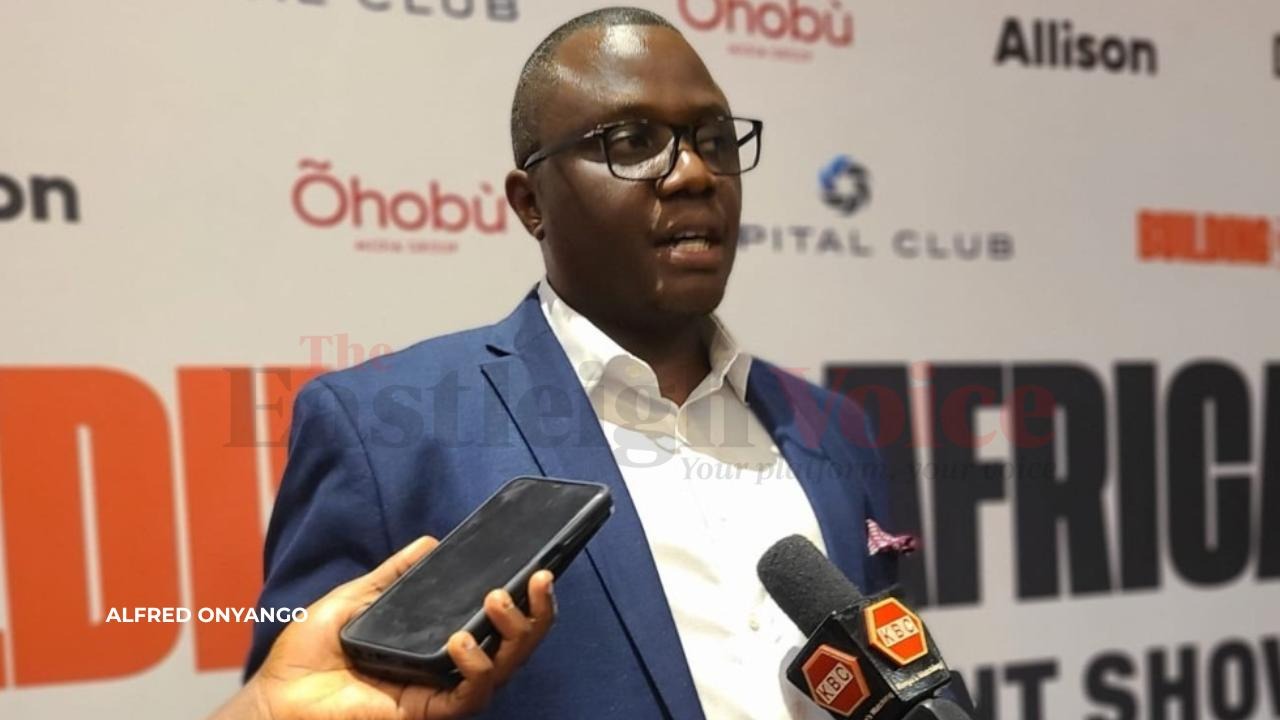
 David Goldfinger, founder of Business for Africa Show, says showcasing the right opportunities will inspire Africans at home and abroad to invest in the continent. (Photo: Alfred Onyango)
Most pronounced in North Africa
The decline was most pronounced in North Africa, where FDI inflows reached $11 billion (Sh1.4 trillion) between January and June 2025, compared with $27 billion (Sh3.5 trillion) in the same period last year. In Sub-Saharan Africa, FDI fell 23 per cent year-on-year to $17 billion (Sh2.2 trillion).
According to Onyeka Akumah, Founder and CEO of mobility-tech platform Treepz, Africa’s investment landscape is constrained by inefficient financial infrastructure that frustrates entrepreneurs operating across borders.
He cites slow, costly, and complex cross-border payments as one of the most urgent barriers to remove.
“How should we get rid of them to ensure we have a seamless intra-Africa investment?” he asked.
“Let me be an entrepreneur doing business in Nigeria or Kenya, and I want to do business in Ethiopia and get my money out of Ethiopia to Kenya—and it happens seamlessly.”
He added that founders should not have to build logistics and payment systems just to keep their businesses operational across multiple markets.
Build economic power
Akumah further argues that Africa should focus on building economic power from within by amplifying local success stories, reducing dependence on external borrowing, and investing aggressively in its own natural and human resources.
“As Africans, we should own our story, we should own our resources, invest in our own resources and amplify how much our resources are giving us more economies of scale,” he said.
Nevertheless, he notes that political transitions across the continent still affect investor sentiment, with uncertainty often stalling capital flows. He believes stronger democratic systems and greater participation of business-minded leaders in governance could help stabilise investor confidence.
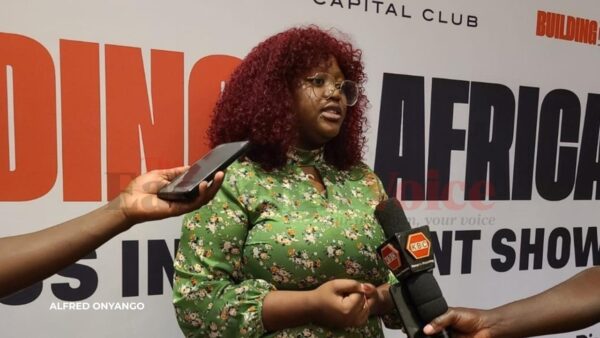 Sarudzayi “Sarue” Marufu, who says Africa must reshape its global image to attract long-term investment. (Photo: Alfred Onyango)
Similarly, Sarudzayi “Sarue” Marufu, an award-winning producer and co-founder of Symphony Innovations, said Africa’s struggle to attract long-term financing is linked to how the continent presents itself.
She argues that African markets are often labelled as “emerging,” reinforcing a perception of perpetual instability and weakening first impressions among investors.
Homegrown entrepreneurs
Marufu adds that homegrown entrepreneurs must play a greater role in creating internal demand rather than relying solely on foreign capital. She believes that stronger African capital flows would trigger more sustainable growth and reduce the continent’s vulnerability to external shocks.
Both speakers urged faster action on long-standing integration goals, including a single African currency, simplified movement of people, and harmonised payment systems. These reforms, they say, would drastically reduce transaction frictions, accelerate intra-African trade, and make the continent more competitive for global investment.
They spoke during the launch of the Business for Africa Show, a new investment initiative designed to accelerate capital flows into the continent.
David Goldfinger, the founder of the Show, said the investment series aims to spotlight opportunities across African markets while mobilising Africans on the continent and in the diaspora to drive investment from within.
“If we create the right environment and we showcase the right opportunities, Africans in the diaspora as well as other Africans across the continent would invest within the continent,” he said.
Top Stories Today