Three-week drop in benchmark crude sets up Kenyans for further fuel price relief
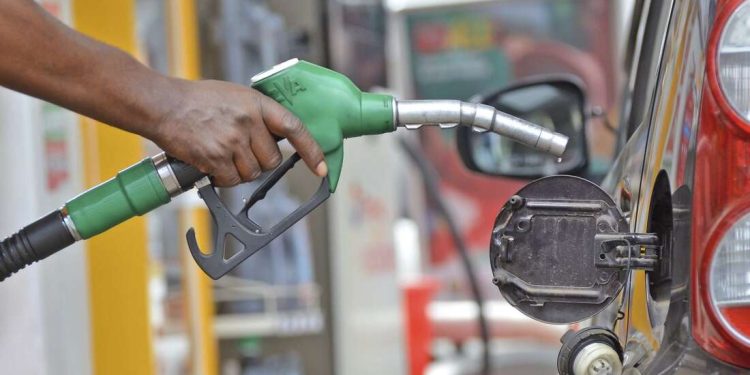
A three-week drop in Murban crude prices and EPRA’s recent restraint on pump hikes point to either steady or slightly lower fuel prices for Kenyans in the next review.
Kenyans are likely to see either another month of unchanged pump prices or a marginal decline in the upcoming fuel review.
This is based on a convergence of easing global benchmark oil prices and the Energy and Petroleum Regulatory Authority (EPRA’s) recent pattern of price restraint.
More To Read
- Consumers to get more units for less as electricity tariffs decline
- Kenya adopts Women Entrepreneurs Finance Code to close gender financing gap for women entrepreneurs
- CBK data shows Sh344 billion decline in mobile money transactions, steepest drop in 18 years
- Matatus take EPRA and City Hall to court over ban on passenger pickups at fuel stations
- Fuel prices remain unchanged in November EPRA review
- CS Mbadi tables new banking rules targeting non-compliance, unethical practices
Analysis shows the continuous three-week drop in international benchmark prices to December 12, coupled with the last four consecutive EPRA price reviews without any upward adjustment, sets the stage for a potentially consumer-friendly announcement on December 14.
The Central Bank of Kenya (CBK’s) weekly bulletin shows a consistent cooling of the Murban crude benchmark, strengthening the case for a soft landing.
Within the three weeks of review, international oil prices have edged downwards slightly as rising supply outpaced weak global demand.
The apex bank notes that the Murban oil price declined to $64.46 (Sh8,325) per barrel on November 27, from $65.25 (Sh8,427) per barrel on November 20.
The trend continued into early December.
“International oil prices were largely stable, with Murban oil trading at $64.33 (Sh8,308) per barrel on December 4, compared to $64.46 (Sh8,325) per barrel on November 27,” CBK said.
By the end of the third review week, on December 11, the downward momentum had strengthened as inventories rose and geopolitical tensions eased.
The benchmark oil prices declined on account of oil inventory build-up and ongoing Ukraine-Russia peace negotiations, with the Murban oil trading at $62.97 (Sh8,133) per barrel on December 11, compared to $64.33 (Sh8,308) per barrel on December 4.
Ideally, a weakening international market provides EPRA with room to maintain or slightly reduce local pump prices.
Locally, fuel prices have remained steady since August, with EPRA opting not to impose upward adjustments despite market volatility.
November’s pricing cycle, running from November 15 to December 14, reflected this stance clearly.
“In the period under review, the maximum allowed petroleum pump prices for Super Petrol, Diesel and Kerosene remain unchanged,” said the regulator in a statement.
October mirrored the same approach, prices unchanged from the previous revision, signalling a deliberate regulatory pause.
The freeze in price hikes in the two latest reviews comes after modest reductions in the preceding two cycles.
In September (September 15 - October 14), EPRA implemented minimal reductions across all products.
The maximum allowed petroleum pump prices for Super Petrol, Diesel, and Kerosene decreased by Sh0.79 per litre, Sh0.11/litre and Sh0.80/litre, respectively.
The August cycle similarly saw slight drops for Super Petrol and Kerosene, marking the beginning of the current stretch of consumer relief.
As of the latest prevailing rates for November 2025, pump prices in Nairobi stand at Sh184.52 for Super Petrol, Sh171.47 for Diesel, and Sh154.78 for Kerosene.
With global oil markets softening further, these figures could arguably remain static or ease modestly in the upcoming pricing window running from December 15 to January 14, 2026.
Top Stories Today