The government has announced a shift from heavy reliance on borrowing and taxation to finance infrastructure projects, saying it will now prioritise private sector participation and alternative funding models to address a widening financing gap.
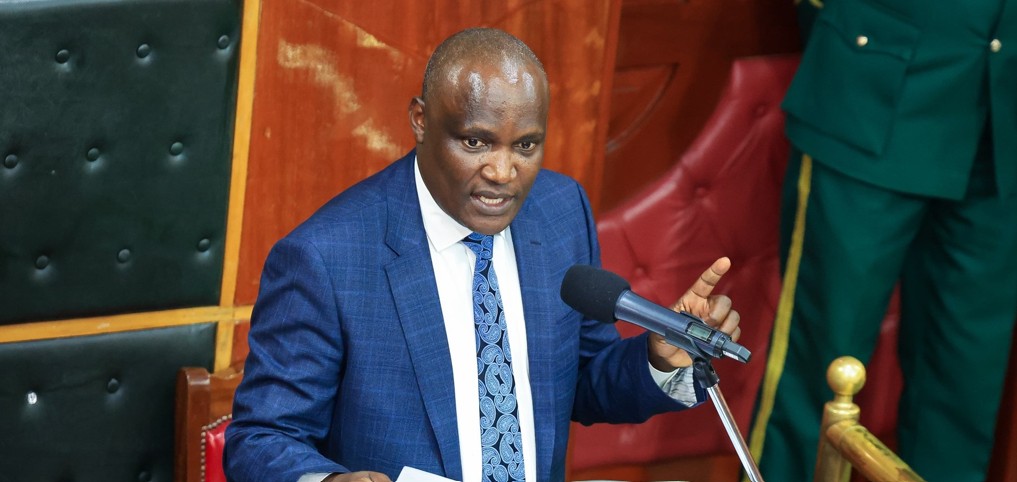
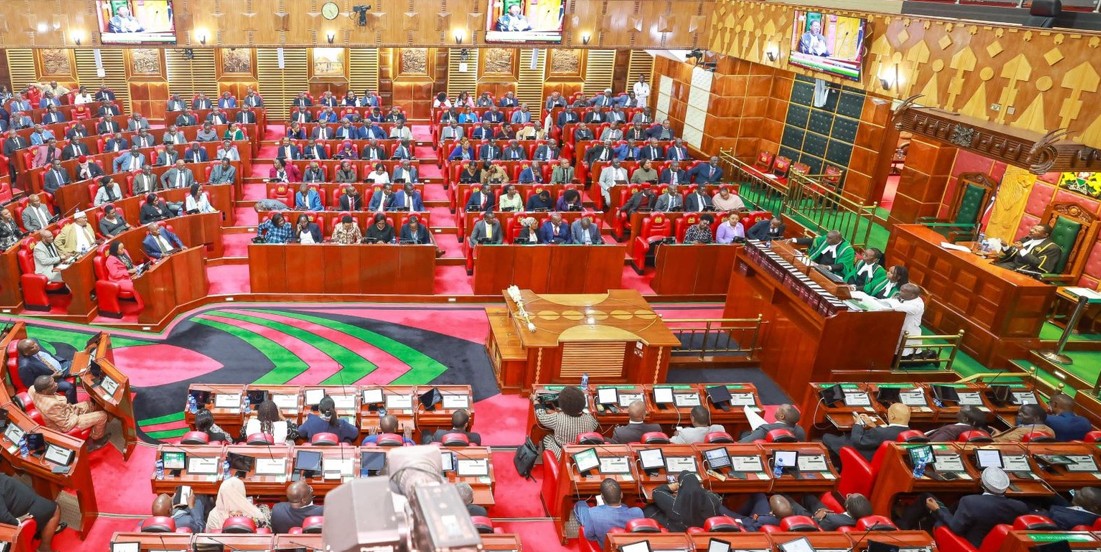
Speaking on Thursday while presenting the 2026/27 budget in Parliament, Treasury Cabinet Secretary John Mbadi revealed that Kenya’s current infrastructure financing deficit stands at about $5 billion US dollars annually, equivalent to roughly Sh650 billion.
He said the situation reflects a tightening fiscal space that requires strict prioritisation and disciplined implementation of government programmes.
“Our development budget, while growing, cannot close that gap alone,” he said.
He emphasised that the current fiscal environment demands careful management of public resources as the country works within limited financial space.
Mbadi said the country can no longer rely on debt and taxation to finance all infrastructure projects, noting that past approaches have created long-term pressure on public finances.
“The era of financing every road, every power line and every dam through government borrowing and taxation is over, not because we lack ambitions, but because we have learned from the consequences of that model,” he said.
He warned that debt-funded infrastructure has increased repayment burdens, reducing the government’s ability to fund key social services.
“Debt finance infrastructure has left us with more debt service obligations that crowd out the very spending our people need most on health education and social protection, so, Mister Speaker, we are going to build better,” he said.
He revealed that the government is now shifting to a model that increases the use of Public-Private Partnerships and the newly established National Infrastructure Fund to attract private capital.
“We are shifting from a model where government borrows to build to enhance the use of the public-private partnership and the recently established national infrastructure fund in funding priority infrastructure through private sector finances, that is the foundation on which this government’s infrastructure program rests,” he said.
He cited the Rironi-Nakuru-Mau Summit Expressway as an example of the new approach, saying construction is already underway and the project will deliver a modern highway once completed.
“The Rironi-Nakuru-Mau Summit Expressway stands as proof. Construction of the expressway is now underway, and Kenyans will be driving on a modern four to six-lane expressway once completed,” he said.
He said the financing model behind the project is historic due to the involvement of local and international investors.
“What makes this project truly historic is not the speed of delivery. It is how it was financed through the participation of the National Social Security Fund, both as a debt and equity investor, alongside international investors. A major national highway is being built with Kenyan capital by Kenyan workers and for the Kenyan people,” he said.
Mbadi added that the government will continue implementing infrastructure projects through the National Infrastructure Fund, which will mobilise resources from multiple sources.
“Beyond the reloading Nekuru Mahusamyat project, the government will continue executing an ambitious infrastructure development plan through the National Infrastructure Fund. The fund will leverage resources from private translation proceeds from mature national assets to attract private capital, domestic pension funds, and climate finance,” he said.
Mbadi assured that the government remains focused on addressing public concerns about the country’s fiscal position while ensuring careful management of public resources as it implements its transformation agenda.
“As we move forward in implementing the government’s transformation agenda, we remain mindful of all the concerns raised by Kenyans on the prevailing fiscal environment and the need for continued prudence in the management of public resources,” he said.































Comments
Sign in with Google to comment, reply, and like comments.
Continue with Google