Architects have demanded the withdrawal of criminal charges against members of the Nairobi City County Urban Planning Technical Committee over the Manzil Towers collapse, arguing that the committee only provided professional advice and had no legal authority to approve the project.
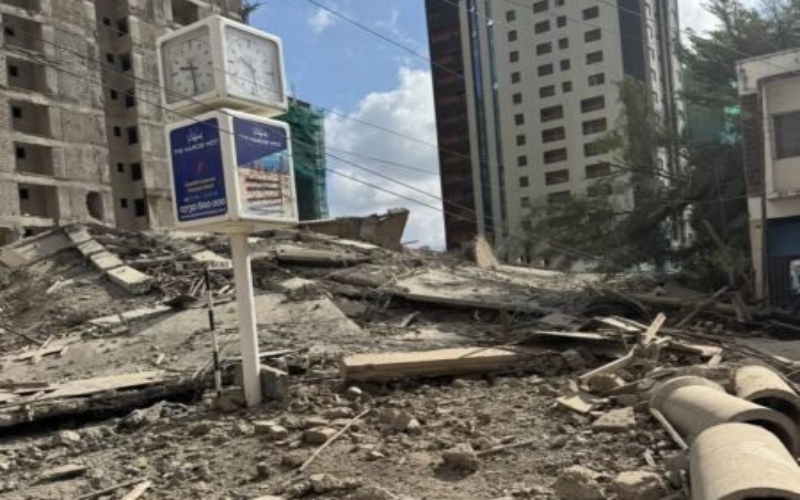
On Friday, the Director of Public Prosecutions, Renson Ingonga, approved multiple charges, including manslaughter, abuse of office, neglect of official duty and document-related offences, against following more than 80 Nairobi public officials, developers, and construction professionals, investigations into the January 2, 2026, collapse of the 16-storey building that was under construction.
Former Nairobi County planning chief Patrick Analo Akivaga is among those who will face charges over abuse of office and neglect of official duty.
In a statement, the ODPP said a review of investigations by the Directorate of Criminal Investigations found enough evidence to proceed with prosecution.
“Following an independent and thorough analysis of the evidence contained in the inquiry file, the DPP has determined that there is sufficient evidence and a realistic prospect of conviction to warrant the prosecution of several suspects connected to the incident,” the ODPP said.
The prosecution office added that the charges against Analo arise from findings linked to approval, oversight and regulatory processes tied to the project before its collapse.
Other suspects will face charges including manslaughter, abuse of office, neglect of official duty, making and uttering false documents, and starting a project without an Environmental Impact Assessment licence.
In a statement, the Architectural Association of Kenya (AAK) urged the ODPP to review and withdraw the charges, saying accountability should rest with those who held decision-making powers.
The association strongly condemned the ODPP’s decision to charge the entire membership of the Committee, arguing that while safety and accountability are important, criminal action must be based on evidence and directed at the right individuals.
AAK said the Urban Planning Technical Committee serves only as a technical review body whose role is to provide professional recommendations and not to make final decisions on building approvals.
“Professional Advice is Not Executive Authority,” it said, adding that the legal power to grant or deny approval rests with the County Executive Committee Member, who can choose to act on, ignore, or override recommendations made by technical teams.
The association further warned that linking advisory professionals to executive decisions could have a chilling effect on public service participation, saying it exposes them to unfair blame for decisions they do not control.
AAK said such actions risk discouraging qualified professionals from taking up roles in public oversight structures meant to strengthen planning and accountability systems.
AAK warned that linking advisory professionals to final decisions creates fear and weakens oversight in public institutions.
“Accountability must follow authority. Professionals who represent the interests of the Association as external stakeholders, often calling authorities to task, should not be persecuted as though they made the ultimate executive decisions,” the association said, calling for the withdrawal of the charges.
“We firmly demand the immediate review and withdrawal of these structurally misguided charges.”
ODPP has maintained that the decision to charge followed Article 157 of the Constitution, the Office of the Director of Public Prosecutions Act and the Decision to Charge Guidelines, based on evidence collected by investigators.
The accused are expected to be taken to court to answer the charges.
Investigations revealed that the South C building had been flagged at least three times by Nairobi County enforcement officers in May, July and December 2025 after developers allegedly exceeded approved plans and ignored stop orders issued by county authorities.
Despite these warnings and arrests of site officials, construction continued until the building eventually collapsed.
Questions have also been raised about how the development grew beyond its approved plan. The building had initially been approved for 12 floors but had risen to about 16 storeys at the time of collapse, raising concerns over changes made during construction and weaknesses in county oversight.
The National Construction Authority further stated that the project was non-compliant and that the developer’s practising licence had expired before the collapse.














































Comments
Sign in with Google to comment, reply, and like comments.
Continue with Google