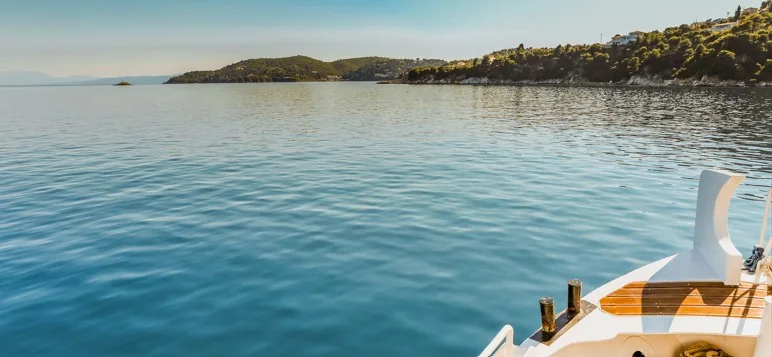
The world's oceans, lakes, rivers and coastal waters are steadily losing oxygen, creating what scientists describe as a growing global environmental crisis that threatens aquatic life, food security and the Earth's ability to regulate its climate.
In a new review, researchers led by the Scripps Institution of Oceanography at the University of California San Diego warn that declining oxygen levels in aquatic ecosystems, a phenomenon known as aquatic deoxygenation, have become so widespread that they should be recognised alongside climate change and biodiversity loss as one of the planet's major environmental threats.
The researchers argue that oxygen loss should be added to the Planetary Boundaries framework, a scientific model introduced in 2009 to identify the environmental systems essential for keeping Earth stable and habitable.
According to the study, some of the damage caused by declining oxygen levels could persist for centuries and may not be reversible within human lifetimes.
Why oxygen matters
Just as humans need oxygen in the air, fish, shellfish, crabs and microscopic aquatic organisms depend on dissolved oxygen in water to survive.
When oxygen levels fall too low, fish struggle to breathe, feed, grow and reproduce. In severe cases, aquatic animals suffocate or are forced to migrate to areas with higher oxygen levels, disrupting entire ecosystems.
"The health and stability of our planet depends on the health and stability of aquatic ecosystems, which need oxygen to function normally," said lead author Erica Ferrer, formerly of Scripps Oceanography and now a postdoctoral researcher at the University of California, Santa Barbara.
What's causing the oxygen crisis?
The researchers identified three major factors driving the decline in oxygen levels.
The first is climate change. As greenhouse gas emissions warm the planet, oceans absorb much of the excess heat.
Warm water naturally holds less dissolved oxygen than cold water. At the same time, rising temperatures make it more difficult for oxygen-rich surface water to mix with deeper waters, reducing the amount of oxygen available throughout the water column.
The second major driver is pollution.
Runoff from farms carrying fertilisers, untreated sewage and industrial waste introduces excessive nutrients into rivers, lakes and coastal waters. These nutrients fuel large algal blooms. When the algae die, bacteria consume enormous amounts of oxygen as they decompose, leaving behind oxygen-starved waters.
Scientists also point to changes in ocean circulation and water ventilation, which reduce the movement of oxygen into deeper aquatic environments.
A threat beyond fish
The study warns that oxygen loss is not an isolated problem. It interacts with nearly every other major environmental challenge, including climate change, ocean acidification, freshwater degradation, biodiversity loss, chemical pollution and disruptions to global nutrient cycles.
As oxygen disappears, biological and chemical processes that naturally help regulate the Earth's climate also begin to weaken.
The effects are felt throughout the food chain, from microscopic plankton that form the foundation of aquatic ecosystems to commercially important fish species and marine mammals.
Although whales and dolphins breathe air, they are still affected because oxygen loss alters the distribution of their prey and damages the habitats on which they depend.
Could fish become more expensive?
Scientists say one of the most immediate concerns is food security.
Lower oxygen levels can reduce fish populations by slowing growth, lowering reproduction rates and increasing mortality. Fish may also move to cooler, oxygen-rich waters, making them harder to catch.
If global fish supplies decline while demand continues to rise, consumers could eventually pay more for seafood. For countries such as Kenya, where fisheries support millions of livelihoods and provide an affordable source of protein, the implications could be significant.
Kenya is already seeing warning signs
Although the study examined aquatic oxygen loss worldwide, Kenya is already experiencing similar challenges in Lake Victoria.
The Kenya Marine and Fisheries Research Institute (KMFRI) has repeatedly warned that parts of the lake periodically experience dangerously low dissolved oxygen levels, a condition known as hypoxia, threatening fish populations and the country's growing aquaculture sector.
Recent monitoring indicates that nearly 40 per cent of Lake Victoria's lakebed can become oxygen-depleted, creating conditions unsuitable for many aquatic species.
The problem affects commercially important fish such as Nile perch and tilapia, both of which require adequate oxygen levels to survive and reproduce.
For fishing communities around Lake Victoria, the effects of environmental degradation are already becoming evident.
Fish traders, many of them women responsible for sorting, drying and selling fish, are increasingly dealing with shrinking catches and smaller fish. Kenya's annual fish landings have declined significantly over the past two decades, raising concerns about food security and household incomes in communities that depend on the lake.
The oxygen crisis comes on top of other long-standing challenges affecting Lake Victoria, including the spread of water hyacinth, an invasive aquatic weed that has repeatedly choked fishing grounds, blocked boat access, damaged fishing gear and disrupted transport.
Scientists note that excessive nutrient pollution from untreated sewage and agricultural runoff not only fuels algal blooms that consume oxygen but also creates favourable conditions for water hyacinth to flourish.
Together, declining oxygen levels, invasive weeds, pollution, overfishing and climate-related changes are placing increasing pressure on one of East Africa's most important freshwater ecosystems. The situation is raising concerns about the long-term sustainability of fisheries that support millions of people in Kenya, Uganda and Tanzania.
According to KMFRI, several factors also contribute to oxygen depletion in the lake.
Heavy rains and strong winds can trigger lake turnover, also known as upwelling, in which cold, oxygen-poor water from the bottom rises to the surface, exposing fish to stressful conditions.
At the same time, untreated sewage, agricultural runoff and urban pollution fuel excessive algal blooms. As the algae die and decompose, bacteria consume dissolved oxygen, leaving less available for aquatic life.
Fish farming can also contribute to the problem when excess feed and fish waste accumulate beneath densely stocked cages, increasing oxygen demand as organic matter decomposes.
To reduce the risk of mass fish deaths, KMFRI advises cage fish farmers in counties including Kisumu, Siaya, Busia, Homa Bay and Migori to reduce or suspend feeding during periods of heavy rainfall and sudden temperature changes, when oxygen levels are most likely to fall.
The institute is also working with international research partners to pilot real-time water-quality sensors capable of warning farmers before oxygen levels become critically low.
An invisible crisis beneath the surface
Unlike floods, droughts or wildfires, oxygen loss cannot be seen with the naked eye.
Yet scientists say its effects ripple through entire ecosystems, affecting biodiversity, fisheries, food supplies and the global climate.
The researchers hope governments will begin treating aquatic deoxygenation with the same urgency as climate change. They argue that protecting oxygen-rich aquatic ecosystems is essential for maintaining biodiversity, supporting fisheries and preserving the natural systems that keep the planet stable.
"Adding aquatic deoxygenation to the Planetary Boundaries framework will help us understand its impacts on Earth system stability," Ferrer said.
"Mitigating its impacts represents a critical component of maintaining biodiversity and climate."









































Comments
Sign in with Google to comment, reply, and like comments.
Continue with Google