The latest school fire tragedy that has claimed 16 lives at Utumishi Girls Academy in Gilgil, Nakuru County, has reignited national anger over recurring dormitory disasters in Kenya’s boarding schools.
Since the 1990s, a breakdown by The Eastleigh Voice shows that more than 160 students have died in similar incidents, exposing persistent gaps in safety enforcement despite repeated reforms, inquiries and policy promises aimed at preventing such tragedies.
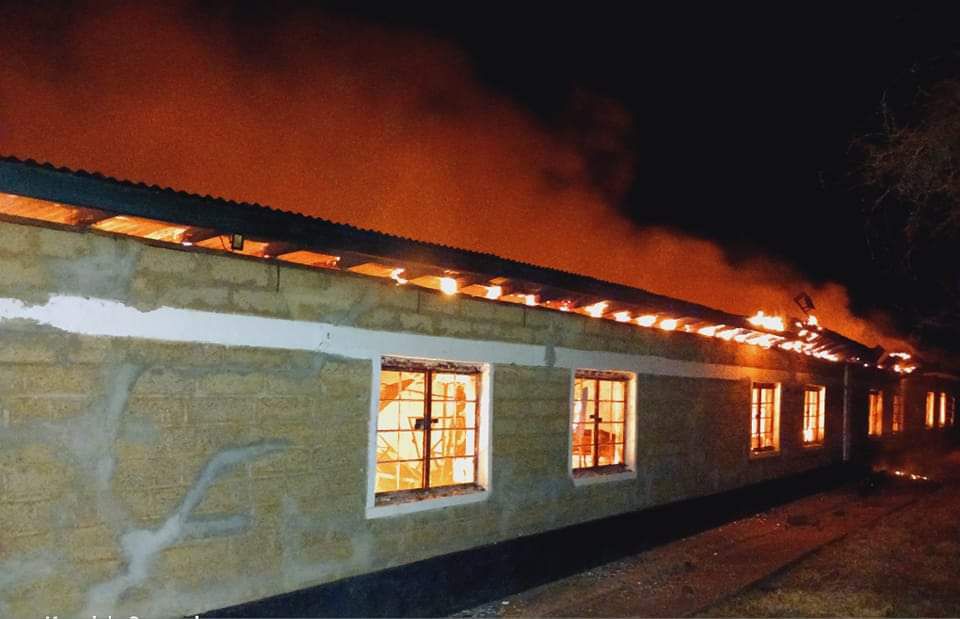
On Thursday, May 28, 2026, Kenyans woke up to news of a midnight inferno that swept through a second-floor dormitory at Utumishi Girls Academy, killing learners and leaving dozens injured.
A total of 16 students died, and 79 others were injured in the blaze, which broke out at around 12:45 am.
The school has a population of 815 learners, with 808 present at the time of the incident. The Ministry of Education said seven students were away for various reasons.
Authorities have said the cause of the fire remains unknown as investigations continue.
“The dorm is destroyed, a lot of injuries to our learners, and unfortunately, we lost some of our learners in that incident. We do not know the cause of this fire, and it would be speculative to say it is arson. I would suggest we wait for the investigations, and then we can confirm that,” Education CS Julius Ogamba said on Thursday.
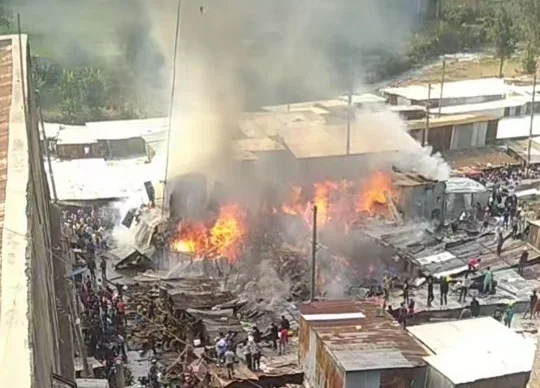
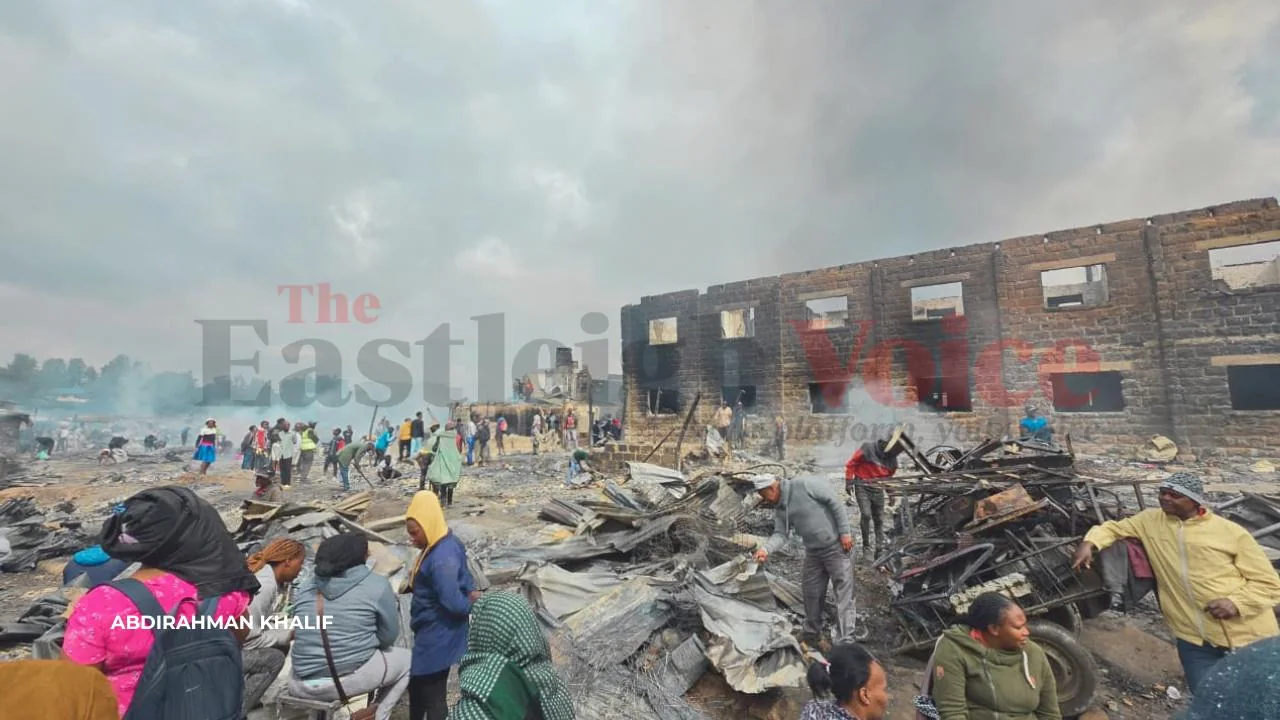
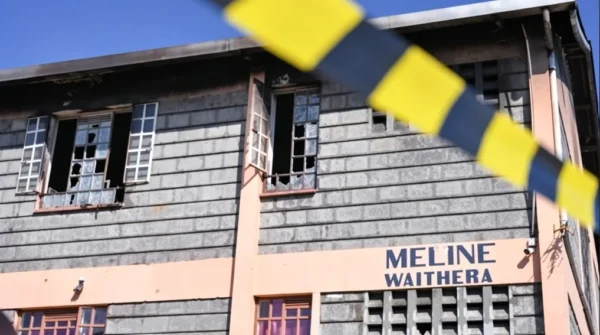 Utumishi Girls Academy's Meline Waithera dormitory which caught fire on the night of May 28, 2026. (Photo: Handout)
The Utumishi tragedy is the latest in a long line of deadly school fires that have scarred Kenya’s education system for decades, with investigations repeatedly pointing to arson, overcrowding and poor safety standards in boarding facilities.
Kyanguli dorm fire
One of the deadliest incidents occurred in March 2001 at Kyanguli Secondary School in Machakos County, where 67 students died after a dormitory fire that investigators believed was deliberately set.
Police later arrested two 16-year-old students, who were charged in court in what became one of Kenya’s most high-profile juvenile arson cases.
Survivors said tensions had been building in the school over fee arrears and the cancellation of national examination results the previous year, factors widely cited as possible triggers of unrest.
However, the case against the two minors eventually collapsed after the court declared a mistrial, leaving no convictions.
Bombolulu Girls School fire
Earlier, in 1997, tragedy struck at Bombolulu Girls Secondary School in Kwale County, where 26 girls died after being trapped in an overcrowded dormitory.
Reports indicated the dorm had a single door used for entry and exit, which had been locked from the outside, while barred windows prevented escape.
The school was later renamed Mazeras Memorial Girls’ School in honour of the victims.
In 2010, two Form One students died in a dormitory fire at Endarasha Boys Secondary School, while in 2012, eight pupils were killed at Asumbi Girls Primary School in Homa Bay County in a fire attributed to an electrical fault.
A wave of unrest hit schools in 2016, when more than 100 secondary schools experienced fire incidents linked to student protests over shortened holidays and restricted parental visits. The unrest followed reforms under former Education CS Fred Matiang’i’s crackdown on exam cheating.
During that period, 239 fire incidents and 244 other cases of unrest were recorded, with 228 of 282 destroyed structures being dormitories.
Moi Girls High School fire
On September 2, 2017, a fire at Moi Girls High School in Nairobi broke out around 2:00 am, killing 10 students. CS Matiang’i confirmed it was an act of arson.
An 18-year-old student was later convicted and sentenced to five years in prison for her role in the blaze. She had been 14 at the time, a Form One student, with the court ruling she intended to force a transfer, not to kill.
Less than two years before the Utumishi tragedy, on the night of September 5, 2024, a dormitory at Hillside Endarasha Academy in Nyeri County, housing 156 boys, caught fire, killing 21 pupils aged between 10 and 14.
Overcrowded dormitory
Investigations found the dormitory was overcrowded, holding 164 boys in inadequate space, while narrow exits hindered evacuation. The school was later ordered to shut its boarding section and was converted into a day school.
Between these major tragedies, other fires were reported at institutions including Isiolo Girls, Njia High School in Meru, Bukhalarire Secondary in Busia, Kakamega High School and BuruBuru Girls, among others, though many faded quickly from public attention.
Across these incidents, investigations have repeatedly pointed to arson, overcrowding, flammable building materials and weak enforcement of safety standards. In some cases, students were identified as suspects, while in others, blame fell on administrative negligence and regulatory failure.
Limited prosecutions
However, prosecutions have remained limited, with many cases ending after initial investigations.
Despite repeated government inquiries and policy reforms, enforcement of fire safety standards in boarding schools has remained inconsistent.
Kenya has developed safety frameworks aimed at preventing such tragedies, but implementation has often lagged.
The 2008 Safety Standards Manual for Schools sets strict requirements for boarding facilities, including 1.2-metre bed spacing, two-metre corridors, outward-opening doors that must remain unlocked when students are inside, and multiple clearly marked emergency exits.
It also requires fire extinguishers, alarm systems, evacuation maps and fire drills at least twice per term.
Despite these provisions, enforcement has remained weak.
In 2016, the Omolo Task Force reviewed earlier recommendations and found that out of 168 proposals, only 65 had been fully implemented, 67 partially implemented, 33 not implemented and three still ongoing. It issued 68 additional recommendations, many of which were expected to be implemented within a year, but several remain unfulfilled.
A 2020 audit by the Office of the Auditor General found that many schools were still unprepared for fire emergencies due to weak infrastructure, poor compliance systems and limited training.
In 2021, following renewed arson incidents, former Basic Education PS Belio Kipsang issued a circular directing boarding schools to strengthen night supervision, improve counselling services and conduct routine safety checks before students slept.
After the 2024 Endarasha tragedy, President William Ruto ordered a nationwide safety audit involving the Ministries of Education and Interior, the Department of Public Works, county governments and the Kenya Red Cross. Education CS Julius Ogamba pledged accountability for officials found culpable, while Head of Public Service Felix Koskei ordered immediate inspections of school infrastructure.
Yet despite these directives, another tragedy struck on May 28, 2026, when 16 students died at Utumishi Girls Academy.
After each disaster, the pattern remains familiar: official visits, statements, investigations and promises of reform. But once public attention fades, implementation often stalls.













































Comments
Sign in with Google to comment, reply, and like comments.
Continue with Google