Omtatah files court petition to halt Kenya–US health deal, cites unconstitutionality
Omtatah claims the deal, said to commit Sh323billion to Kenya's health sector, was concluded without public participation, parliamentary scrutiny, or disclosure of its full contents.
Omtatah moves to Court to halt implementation of Kenya–US health framework
Omtatah files court petition to halt Kenya–US health deal, cites unconstitutionality
More To Read
- Health Ministry denies sharing Kenyans’ private medical data under US partnership
- Ministry of Health assures public of data privacy in new US cooperation deal
- Kenya becomes first country to seal direct health funding pact with US
- Kenya reasserts sovereignty amid US scrutiny over China ties
- Kenya, South Africa vow to fight back against Trump’s new trade tariffs
- Trump slaps 10% tariffs on Kenyan goods in new "economic independence" blitz
Busia Senator Okiya Omtatah has filed an urgent petition before the High Court in Nairobi seeking to stop the government from implementing the recently signed Kenya–United States Health Cooperation Framework, arguing that the agreement is unconstitutional, financially risky, and threatens Kenya's sovereignty.
In the petition lodged at the Constitutional and Human Rights Division, Omtatah wants the court to immediately suspend the implementation, operationalisation, and execution of the Framework signed on December 4, 2025.
He claims the deal, said to commit Sh323billion (USD1.6 billion) to Kenya's health sector, was concluded without public participation, parliamentary scrutiny, or disclosure of its full contents.
Through a certificate of urgency, Omtatah asks the court to hear the matter ex parte and halt any steps by the state to spend public funds, enter into contracts, or roll out policies linked to the agreement.
He argues that "unless conservatory orders are issued, the government will proceed with measures that violate the Constitution and several national laws on public finance, treaty-making, health regulation, and data protection."
The petition lists Prime Cabinet Secretary and Cabinet Secretary for Foreign Affairs as the first respondent, alongside the Cabinet Secretary for Health, the National Treasury, and the Attorney General. Katiba Institute is named as an interested party.
Omtatah contends that the Framework was entered into "secretly and unlawfully," bypassing the Treaty Making and Ratification Act, which requires parliamentary approval before such agreements take effect.
He says the government ignored constitutional principles of transparency, public participation, and fiscal accountability.
According to the petition, the Framework contains binding financial and policy obligations disguised as a non-binding document.
Omtatah argues that despite purporting not to create enforceable rights or obligations, the document contains prescriptive timelines, funding benchmarks, policy harmonisation clauses, and audit provisions that effectively commit the Kenyan government to far-reaching actions.
He faults clauses that require Kenya to treat US Food and Drug Administration (FDA) approvals as a sufficient basis for the use of medical products in Kenya, saying this undermines the mandate of the Pharmacy and Poisons Board. Additionally, he says provisions granting US authorities audit access to health facilities, supply chains and financial accounts amount to foreign oversight of Kenya's internal systems.
The petition further argues that Kenya's commitment to escalating domestic health spending—including annual co-investment benchmarks rising from Sh10 billion to Sh50 billion—bypasses parliamentary budgetary processes and may plunge the country deeper into debt.
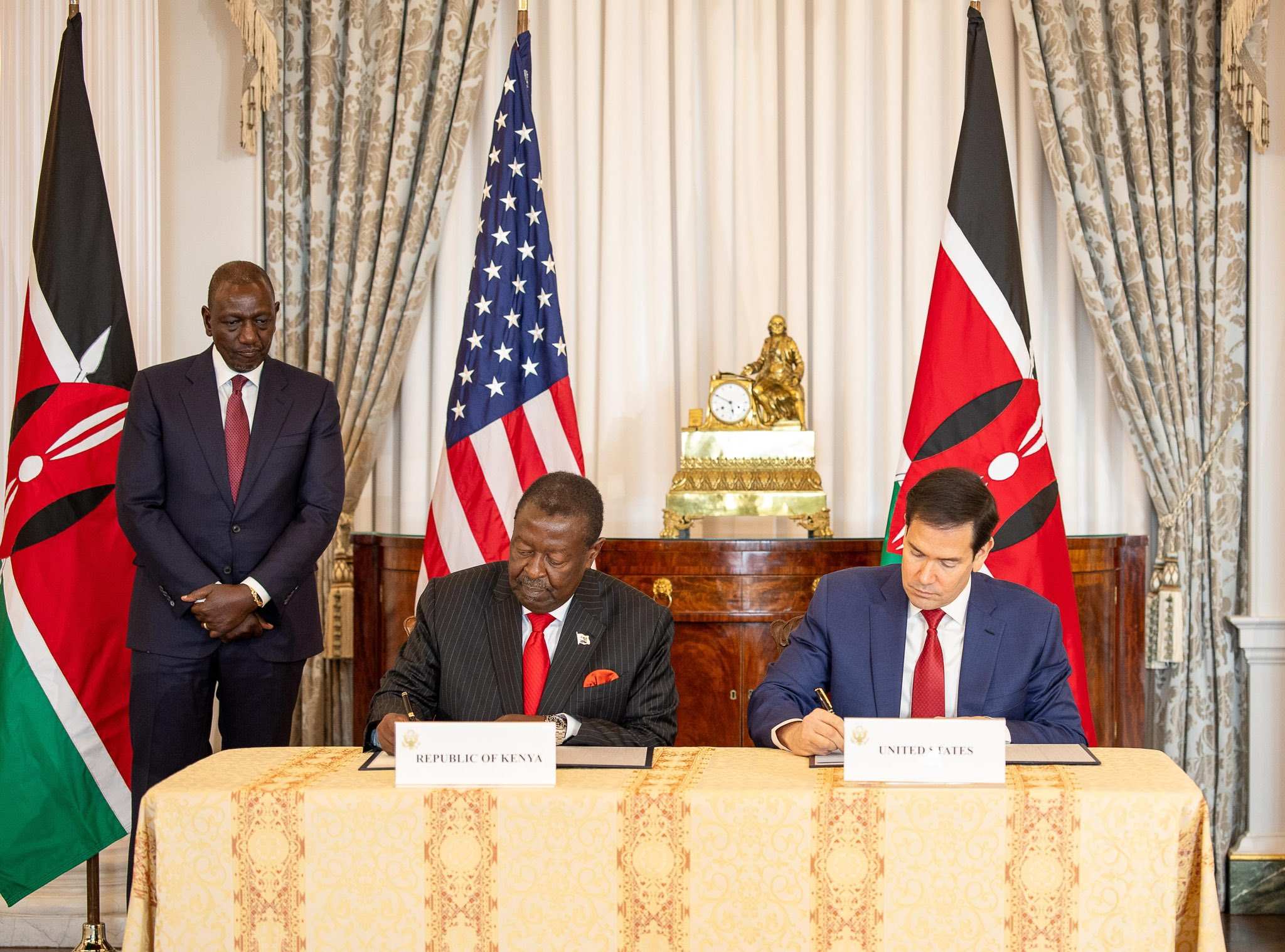
In his supporting affidavit, Omtatah states that the Framework was signed in Washington, D.C. by Kenya's Prime Cabinet Secretary and the US Secretary of State, but has never been released to the public or tabled in Parliament. He insists the court must intervene to prevent imminent violations of the Constitution.
Top Stories Today