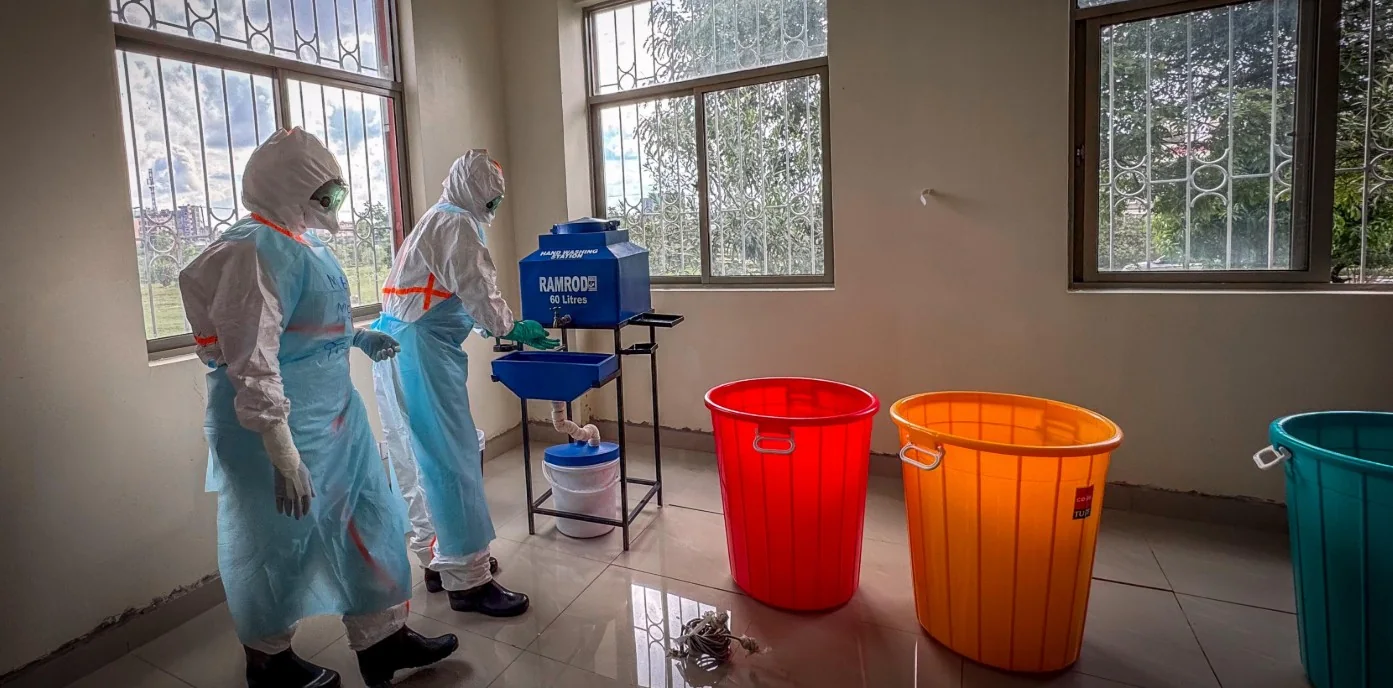
The World Health Organisation (WHO) has supplied Kenya with 1,000 Ebola personal protective equipment (PPE) kits to bolster the country’s preparedness as neighbouring states continue to report cases of the disease.
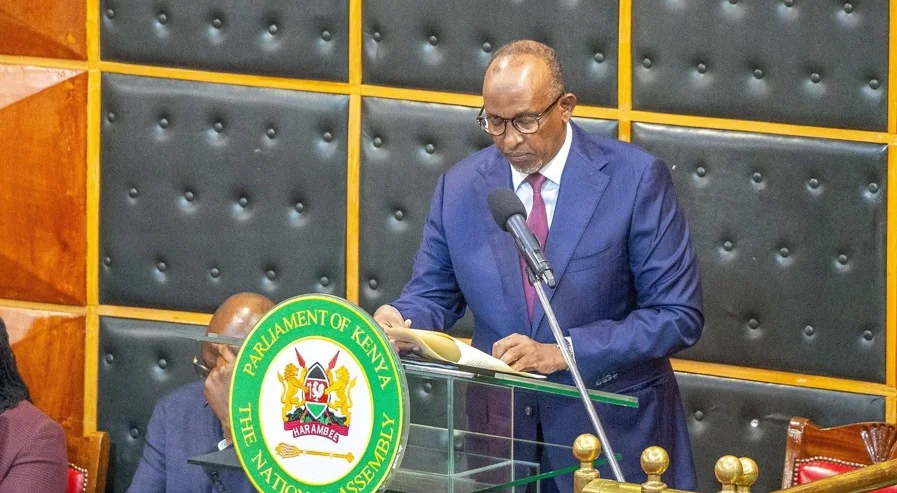
Health Cabinet Secretary Aden Duale told Parliament that the kits have already arrived in the country and are being pre-positioned in strategic facilities, including Kenyatta National Hospital (KNH), Kenyatta University Teaching, Referral and Research Hospital (KUTRRH), Mombasa, Turkana, and key high-risk points of entry.
The donation comes as Kenya intensifies surveillance, screening, and emergency response measures aimed at preventing any importation of Ebola.
According to Duale, the Ministry of Health has strengthened monitoring systems across health facilities, communities, and all points of entry nationwide.
In addition, the ministry has issued detailed advisories to all 47 counties, outlining Ebola case definitions, infection prevention and control protocols, isolation procedures, sample referral pathways, and contact tracing guidelines.
Rapid response teams have also been placed on standby for immediate deployment in the event of suspected cases.
The government has further enhanced screening at 26 official points of entry, including international airports and land border crossings.
As of June 2, 2026, a cumulative 71,243 travellers had been screened, including 2,509 within the previous 24 hours.
Authorities are paying heightened attention to travellers arriving from affected countries and other high-risk routes.
Despite the increased vigilance, Kenya has not recorded any confirmed Ebola case. Duale said the national surveillance system has investigated 22 suspected alerts from Nairobi, Kiambu, Uasin Gishu, Nyeri, Nakuru, Nyamira, West Pokot, Kisumu, and Bungoma counties—all of which tested negative. He added that three additional alerts investigated within the previous 24 hours in Nairobi, Uasin Gishu, and Bungoma also returned negative results.
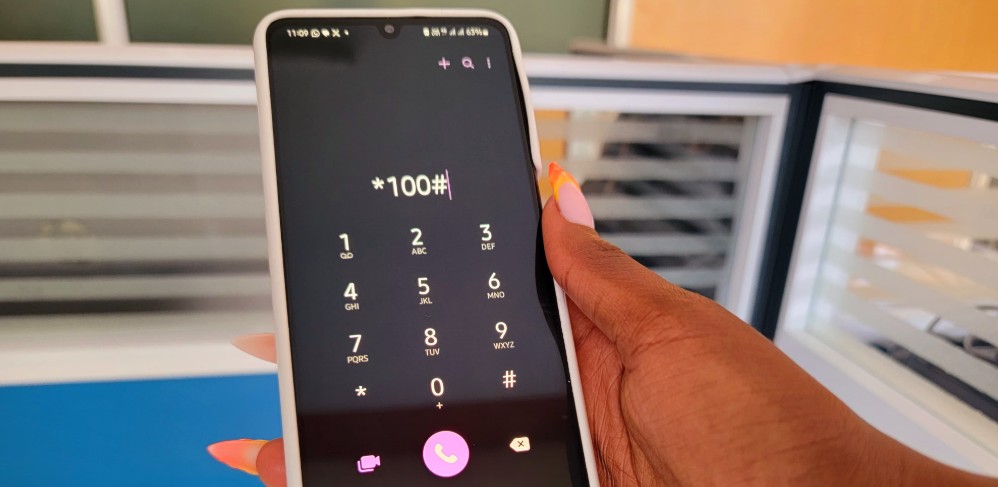
To support early detection and public awareness, the ministry has operationalised the national 719 public health hotline to enable reporting, inquiries, and dissemination of health advisories.
Public information campaigns are also being rolled out through national and county communication channels to educate citizens on Ebola symptoms, transmission risks, prevention measures, and to counter misinformation.
Duale said the government has conducted readiness assessments and continues to strengthen capacity in referral hospitals and counties considered most vulnerable.
At the national level, KNH has established an eight-bed Ebola isolation and treatment unit and completed simulation exercises on managing a potential index case.
The facility also has a dedicated waste management system for handling infectious materials. The National Police Service Hospital has prepared 49 beds that can be activated as additional isolation capacity if required.
At the county level, 29 counties have already identified designated isolation and treatment facilities.
The Ministry of Health, working with the Kenya National Public Health Institute (KNPHI) and regulatory agencies, is conducting inspections and quality assurance checks to ensure compliance with infection prevention, patient care, staff safety, and waste disposal standards.
The Health CS emphasised that these facilities are national public health assets designed to protect everyone in Kenya.
"These facilities are part of Kenya's national public health preparedness architecture and are intended to protect all persons within the territory of Kenya," he said.
On workforce preparedness, the ministry has mapped a surge capacity of 241 expert responders, including 51 Field Epidemiology and Laboratory Training Programme graduates, 118 African Volunteer Health Corps professionals, and 72 public health emergency management specialists. These teams remain on standby for surveillance, contact tracing, laboratory investigations, and outbreak response.
Additionally, 1,069 healthcare workers from both national and county governments have undergone virtual training on Ebola preparedness and response.
On-site training and simulation exercises have already been conducted in Busia, where 60 health workers were trained, with similar exercises planned for Turkana and Trans Nzoia counties.
A national tabletop simulation exercise is scheduled for June 15–18 to test coordination, referral systems, laboratory capacity, and emergency response mechanisms.
The ministry has also activated preparedness measures across all major response pillars, including coordination, surveillance, laboratory diagnostics, case management, infection prevention and control, logistics, risk communication, and regional collaboration.
Four laboratories have been designated for Ebola testing: the National Public Health Laboratory, KEMRI Nairobi, KEMRI Kisumu, and a mobile laboratory deployed in Busia, which is expected to significantly reduce turnaround times in high-risk border areas.
However, Duale warned that current stocks of specialised test kits, reagents, and protective equipment are sufficient for only about 200 suspected cases, highlighting the need for additional funding and partner support.
The ministry has activated the National Incident Management System and continues to hold regular coordination meetings with counties, government agencies, and development partners. A national Ebola preparedness and response plan has also been developed to guide interventions and strengthen accountability.
Kenya is also enhancing regional cooperation with Uganda, the Democratic Republic of Congo, and international partners, including the WHO, Africa CDC, IGAD, the East African Community, the International Organisation for Migration, and the United States Centres for Disease Control and Prevention.
Duale reiterated that Kenya remains Ebola-free but warned that ongoing outbreaks in neighbouring countries require sustained vigilance.
"Our surveillance systems are active, our laboratories are functional, our rapid response teams are on standby, and our health workers are being trained. We are taking every necessary step to protect Kenyans and prevent the importation of Ebola into the country," he said.






























Comments
Sign in with Google to comment, reply, and like comments.
Continue with Google