A young Kenyan wakes up and checks her smartwatch. Before breakfast, the device has already recorded her heart rate, sleep quality, movement patterns, stress levels, and location data.
Later in the day, she visits a clinic where her diagnosis, laboratory tests, prescriptions, and treatment records are entered into a digital health system.
If she is enrolled in a national health insurance scheme, additional records are generated. If she uses fitness applications or participates in public health programmes, another layer of data is added.
Individually, these are routine interactions. Collectively, they form one of the most valuable resources in the modern world: health data.
Increasingly, governments, pharmaceutical companies, technology firms, artificial intelligence developers, insurers, and foreign powers are competing to access it, marking a quiet global scramble for a new strategic resource.
For decades, Africa’s value was defined by oil reserves, agricultural land, gold deposits, cobalt mines, and rare earth minerals. But a new resource is emerging: data, more specifically, health data.
Changes in global health engagement
For more than two decades, African countries have shared health data through global programmes targeting HIV/AIDS, tuberculosis, malaria, polio, and epidemic preparedness.
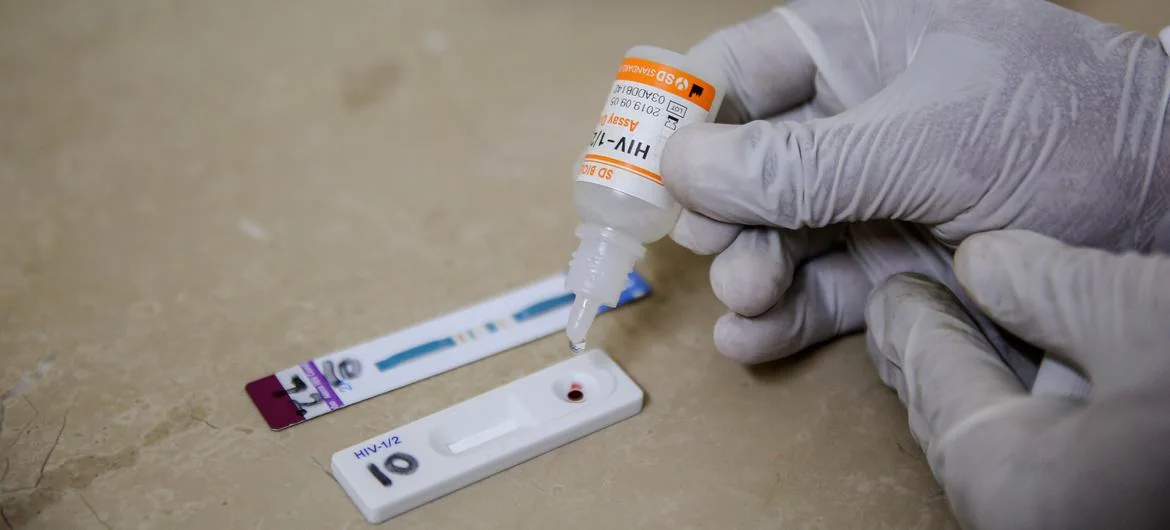
Through initiatives such as PEPFAR, CDC-supported surveillance systems, WHO reporting networks, and global health security programmes, countries routinely provide epidemiological reports, laboratory results, disease surveillance data, pathogen samples, and increasingly genomic sequencing information.
In Kenya, Uganda, Zambia, Tanzania, and other countries, donor-supported health information systems have become central to outbreak monitoring and disease control. Data sharing is therefore not new.
What has changed is the strategic and political framing of that data.
In September 2025, the United States unveiled the America First Global Health Strategy, placing disease surveillance, laboratory networks, pathogen sequencing, outbreak monitoring, and long-term data-sharing arrangements at the centre of its global health engagement.
Unlike earlier frameworks focused on humanitarian cooperation, the new strategy explicitly links global health to national security, economic interests, and domestic protection. The strategy states that the US will strengthen global surveillance systems to detect disease threats.
It proposes expanding laboratory networks, integrating health information systems, increasing genomic sequencing, and deploying US health personnel in countries hosting American diplomatic missions, with higher staffing in perceived high-risk regions.
Kenya’s role
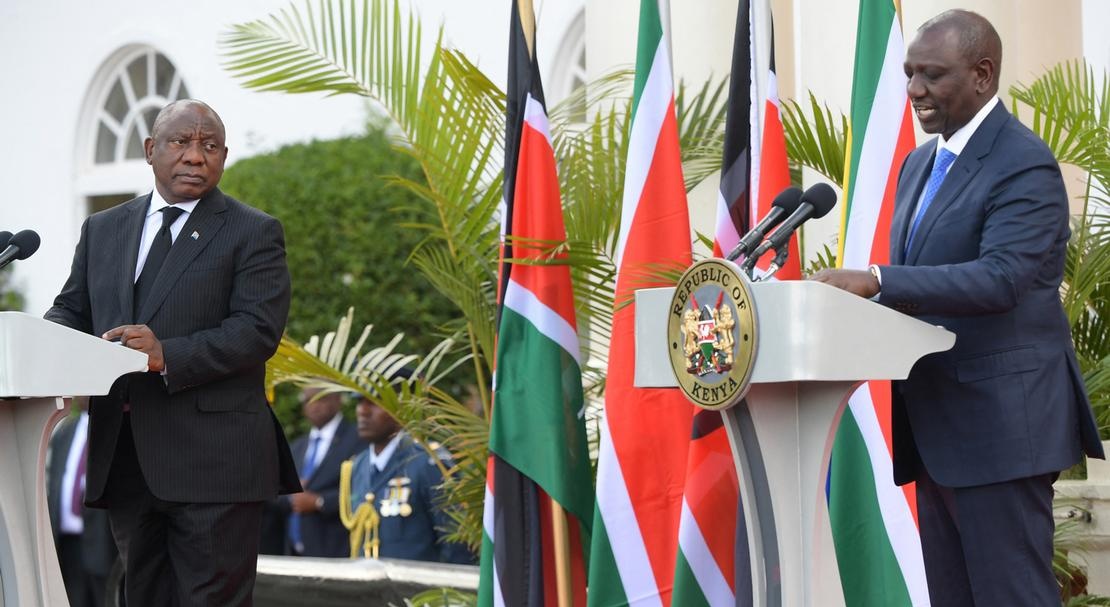
Three months later, Kenya became the first African country to sign a bilateral agreement under this framework, signed in Washington by President William Ruto and US Secretary of State Marco Rubio.
However, the agreement was later suspended by courts following petitions arguing that it violated constitutional safeguards on sensitive medical and epidemiological data.
Supporters argue the model reflects lessons from Ebola and COVID-19, where early detection and cross-border surveillance were essential.
Critics, however, raise deeper questions about data sovereignty, ownership, storage, and benefit-sharing, especially where African-generated data contributes to vaccines, diagnostics, AI tools, or commercial health products abroad.
This raises a central question: If surveillance systems are designed primarily to protect American populations, what guarantees ensure African countries receive equal access, influence, and benefit from the data they generate?
Surveillance strategy and its implications
The America First Global Health Strategy explicitly states that protecting Americans begins outside US borders. It proposes placing the US health personnel in every country hosting a diplomatic mission and expanding surveillance capacity in outbreak-prone regions.
It calls for integrated monitoring systems, genomic sequencing, and structured data-sharing arrangements to detect threats early.
The US government also signals interest in outbreak information, pathogen samples, and genomic data during response operations.
To policymakers, this is preventive health security. To critics, it raises concerns about biological sovereignty and control over health intelligence generated in developing countries.
What counts as health data today
Health data now extends far beyond hospital records. It includes medical diagnoses, prescriptions, laboratory results, vaccination history, genomic information, sleep patterns, fertility data, mental health indicators, physical activity, geolocation history, shopping behaviour, and broader social determinants of health.
Increasingly, health data is not just about treatment; it is about prediction and behavioural forecasting.
Health data is uniquely powerful because it cannot be changed once exposed and reveals long-term biological vulnerabilities and behavioural patterns.
It is valuable to:
pharmaceutical companies (drug discovery)
AI developers (model training)
insurers (risk modelling)
governments (outbreak detection)
tech firms (behavioural analytics)
public health agencies (disease surveillance)
universities (research and genomics studies)
cloud computing providers (data storage and processing infrastructure)
military and national security planners (biosecurity -bioweapons and threat intelligence)
Health data has therefore become strategic infrastructure. A McKinsey Health Institute report estimates that closing women’s health gaps alone could add $1 trillion annually to global GDP by 2040, highlighting its economic significance. However, experts warn that reproductive and biometric data remain among the most sensitive categories requiring strict safeguards.
Geopolitics of health data
The United States is expanding surveillance-linked health cooperation, while China is increasing health infrastructure and digital systems investment across Africa.
Health systems are increasingly becoming arenas of geopolitical competition, where data is as strategic as physical infrastructure.
Health datasets reveal population vulnerabilities, disease patterns, and biological characteristics. In the age of artificial intelligence and biotechnology, this information carries strategic value.
Most experts do not argue that current surveillance systems are designed for harm. However, they stress that governance mechanisms must keep pace with rising data value. The more valuable the data becomes, the stronger the incentive to access it.
The new scramble
Kenya is a regional leader in digital health innovation, with expanding electronic medical records, health insurance digitisation, and digital identity systems supported by the Data Protection Act.
However, challenges remain in enforcement, cloud governance, cross-border transfers, and public awareness.
More critically, Kenya reflects a policy–strategy gap in emerging technologies.
The country has a National Artificial Intelligence Strategy (2025–2030), but lacks a fully developed AI law or a comprehensive regulatory framework governing AI deployment in sensitive sectors such as health. Leaving this gap for exploitation by foreigners using AI to collect data from miles away.
A Kenya Artificial Intelligence and Emerging Technologies Policy only began development in late 2025, after the strategy was launched, revealing a sequencing gap between ambition and regulation.
Critics warn that as AI adoption accelerates, governance risks lag behind innovation, enabling opaque data practices, weak accountability, and potential cross-border exploitation of sensitive datasets.
The America First Global Health Strategy signals a shift where surveillance, sequencing, and data systems are central to global health security.
For African countries, the challenge is no longer participation, but is power within our system, or we are still following outsider rules.
The question is no longer whether health data has value. It is who controls it, who benefits from it, and who defines its rules.
For decades, Africa was central to the global scramble for minerals and oil. In the years ahead, it may again be central, this time for something even more valuable: data.








































Comments
Sign in with Google to comment, reply, and like comments.
Continue with Google