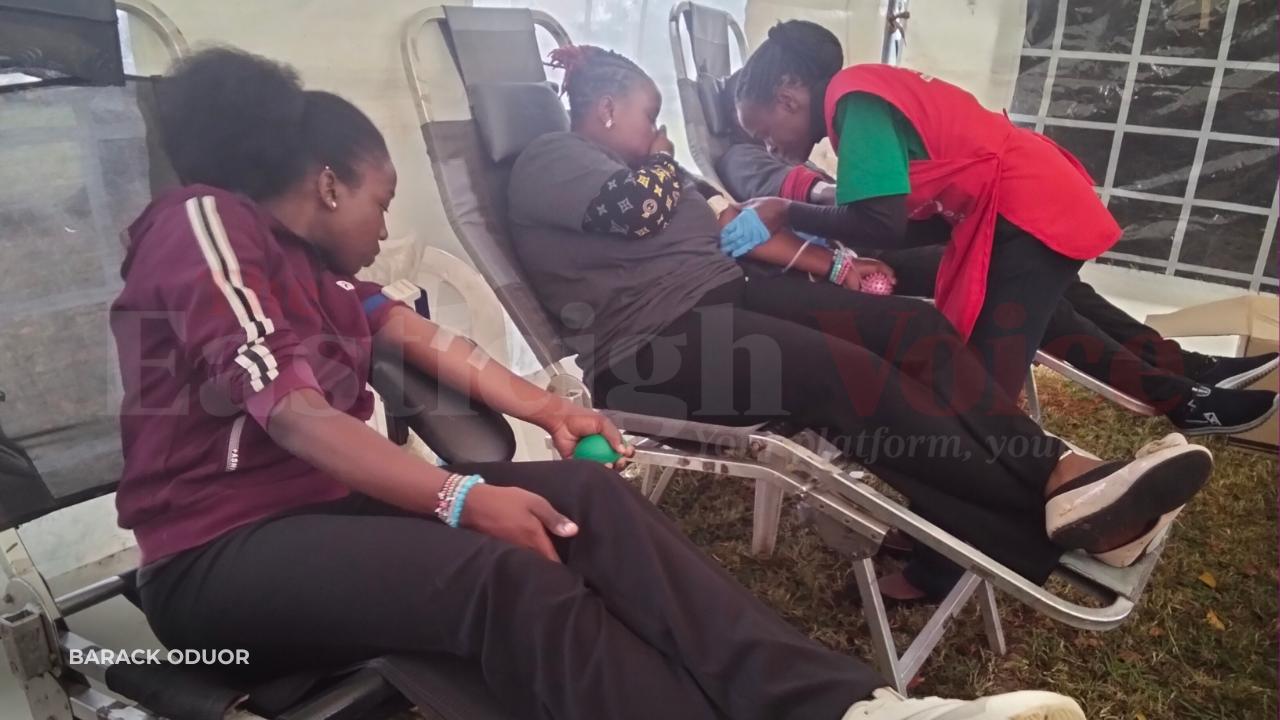
Blood donation continues to face major setbacks in Kenya as myths, misconceptions and limited awareness discourage many people from becoming donors, despite the lifesaving role donated blood plays in hospitals every day.
From fears of weakness and fainting to beliefs that the body may not have enough blood to spare, many people avoid donating because of assumptions rather than medical facts.
Health experts warn that these misconceptions contribute to persistent blood shortages that put patients' lives at risk.
For 35-year-old Edward Njoroge, donating blood has never felt like an option.
Not because he has ever been diagnosed with a medical condition, experienced complications or been advised against it, but because of a belief he has held for years: that his body may not have enough blood.
“I know people donate blood, but I have never done it, and I’m not sure I want to,” he says. “I don’t think I have enough blood in my body. I worry that if I donate, I may become weak.”
Edward has never undergone a blood transfusion and admits that most of what he knows about blood donation comes from stories shared by others rather than advice from health professionals.
His fears are not unique.
For Aisha Abdulla, blood donation is something she believes should largely be left to men.
The mother of two says she has always assumed that women lose too much blood through menstruation and therefore should avoid donating.
“I have never donated because I believe women already lose blood every month,” she says. “I feel like if I donate more, my body will not have enough.”
Beyond concerns about blood loss, Aisha says she has heard frightening stories from friends and neighbours.
“I hear people faint after donating blood. Some people say others collapse, and some even die, and that scares me,” she says.
Such beliefs continue to shape attitudes toward blood donation in many communities, where information is often passed through rumours, personal experiences and social conversations rather than verified medical advice.
Yet health professionals say the human body naturally replaces donated blood over time, and donors are carefully screened before any donation takes place to ensure the process is safe for both the donor and recipient.
As demand for blood rises due to emergencies, childbirth complications, surgeries, cancer treatment and chronic illnesses, experts say addressing fear and misinformation may be just as important as expanding blood collection campaigns.
For many people, the barrier is not a lack of willingness to help but uncertainty, fear and long-held misconceptions about what happens after giving blood.
According to Dr Esther Mwaura, blood donation in Kenya is governed by strict medical screening procedures designed to protect both donors and recipients, yet misconceptions continue to discourage many people from participating in what is often a lifesaving act.
“There is a clear qualification process before anyone donates blood,” she explains. “We check haemoglobin levels, weight, blood pressure, blood sugar, age, and general health. These are safety measures, not barriers.”
She adds that potential donors are also assessed for recent illnesses, surgeries, ongoing infections and certain medications that may temporarily disqualify them until they have fully recovered.
“A person who has had recent surgery, an active infection, or is on specific medication may be asked to wait. This is to ensure the donation process does not put them at risk,” she says.
Dr Mwaura notes that in Kenya, eligible donors are generally adults aged between 18 and 60 years, although healthy younger adults may also qualify under specific guidelines. She emphasises that a person's overall health matters far more than misconceptions about "having enough blood."
One of the most common questions among potential donors is how often blood can be safely donated.
“For whole blood donation, men can typically donate after every three months, while women are usually advised to wait about four months,” she explains. “This allows the body enough time to fully replenish blood cells and iron stores.”
She stresses that the body naturally replaces donated blood within a few weeks, while iron stores take longer to recover, hence the recommended intervals between donations.
Dr Mwaura says blood remains one of the most critical yet irreplaceable medical resources. It is essential in emergency care, surgeries, cancer treatment, childbirth complications, trauma cases, severe anaemia and chronic illnesses such as sickle cell disease.
“Blood cannot be manufactured in laboratories,” she says. “It can only come from voluntary donors. That is why every donation is valuable.”
She notes that a single donation can save up to three lives because blood is separated into components, including red cells, plasma and platelets, each used to treat different medical conditions.
Despite its importance, fear continues to discourage many potential donors. Some believe they will become weak, faint or develop long-term health problems after donating.
Dr Mwaura dismisses these concerns, explaining that the process is medically controlled and safe.
“Healthy individuals do not lose strength from donating blood. The body quickly replaces the donated volume, and donors are monitored throughout the process,” she says.
She adds that fainting is rare and is usually linked to anxiety, dehydration or failure to eat before donation rather than the donation process itself.
“Most reactions are mild and preventable. Proper preparation, like eating well and staying hydrated, reduces discomfort significantly,” she explains.
Another major requirement is haemoglobin (HB) level, which indicates whether a person has enough red blood cells to donate safely.
Normal haemoglobin ranges vary by gender, with women generally expected to have levels between 12 and 16 g/dL and men between 13 and 18 g/dL.
“If the haemoglobin is within a healthy range, it shows the body is producing enough blood cells and can safely handle donation,” Dr Mwaura says.
She cautions, however, that unusually high haemoglobin levels can also signal health concerns such as dehydration or underlying medical conditions that may require further evaluation.
Despite medical clarification, myths remain deeply rooted in communities. Some people believe women should not donate because of menstruation, while others fear that giving blood permanently reduces blood levels in the body.
Health experts say these beliefs are not supported by science and continue to contribute to blood shortages in hospitals across Kenya.
“We are not short of willing people; we are short of correct information,” Dr Mwaura notes.
Kenya continues to experience periodic blood shortages, particularly during emergencies, road accidents, maternal complications and surgical procedures. Hospitals often rely on voluntary donors to meet urgent demand.
Experts say increasing public awareness could significantly improve donation rates and save thousands of lives each year.
“Blood donation is not just a medical procedure; it is an act of solidarity,” Dr Mwaura says. “When people understand the facts, fear reduces, and more lives are saved.”
Kenya continues to face a significant gap between the demand and supply of blood, with national figures showing persistent shortages despite ongoing donation drives and health sector reforms.
According to data from the Kenya National Blood Transfusion Service (KNBTS), the country requires approximately 400,000 to 500,000 units of blood annually to meet clinical needs arising from emergencies, surgeries, maternal complications and chronic conditions such as sickle cell disease.
However, collection levels have consistently fallen short of this target, meeting only about 60 to 70 per cent of national demand and leaving a substantial deficit that affects hospitals across the country. Earlier assessments have shown that Kenya has, at times, met as little as 30 per cent of its blood requirements, highlighting the long-standing nature of the challenge.
Health officials attribute the shortfall to low donor turnout, persistent myths about blood donation, logistical challenges in collecting and distributing blood in rural areas, and occasional disruptions in testing and storage systems. As a result, hospitals often rely on emergency appeals and replacement donations from patients' relatives.
The Kenya National Blood Transfusion Service continues to advocate for increased voluntary and repeat blood donations, which experts say are critical to stabilising the national blood supply and reducing preventable deaths caused by delayed transfusions.
The World Health Organisation (WHO) says voluntary, unpaid blood donation is essential for saving lives and maintaining safe blood supply systems.
According to WHO, blood is needed for emergencies, surgeries, childbirth complications, cancer treatment and blood disorders. One donation can be separated into components and save multiple lives.
The organisation urges people to donate regularly because blood products have a limited shelf life and stresses that voluntary donors remain the safest source of blood.

























Comments
Sign in with Google to comment, reply, and like comments.
Continue with Google