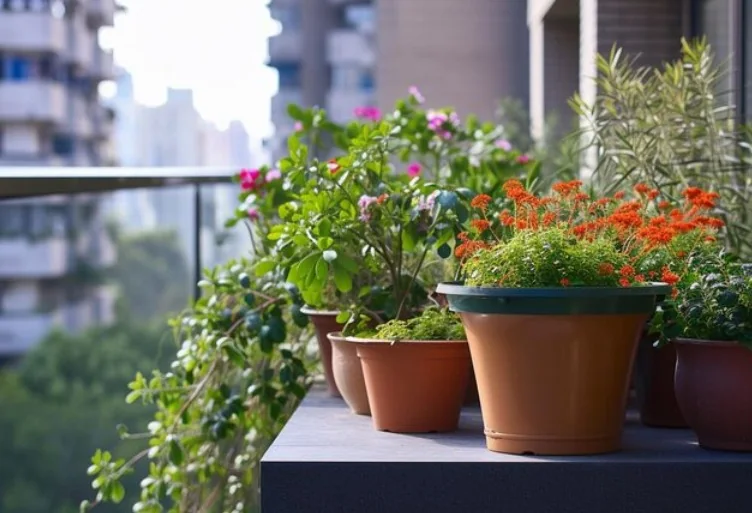
Balcony gardening has become one of the simplest ways to reconnect with nature, especially in urban spaces where land is limited.
A small balcony can transform into a calming green retreat or even a productive mini farm for herbs and vegetables. But while it looks easy on social media, successful balcony gardening depends on understanding how your specific space behaves.
Here are ten essential things to understand before you begin:
1. Your balcony has its own climate
Every balcony behaves like a micro-environment. But more importantly, the direction your balcony faces matters a lot.
A south-facing balcony will receive strong, direct sunlight for most of the day, while an east-facing one gets softer morning light, and a west-facing balcony may experience intense afternoon heat.
North-facing balconies are often more shaded and suitable for low-light plants. Before choosing anything, observe not just the light, but how the direction of your balcony shapes it.
2. Containers are not just pots
In balcony gardening, containers replace natural ground soil, which means they play a much bigger role than most beginners realise.
Drainage, depth, and material all influence plant health. A pot that looks beautiful but retains too much water or overheats quickly can quietly damage roots over time.
3. Wind is an invisible stress factor
Unlike ground gardens, balconies, especially on higher floors, are exposed to constant airflow.
Wind can dry out soil faster, stress delicate leaves, and even destabilise pots. Many beginners underestimate this until plants start wilting or breaking unexpectedly.
4. Soil is the foundation of everything
Unlike outdoor gardens, where soil is part of a larger ecosystem, balcony plants depend entirely on the soil you provide.
A good potting mix is not just “dirt”, but a carefully balanced medium that holds moisture while allowing air to reach the roots. Without this balance, even healthy plants will slowly decline.
5. Watering is about rhythm, not routine
One of the biggest mistakes in container gardening is watering on a fixed schedule.
Balcony plants do not follow calendars; they respond to heat, wind, pot size, and sunlight. Some days the soil dries quickly, other days it stays moist longer. Learning to read the soil becomes more important than following strict routines.
6. Small beginnings lead to better results
A common beginner mistake is trying to turn the balcony into a full garden immediately. Starting with too many plants often leads to confusion and neglect.
A small number of plants allows you to understand your environment properly before expanding gradually. Also, do more research about the plants you are using in your garden before you get the seeds.
7. Some plants are designed for beginners
Not all plants demand the same level of care. Herbs like mint and basil, leafy greens like spinach, and hardy plants like aloe vera tend to adapt easily.
Starting with resilient plants helps build confidence and reduces early disappointment.
8. Weight is a silent limitation
Balconies have structural limits that are easy to overlook. Soil becomes heavy when wet, and multiple pots can add a significant load over time.
This is not just a gardening consideration but also a safety one, especially when using large containers or water trays.
9. Feeding plants is non-negotiable
Because container soil has limited space, nutrients get used up quickly. Fertilising is not optional; it is part of maintenance.
However, balance is important. Too little feeding slows growth, while too much can damage roots or burn plants.
10. Gardening is a process of learning, not perfection
Perhaps the most important lesson is that balcony gardening is not about getting everything right immediately. Some plants will fail, others will surprise you.
Over time, you begin to understand light patterns, watering needs, and plant behaviour in your specific space. Experience becomes your best tool.
A balcony garden is not built in a day. It evolves slowly as you learn how your environment behaves and how your plants respond.
With patience and observation, even the smallest space can become a living system that grows with you, quiet, productive, and deeply rewarding.


















































Comments
Sign in with Google to comment, reply, and like comments.
Continue with Google