The United Nations (UN) has released new guidelines to strengthen the protection of journalists working in armed conflicts.
Authored by UN Special Rapporteur for Freedom of Opinion and Expression Irene Khan, the guidelines note that journalists continue to show extraordinary courage in conflict zones worldwide, fulfilling the public’s right to know, promoting truth and justice, and enabling public debate for political action.
To preserve their role of informing the public amid heightened risks, the document stresses the imperative of reinforcing journalist protection and safety.
The guidelines draw on Khan’s research, reports, consultations with legal experts, civil society, international organisations, media groups, and testimony from journalists and media workers with direct experience in armed conflicts across different regions.
She begins by outlining the challenges journalists face in conflict zones, including threats and attacks from factions they expose. The guidelines note that parties to conflicts often seek to control narratives and information spaces to advance their objectives.
Journalists are further endangered by impunity, which breeds contempt for the rule of law and fuels attacks. Data shows fewer than two in ten killings of journalists are ever investigated and prosecuted globally.
They also face surveillance, arrest, and detention. In detention, many have endured torture, cruel and degrading treatment, enforced disappearances, and even death.
The first guideline expands the definition of journalism to include professional reporters, analysts, bloggers, and others engaged in self‑publication, as well as media workers and support staff.
It states that during armed conflicts, States are obliged to respect and protect journalists under both International Human Rights Law (IHRL) and International Humanitarian Law (IHL). Obligations include not harming journalists, not impeding their work, and protecting them from attacks by State or non‑State actors.
The document clarifies that journalists only lose civilian protection under IHL if they directly participate in hostilities. “Journalistic activities do not constitute direct participation in hostilities,” it asserts.
The guidelines further stipulate that journalism must not be conflated with espionage, and accusations of espionage against journalists must be thoroughly investigated with due process.
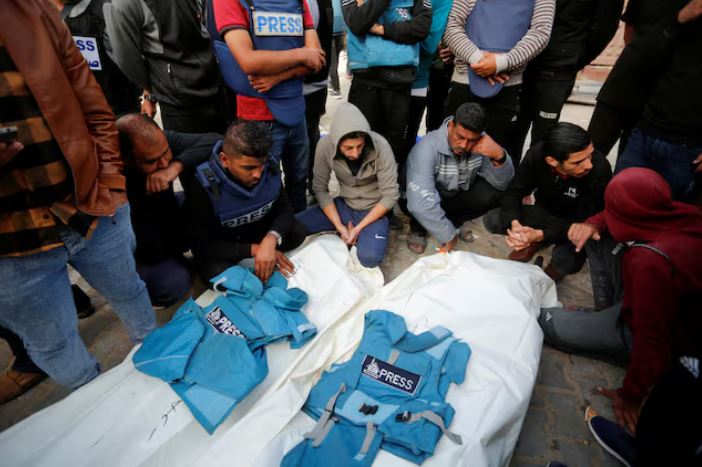
It adds that “PRESS” markings on vehicles, clothing, or equipment, and press identity cards are practical means of identification. However, whether or not journalists use such markings, they remain protected as civilians under IHL, and in cases of doubt, parties must respect the presumption of civilian status.
Journalists embedded with or accredited by armed forces also remain civilians. In international armed conflicts, those authorised to accompany armed forces who fall into the hands of the adverse party are entitled to prisoner‑of‑war status.
The document lists media facilities, equipment, and other professional objects as protected civilian property under IHL, which must not be attacked. It cautions against detaining journalists solely for carrying out their professional duties.
If detained, captured, or otherwise under the power of an opposing party, journalists are entitled to fair trial standards under international human rights law and fundamental guarantees under IHL. “Under certain conditions, they may benefit from more favourable treatment under International Humanitarian Law,” the document adds.
The guidelines also stress that States must avoid vaguely defined criminal offences, including counter‑terrorism laws, that unlawfully restrict journalists’ freedom of expression.
States are further obligated to ensure that surveillance measures, online, offline, or of open sources, comply fully with international legal standards. They must also respect the confidentiality of journalists’ sources, including whistleblowers, during armed conflicts.


















Comments
Sign in with Google to comment, reply, and like comments.
Continue with Google