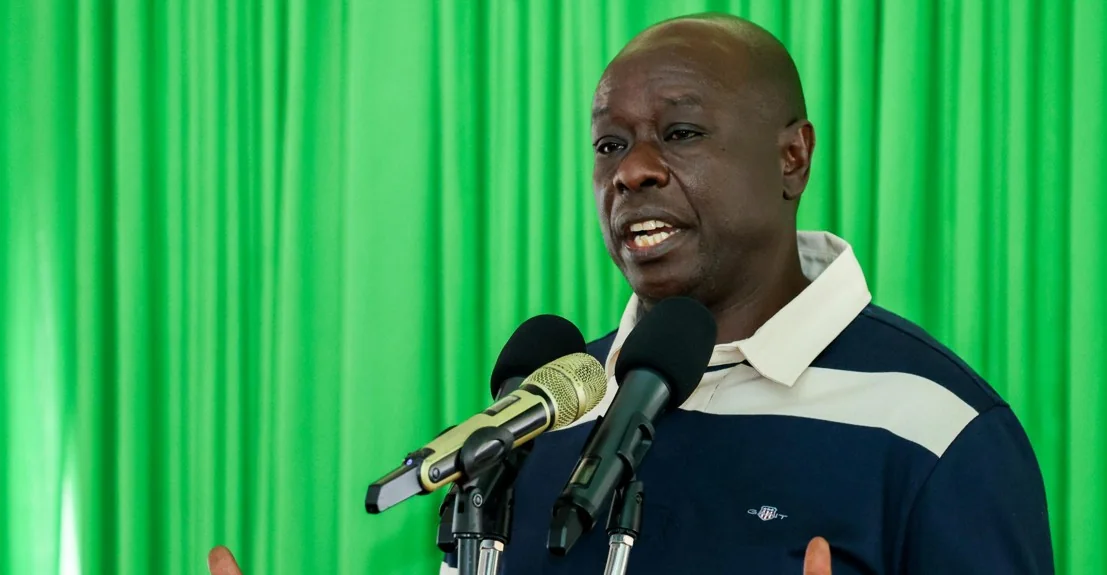
President William Ruto has dismissed reports that the newly signed Finance Act 2026 introduces fresh taxes on land, M-Pesa transactions, bottled water, mobile phones and second-hand clothes, saying the law is aimed at improving tax compliance and closing loopholes rather than increasing the burden on ordinary Kenyans.
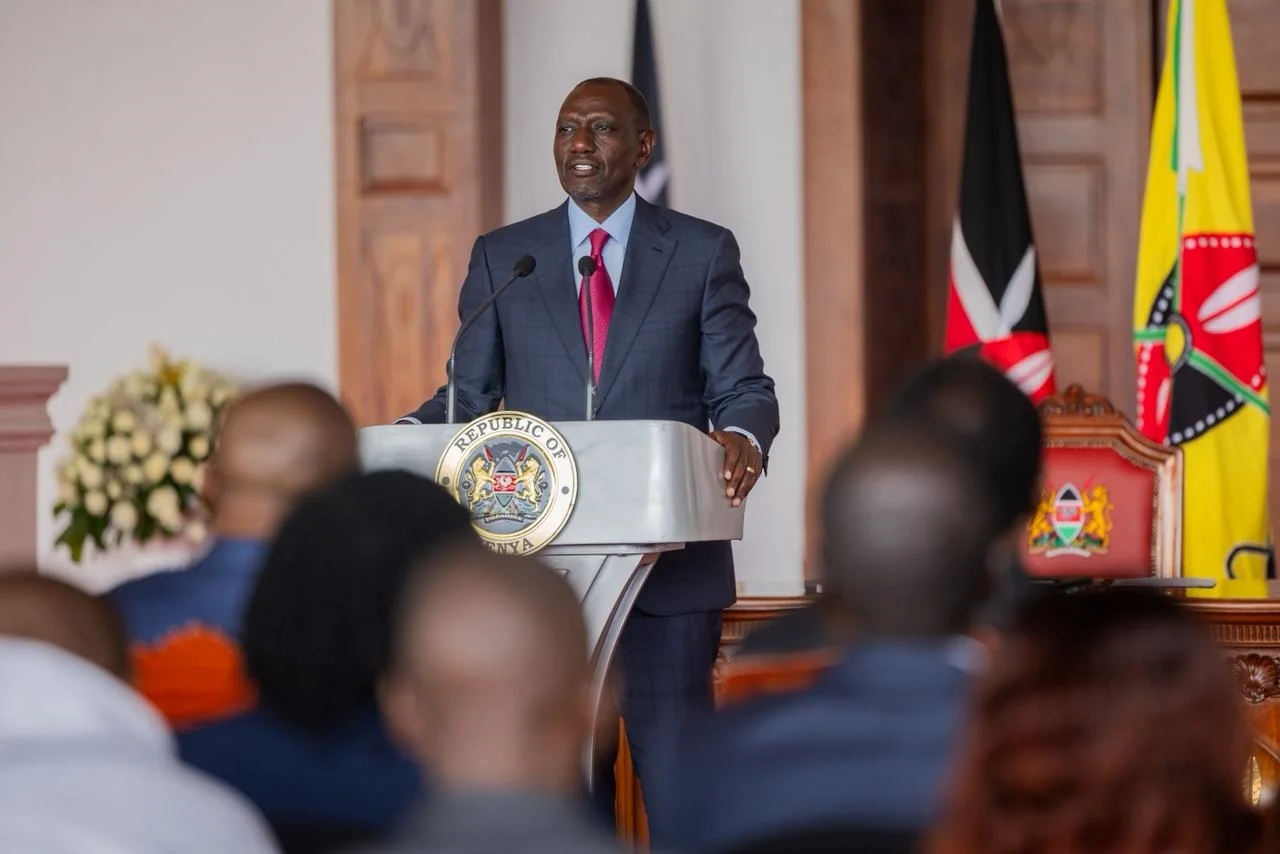
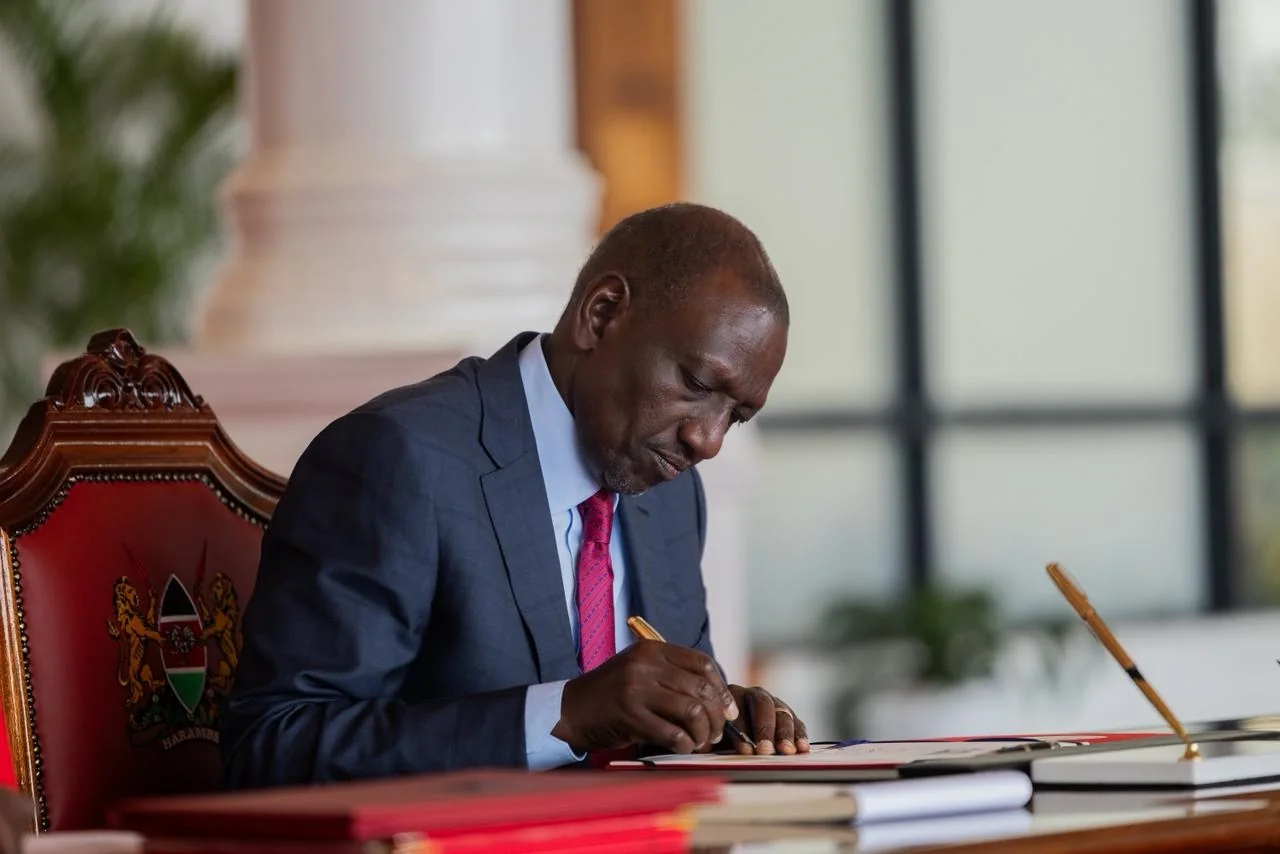
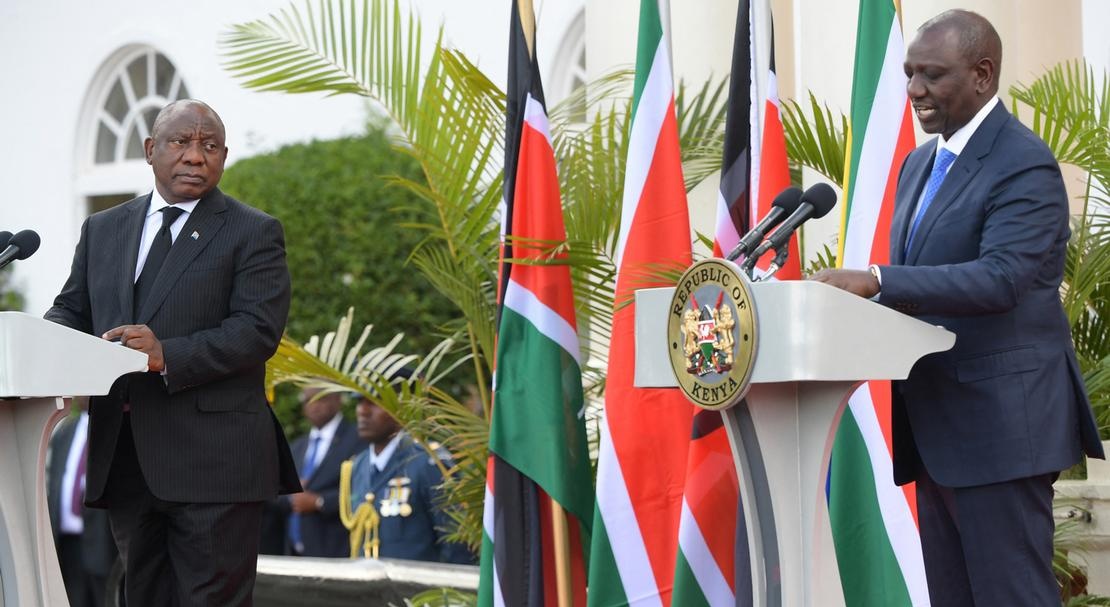
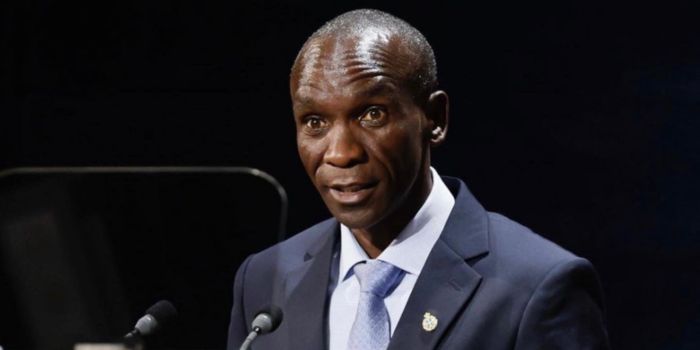
Speaking on Tuesday at State House, Nairobi, after signing the Finance Bill 2026 into law, Ruto said the legislation gives the government the legal framework and resources needed to implement its priorities under the Bottom-Up Economic Transformation Agenda.
He noted that the budget was designed to serve ordinary Kenyans, including farmers, boda boda riders, traders, entrepreneurs, students and young people.
“Budget is more than an accounting exercise. It is a statement of national priorities. This government serves the ordinary people, the farmers, the boda boda riders, the Mama mbogas, the workers, the entrepreneurs, students, and every young person striving for a better future,” he said.
He added that Parliament conducted extensive public participation before passing the Finance Bill, receiving submissions from more than 170 organisations and over 100,000 citizens through physical and digital platforms.
He maintained that the Act does not introduce new taxes on ordinary citizens.
“Let me state clearly, this law does not raise taxes on ordinary Kenyans. Instead, it improves fairness by strengthening compliance, closing loopholes, and ensuring that every person and business pays what is lawfully due. We are pursuing tax avoidance, not taxpayers, offshore schemes, not ordinary wages and leakages, not livelihoods,” Ruto said.
The President dismissed claims that the government had proposed taxes on land, mitumba, rental income, bottled water, mobile money, mobile phones, airtime, data and locally manufactured packaging.
“Contrary to propaganda, misinformation, disinformation, and fake news, the government did not propose any taxes that were largely alleged. Specifically, there was no proposal to introduce taxes on freehold land or any land for that matter. There was no proposal to introduce taxes on second-hand clothing or mitumba; there was no change to the rental income tax regime as alleged. There was no proposal to introduce tax on bottled water,” he said.
“There is no new tax on M-Pesa or mobile money; the money you send to your family, your business, or your friends will move tomorrow as it has always done. There is no new tax on mobile phones, airtime, or data, there is no new tax on locally manufactured packaging used for essential products.”
He said the Act introduces incentives for motorcycles, electric buses, electric bicycles, solar batteries and locally assembled mobile phones. It also raises import duty on sugar from Sh7.50 to Sh40 per kilogram to protect local producers.
According to Ruto, the law includes a six-month tax amnesty that will waive penalties and interest on outstanding tax obligations, while mortgage tax benefits have been extended to borrowers from registered microfinance institutions.
The duty-free allowance for gifts and personal effects carried by returning travellers has also been increased from Sh39,000 to Sh260,000.
He added that projects undertaken through public-private partnerships and the National Infrastructure Fund will benefit from reduced taxes, lower implementation costs and improved efficiency.
“This is what a fair tax system looks like, one that protects the vulnerable, rewards enterprise, promotes compliance, and shares responsibility fairly. The true measure of a budget is not what it collects, but what it makes possible. This budget invests in people, productivity and prosperity,” he said.
Ruto said education remains a key priority, with Sh784 billion allocated to the sector, up from Sh526 billion in 2022. He announced that 20,000 teachers on contract will be moved to permanent and pensionable terms, while another 24,000 teachers will be recruited, bringing the total hired under his administration to 124,000.
The Higher Education Loans Board will receive Sh56.7 billion, while Sh40.4 billion has been set aside for university, KMTC and TVET scholarships and Sh6.6 billion to clear lecturers’ arrears.
Funding for secondary education and junior school capitation has risen to Sh84.6 billion, with additional allocations for free primary education, examinations, school feeding and STEM education.
In health, funding has increased from Sh132 billion to Sh175.5 billion, including Sh19.1 billion for primary healthcare. Ruto warned hospitals against charging patients for outpatient services covered under the Social Health Authority, saying such charges would soon become a criminal offence.
The government has also increased funding for community health promoters, KEMSA and medicine supplies, with Ruto promising to address shortages in health facilities.
Agriculture funding has risen to Sh63 billion, including Sh20 billion for seed and fertiliser subsidies, maintaining fertiliser prices at Sh2,500 per 50-kilogram bag. The budget also provides support for sugar and coffee farmers, livestock programmes, pastoralist communities, dairy value addition and county aggregation parks.
Ruto said nearly Sh110 billion will support women, youth and grassroots programmes, including Sh22.6 billion for youth initiatives, Sh12.4 billion for the National Youth Service, Sh8.8 billion for small businesses and Sh5.3 billion for the Nyota programme.
The government has also allocated Sh25 billion for cash transfers to 1.2 million vulnerable households, alongside funding for orphans, persons with disabilities, girls’ education and village elders.
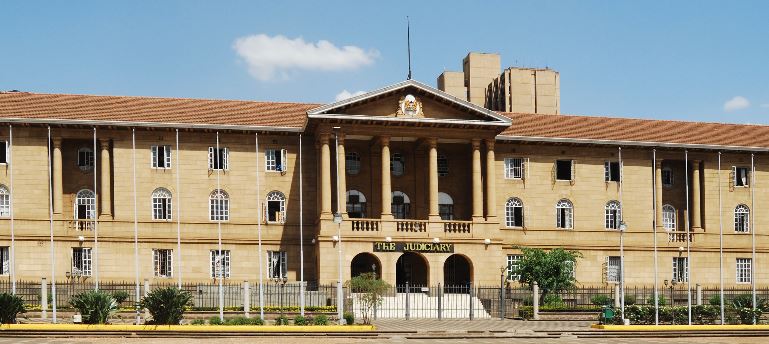
Funding for the Judiciary has increased from Sh16 billion in 2022 to Sh30 billion, while affordable housing and urban development will receive Sh138 billion. Roads have been allocated Sh225 billion, and transport infrastructure Sh52 billion.
President William Ruto signed the Finance Bill 2026 into law, giving the National Treasury the legal authority to collect revenue and implement the Sh4.8 trillion budget for the 2026/27 financial year from July 1.
























Comments
Sign in with Google to comment, reply, and like comments.
Continue with Google