A new report by Amnesty International has again confirmed that the Rapid Support Forces (RSF) committed crimes against humanity and ethnic cleansing during its campaign to seize El Fasher in North Darfur state in Sudan.
Dubbed "City Under Siege, Children Under Fire: Rapid Support Forces’ Crimes Against Humanity in North Darfur", the report documents how civilians in and around El Fasher were killed, injured, beaten, tortured and detained between early 2024 and October 2025 as the RSF fought the Sudanese Armed Forces (SAF) and allied Joint Forces in a war that devastated North Darfur.
The human rights organisation says it interviewed 247 people for the report, including 208 survivors (169 adults and 39 children) who experienced or witnessed conflict-related abuses.
The report also contains open-source analysis, including 89 videos and an extensive analysis of satellite imagery from North Darfur.
A 17-year-old boy who was at his family farm near Abu Zerega, a town 35km south of El Fasher, when the RSF attacked in December 2024, recalled that he tried to flee but was captured by the paramilitary group.
“They tied me up and beat me with sticks and the back of an AK-47. Then one of them approached a camel and said, ‘This is the child of a falangay’… And he just shot me in the leg,” the boy told Amnesty International of the attack that not only made him use clutches to walk but also claimed the lives of eight of his cousins, including four boys aged between 11 and 17.
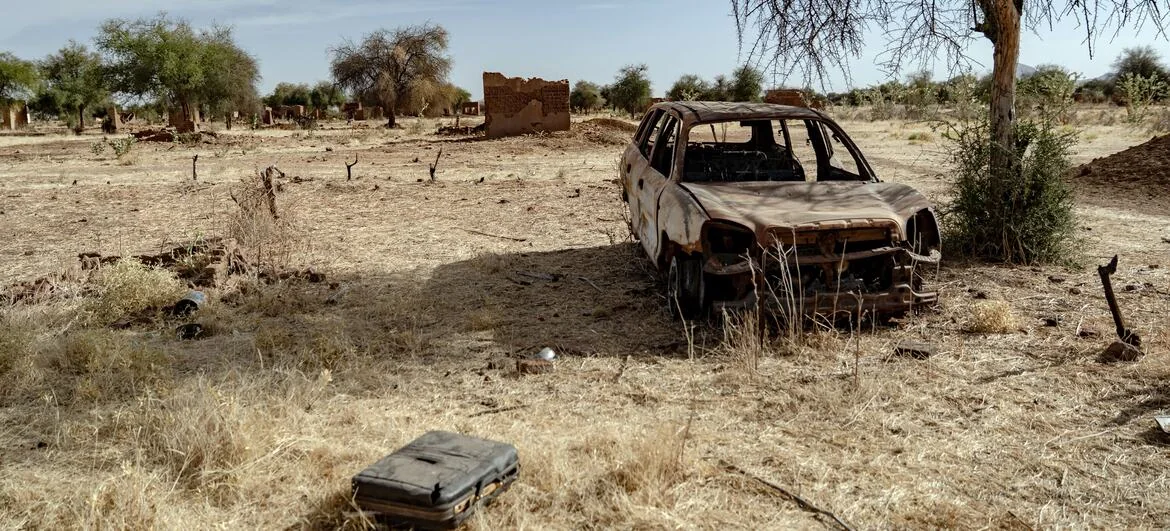
As the fighting continued, residents were forcibly displaced from the villages around El Fasher from May 2024 to October 2025.
The RSF then maintained a brutal siege on the city, restricting the entry of food and humanitarian supplies and shelling the city on a near-daily basis.
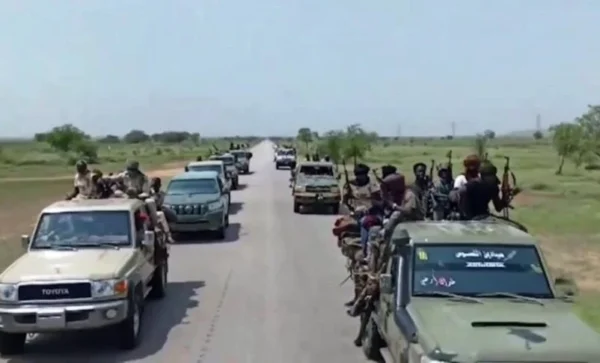 Rapid Support Forces (RSF) seen in North Kordofan state (Photo: ST via Addis Standard)
The report found that, at the time, famine spread, forcing people to eat ambaz, a byproduct of peanut oil production normally used as animal feed.
“All civilians, but particularly children on whom disease and malnutrition can have irreversible effects, bore the brunt of this manufactured famine. Women described giving birth amid severe deprivation and stress: in sweltering underground bomb shelters, in hospitals that were shelled or while fleeing violence,” they said.
Unable to get adequate nutrition themselves, they often could not produce enough milk to feed their newborns. With no safe alternatives, many were forced to watch as their babies wasted away.
“(My son) was getting very weak [and] not taking milk. He became very thin,” a 39-year-old woman who lost her youngest child, a one-year-old twin, in August 2025 recalled.
The report further narrates that on October 26, 2025, when the RSF waged its final offensive on El Fasher, civilians encountered a 57km network of berms as they attempted to flee.
“A massacre followed: hundreds were executed, and many others were tortured or detained,” the report says on accounts made by witnesses and survivors to the executions, rape, torture or hostage-taking.
Those who remained in El Fasher further witnessed horrific violations. Witness accounts further showed that the RSF attacked the Saudi Maternity Hospital, a protected object under international law.
“The RSF raped and committed other forms of sexual violence on a massive scale across many settings. Amnesty International interviewed 26 survivors of sexual violence, including 20 female survivors of rape, among them three girls under the age of 18 and one young woman raped when she was 17. Survivors described being subjected to severe humiliation and abuse that left lasting physical and psychological harm,” the report adds.
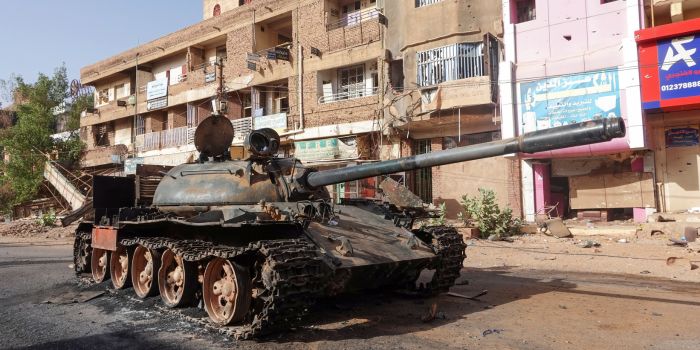 A damaged army tank is seen on the street in Omdurman, Sudan, April 7, 2024. (Photo: El Tayeb Siddig/Reuters)
Other persons were unlawfully detained civilians and held many of them hostage for ransom, often in horrific conditions, denied food and water and kept in sweltering, overcrowded rooms where illnesses spread.
Amnesty International further documented widespread RSF recruitment and use of boys, either from aligned Arab ethnic groups or abducted from non-Arab groups during attacks on villages and displacement camps.
They were deployed to perform different roles for the group, including fighting, gathering intelligence, and herding livestock.
The organisation said the RSF’s crimes included murder, forcible transfer, imprisonment, torture, rape, sexual slavery, other forms of sexual violence, enslavement, extermination and persecution and called for an immediate ceasefire in Sudan, and the urgent deployment of an international force to protect civilians.
“The war in Sudan is a war on civilians. The world was warned of the horrors that civilians in El Fasher confronted as the RSF laid siege to the city. It is a stain on the conscience of humanity,” Agnès Callamard, Amnesty International’s Secretary General, said.
Callamard noted that children were deliberately targeted and have suffered immensely.
“They have been killed, injured, raped, abducted, and forcibly recruited on a massive scale. They were not collateral damage of this violence. A nationwide ceasefire is immediately needed. An independent and adequately resourced international force must be deployed to Sudan to protect civilians against crimes by all parties to the conflict. Without urgent action from the international community, attacks on civilians - and the immense suffering and trauma being inflicted on children - will continue unhindered,” she added.
From its analysis, Amnesty concluded that the persecution was based on ethnic identity and, as such, recommended further probe into the crime of genocide in El Fasher.
“Many of these communities were predominantly from the Zaghawa ethnic group. During attacks, RSF fighters burned civilian homes long after residents had fled, suggesting an intent to render the areas uninhabitable. These actions, combined with the RSF’s continued control of these areas, preventing displaced populations from returning, are consistent with the ethnic cleansing of the Zaghawa people from areas near El Fasher,” the report says.
If further lists RSF commanders, it claims they are responsible for the serious violations of international law. They include RSF commander Al-Fateh Abdullah Idris, more widely known as 'Abu Lulu', who is captured on camera executing captives who are wearing civilian clothing.
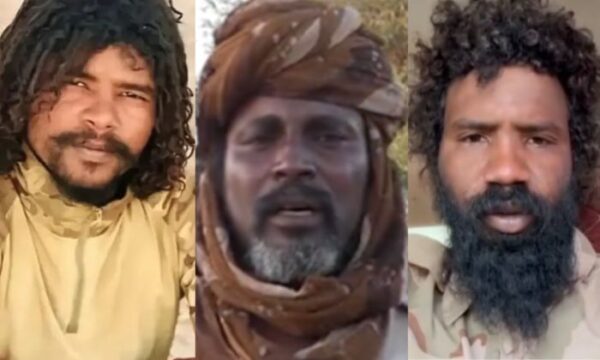 Sanctioned RSF commanders Abu Lulu, Abu Shok and Al Zeir Salem. (Photo: OFAC)
Others are Senior RSF commanders at the Mina al-Bari detention facility, including Major General Gedo Hamdan Ahmed Mohamed (‘Abu Shouk’), who directed interrogations and participated in torture, and Lieutenant Colonel Abbas Khater Bakhit, who was seen ordering the torture of prisoners and facilitating payments.
“These violations happened repeatedly and on a large scale, suggesting that those in positions of authority knew, or should have known, what was occurring, and failed to stop it or hold anyone accountable,” the findings show.
Before publishing the report, Amnesty on June 10 wrote to General Mohamed Hamdan Dagalo, the head of the RSF, documenting the report’s findings, but had yet to receive a response by the time of publication.
From the findings, Amnesty says there is a need for the international community to move beyond statements of concern and take concrete steps to protect civilians, breaking the cycle of impunity.
“Sudan has been reeling from the impact of humanitarian funding cuts, which deepened an already catastrophic human rights crisis for communities that have lost everything. All of Sudan’s international partners must ensure that adequate aid reaches refugees and displaced persons, including child-focused services, to help quell the crisis,” Ms Callamard urged.
She further called for the strengthening of accountability by ensuring sufficient support for all existing accountability mechanisms for Sudan, including the International Criminal Court, the UN and African Union-backed fact-finding missions.
The report also calls for the investigation of the Commanders identified in the findings and, where there is sufficient admissible evidence, prosecuted.
“All countries must immediately stop providing arms and ammunition to all parties to the Sudan conflict. In particular, all countries must stop providing the UAE, the RSF’s chief backer, with any arms until it can be brought into compliance with the UN embargo. The UN Security Council must also expand the existing arms embargo on Darfur to the rest of the country,” the report concludes.































Comments
Sign in with Google to comment, reply, and like comments.
Continue with Google