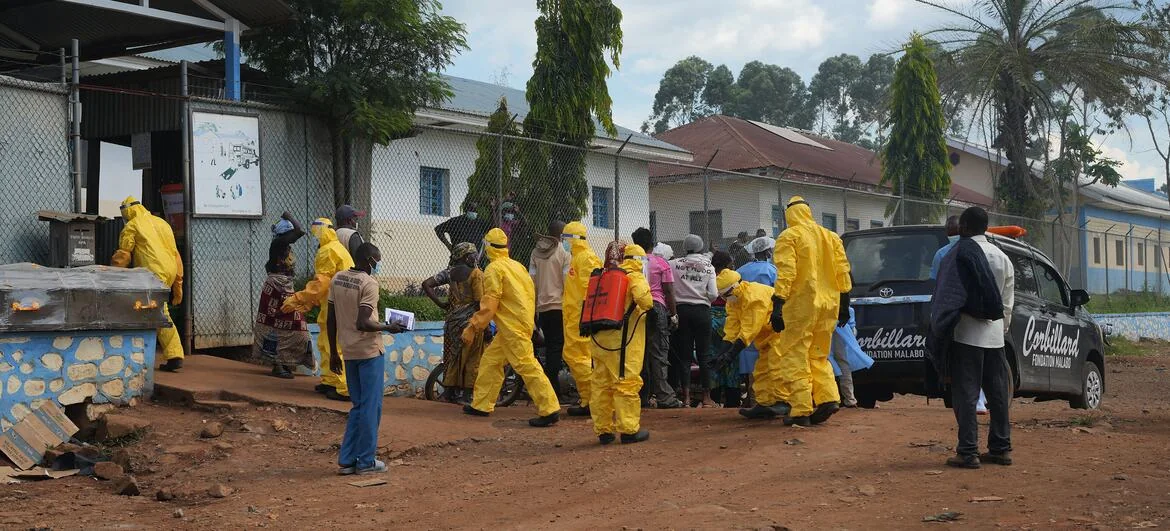
The Ebola outbreak in the Democratic Republic of the Congo (DRC) has recorded 1,333 confirmed cases, including 399 deaths, as health and development agencies warn that the epidemic, expanding faster than the current response capacity, could cause wider socioeconomic damage.
According to the figures released Tuesday by the government, 609 patients were in isolation or hospitalised, while 189 people had recovered. The contact follow-up rate in the three affected provinces reached 82.7 per cent.
The outbreak, caused by the Bundibugyo virus, remains "active" in the DRC, with transmission continuing in several hotspot areas, the World Health Organisation (WHO) said in its report released on Tuesday.
Important operational gains had been made, including better contact follow-up, expanded decentralised laboratory capacity, increased treatment capacity and strengthened cross-border coordination, the WHO said.
However, the WHO warned that the response "remained below the level required to interrupt transmission rapidly," citing the continued increase in cases and deaths, near-saturation of treatment facilities and insufficient infection prevention and control readiness in health facilities as signs that a stronger operational surge was urgently needed.
Beyond the health emergency, the outbreak is also raising alarms over its economic and social impact. A new assessment by the United Nations Development Programme (UNDP) warned on Tuesday that the Ebola crisis could push 985,000 more people into poverty in the DRC, with women disproportionately affected by the economic and health fallout.
The UNDP also warned that the crisis risks eliminating tens of thousands of jobs, disrupting education and healthcare services, and costing African economies up to $3.6 billion if broader regional and global shocks intensify.
Even under a baseline scenario in which the virus is contained in the DRC and Uganda, the DRC could face real GDP losses of more than $1 billion and the loss of 55,000 jobs, according to the UNDP assessment.
Meanwhile, the Africa Centres for Disease Control and Prevention (Africa CDC) on Tuesday called for urgent funding to support clinical trials for candidate therapeutics against the Bundibugyo Ebola virus.
It said trials evaluating candidate therapeutics were being launched this week in Bunia, capital of DRC's Ituri Province, epicentre of the outbreak, marking an important step in the response to a strain for which there is currently no licensed vaccine or therapy.
Africa CDC said financing for vaccine trials was largely in place, but a funding gap remained for therapeutic trials, which only secured 10 million dollars. It appealed for immediate additional financing, including 16 million dollars for a post-exposure prophylaxis study among exposed contacts and another 2 million to 3 million dollars to strengthen contact tracing needed for the trial.
"We have the science. We now need the funding to use it. Clinical trials must start this week, and every day of delay costs lives we could save," Africa CDC Director General Jean Kaseya said in a statement on Tuesday.
The DRC declared the outbreak in mid-May. Health authorities and international partners have repeatedly warned that insecurity, population movement, pressure on health facilities and incomplete contact tracing continue to complicate the response.


















Comments
Sign in with Google to comment, reply, and like comments.
Continue with Google