Infotrak survey: Kenyans rank delivery of promises as top measure of leaders’ performance

Listen
Read this story aloud
Listen to the clean text version of this article.
Infotrak noted that citizens often compare what leaders promised with what they see happening on the ground when assessing performance.
Delivery of campaign promises has emerged as the leading factor that Kenyans consider when rating the performance of their elected leaders, a new Infotrak survey shows.
According to the report released on Wednesday, 41 per cent of respondents said they judge leaders primarily on whether they fulfil the commitments they made before and after elections.
Infotrak noted that citizens often compare what leaders promised with what they see happening on the ground when assessing performance.
More To Read
- Kenya and Morocco deepen defence cooperation with joint focus on air power and military training
- Senator Mungatana seeks Senate probe into Tana River vocational training funds
- Kenya pushes for common AI rules across COMESA to boost trade and cybersecurity
- Somalia's Deputy Prime Minister breaks silence after Kenya deportation, denies arming militias
- 𝐄𝐚𝐬𝐭𝐥𝐞𝐢𝐠𝐡 𝐕𝐨𝐢𝐜𝐞 𝐚𝐭 𝐍𝐢𝐧𝐞 - Meru miraa farmers push back against new licensing law, demand review
- Businesses win as MPs extend tax relief in Finance Bill 2026
"Citizens remember what leaders said they would do. A promise may be made during a campaign, repeated at a public meeting, announced through media or reinforced through community expectations. When citizens later assess performance, they compare public commitments with visible outcomes. They do not expect every promise to be fulfilled immediately, but they expect seriousness, follow-through and evidence of effort," reads the report.
The survey also found that transparency and accountability ranked second, with 35 per cent of respondents identifying it as a key factor when rating leaders, while 30 per cent said they consider the initiation of development projects in assessing performance.
"Citizens reward leaders they perceive as accountable. This includes how leaders explain decisions, communicate the use of public resources, respond to questions, and handle public scrutiny. Where citizens sense opacity, distance or defensiveness, confidence can weaken. Accountability is not only a technical issue. It is also a relationship issue," reads the report.
Latest Stories
- Kenya unveils multi-agency team to crack down on fake and substandard medicines
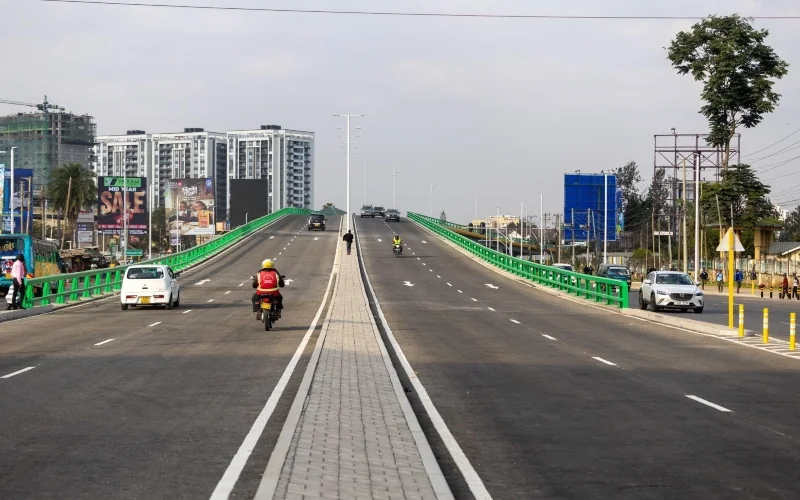
- How the new Ngong Road flyover is fueling growth at Dagoretti Corner
- DR Congo Ebola cases rise to 1,333 as agencies warn of wider socioeconomic fallout
- FKF withdraws court case after FIFA, CAF intervene to resolve governance crisis
Other key factors identified by respondents included influence over the allocation and use of public funds, such as CDF and county funds at 28 per cent, accessibility and responsiveness to constituents at 13 per cent, comparison of performance with previous elected leaders at 11 per cent and personal experience or interaction with the leader at 7 per cent.
Participation in legislative debates and motions, sponsorship of Bills and policies, engagement in public forums and town hall meetings with constituents, media portrayal and visibility, and information obtained through media, community discussions and political debates were also listed among the factors influencing public ratings.
According to the survey, visible development remains a major part of how citizens experience leadership, especially for Members of Parliament (MPs) whose roles are closely linked to constituency projects, bursaries, schools and local infrastructure.
"Development remains a powerful part of how citizens experience leadership. This is especially true for MPs, whose office is strongly associated with constituency-level projects, bursaries, schools and local infrastructure. Across offices, citizens ask whether public leadership is producing visible benefits. The keyword is visible: work that is not known, understood or felt may not be credited," reads the report.
Infotrak further stated that citizens form opinions on how public resources are managed, although the ratings do not represent an audit of public expenditure.
"Citizens pay attention to how public resources appear to be influenced, allocated or protected. This does not mean the rating is an audit of public expenditure. It is not. But citizens form impressions about stewardship: whether resources seem to reach communities, whether benefits appear fairly distributed, and whether leaders are perceived as protecting public interest," Infotrak said.
The survey also found that accessibility and communication between leaders and citizens affect public perception, with residents favouring leaders they feel can be reached and who respond to their concerns.
"Citizens reward leaders who feel reachable. Accessibility does not mean a leader must personally solve every problem. It means citizens perceive that the leader listens, responds, communicates and maintains a relationship with the people they represent. A distant leader may be active institutionally but still poorly recognised by citizens," reads the report.
Media visibility was also identified as an important factor in shaping how citizens view the work of elected leaders. According to the report, citizens rely on information from media and social media when forming opinions about elected leaders, although the ratings are not solely driven by media coverage.
The report noted that visibility matters because leaders' efforts may not receive public recognition if citizens do not encounter them through community engagement, media platforms, social media, public meetings or direct interactions.
The Infotrak survey was conducted between January and May 2026 across all 47 counties, 290 constituencies and 1,450 wards, covering an overall sample of 87,286 respondents.
The first phase of the survey was conducted between January and March 2026 and involved 36,200 participants. The second phase involved 51,086 respondents and was carried out to increase the sample size so that every constituency had at least 300 respondents.
Each county was treated as an individual universe and assigned a cluster sample ranging between 738 and 5,100 respondents based on population size and the number of wards. Sampling frames were developed using population proportionate to size, guided by census data and taking into account demographics such as age and gender.
Data was collected through Computer Assisted Telephone Interviews and analysed using SPSS. Respondents rated their MPs, Senators and county Women Representatives using a 1-10 Likert scale, where one represented very poor performance, and 10 represented excellent performance.
The final rating of each elected leader was determined by the average score given by respondents in their respective constituencies or counties.
Infotrak said the rating seeks to capture citizens' views of leadership and does not serve as a technical assessment of elected leaders.
Top Stories Today












































Comments
Sign in with Google to comment, reply, and like comments.
Continue with Google