Ruto told to fix Cabinet gender imbalance after court ruling, not reshuffle
Listen
Read this story aloud
Listen to the clean text version of this article.
The remarks come after a three-judge bench ordered President Ruto to reconstitute the Cabinet within 120 days after finding that it violates the Constitution's two-thirds gender rule.
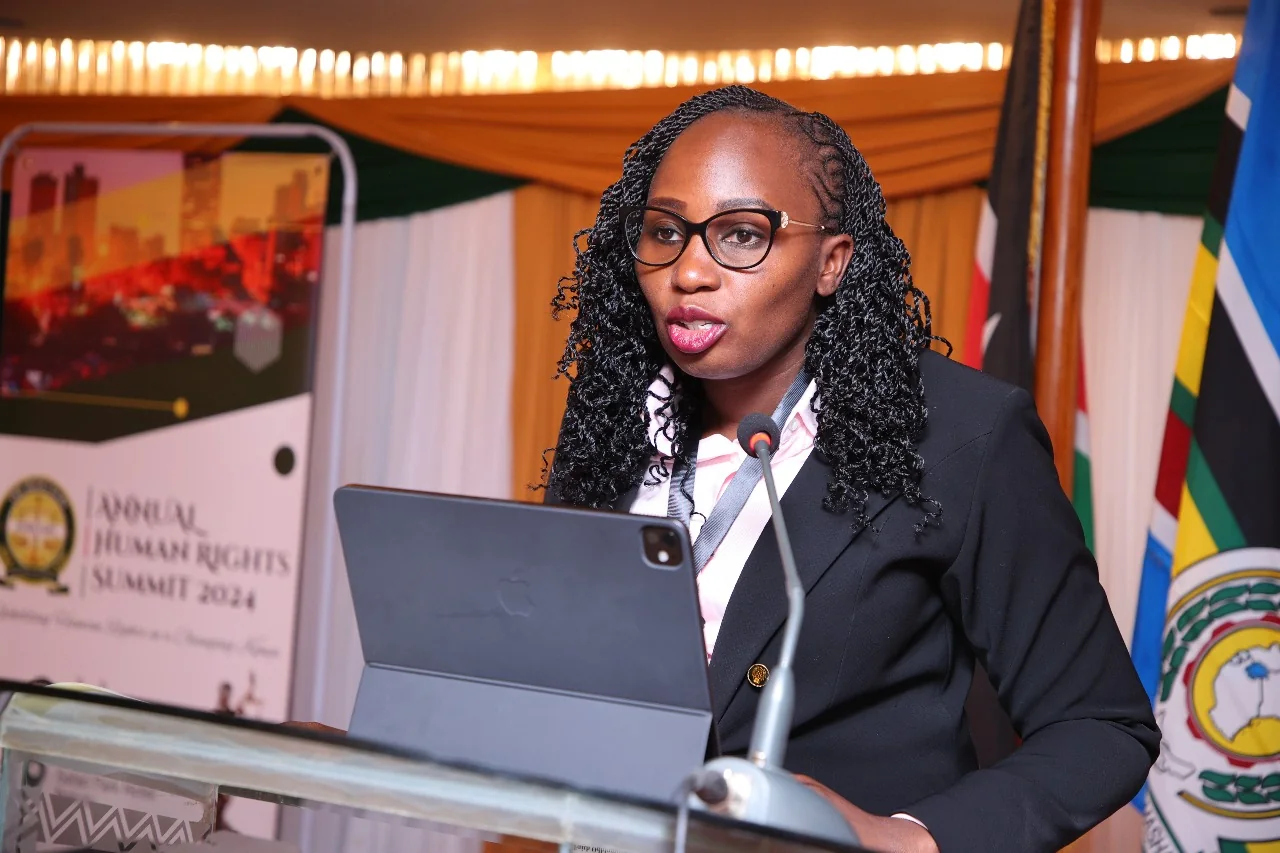
Former Law Society of Kenya (LSK) President Faith Odhiambo has warned President William Ruto against making politically driven Cabinet changes following the High Court ruling that declared his Cabinet unconstitutional.
In a statement on Wednesday, Odhiambo said the President should use the 120 days ordered by the court to fully comply with the Constitution instead of carrying out cosmetic reshuffles or political bargains that fail to address the gender imbalance.
She noted that the High Court's decision in Petition E015 of 2024 sends a clear message that the Constitution must be obeyed by every State organ, including the Executive.
More To Read
- Court rules Ruto’s Cabinet is unconstitutional, orders gender-balanced appointments within 120 days
- Kenya secures Sh162 billion World Bank funding for governance, social protection reforms
- Hustler Fund: Nearly Sh90 billion disbursed to 27 million Kenyans - Ruto
- Access to affordable credit remains biggest MSME challenge, says Ruto
- Ruto: Business registration cost slashed to Sh11,000 to boost entrepreneurship
- President Ruto appoints Kiraitu Murungi Competition Authority board chair
Odhiambo emphasised that the judgment, which found the Cabinet unconstitutional for failing to meet the two-thirds gender rule, reaffirmed that Article 27(8) is binding and cannot be ignored.
"Yesterday’s High Court judgment in Petition E015 of 2024 is a decisive reminder that the Constitution is not advisory. By declaring President Ruto’s Cabinet unconstitutional for violating the two-thirds gender rule and granting only 120 days for full compliance, the Court has reaffirmed that Article 27(8) and the gender principle bind the Executive just as they bind every other state organ," she said.
She reiterated that the judges made it clear that appointing a few women after the fact cannot correct long-standing exclusion.
Latest Stories
- What criminals can access after phone theft and what to do immediately
- Kenya unveils multi-agency team to crack down on fake and substandard medicines
- How the new Ngong Road flyover is fueling growth at Dagoretti Corner
- DR Congo Ebola cases rise to 1,333 as agencies warn of wider socioeconomic fallout
"The Bench was clear. Tokenism and afterthought appointments cannot cure systemic exclusion. The Court interrogated the composition of the Cabinet, the process of appointment and re-appointment and the State’s persistent pattern of non-compliance, and still found the Executive wanting. This is not about rewarding women. It is about enforcing a constitutional architecture that requires no more than two-thirds of any appointive public body to be of the same gender," she said.
She also faulted both Parliament and the Executive for repeatedly failing to uphold the constitutional requirement on gender representation.
"Parliament and the Executive have been strange bedfellows in the failure to uphold the two-thirds principle. They appear to be taking the cue from one another on non-compliance. This decision is transformative, as it is a step towards ensuring that the inclusion of women in governance is not performative but a real acknowledgement of their stake in governance, their competence as leaders, and their equal rights as enshrined in the constitution," Odhiambo said.
Odhiambo said the court order should be treated as an opportunity to demonstrate respect for the Constitution rather than pursue political interests.
"This moment demands sobriety and statesmanship. If the President treats these 120 days as a window for cosmetic reshuffles or political horse-trading, he will be in open defiance of a binding court order and of the very Constitution he swore to uphold. Implementing this judgment faithfully is the minimum test of his commitment to the rule of law, women’s equal citizenship, and genuine constitutionalism," she said.
The remarks come after a three-judge bench ordered President Ruto to reconstitute the Cabinet within 120 days after finding that it violates the Constitution's two-thirds gender rule.
Delivering the judgment, Justice Eric Ogola directed the President to ensure future Cabinet appointments comply with Article 27(8) of the Constitution.
"The appointing authority, being the President, is hereby directed to make appointments for Cabinet Secretaries in conformity with Article 27(8) within 120 days from the date of this judgment," Justice Ogola ruled.
The judges found that the 25-member Cabinet has seven women and 18 men, meaning women occupy about 28 per cent of the positions instead of the minimum nine seats required to meet the constitutional threshold.
However, the court declined to invalidate the reappointment of some Cabinet Secretaries after the July 2024 Cabinet dissolution, ruling that dismissal from office does not automatically bar a person from future appointment.
It added that constitutional disqualification only applies where removal is based on specific constitutional violations, not political reorganisation, although it questioned the logic of dismissing ministers and later returning some of them to office.
Top Stories Today









































Comments
Sign in with Google to comment, reply, and like comments.
Continue with Google