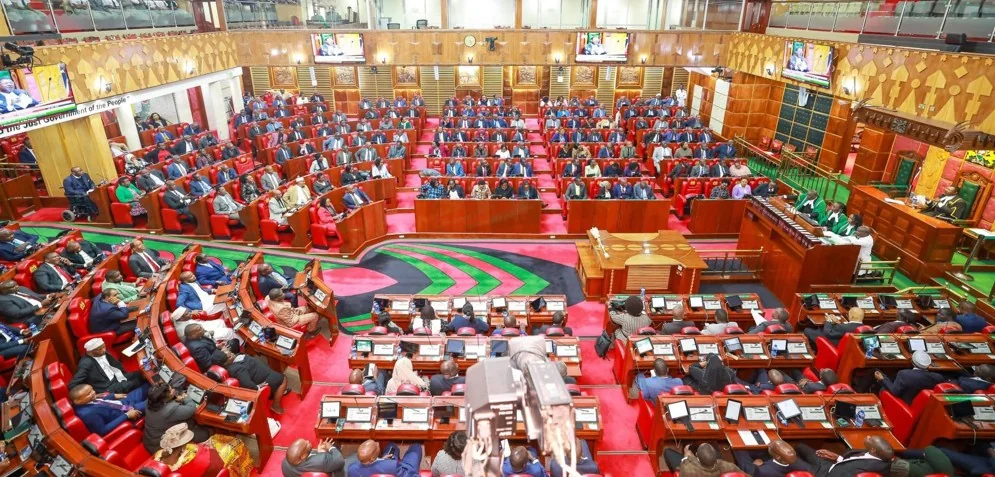
Members of Parliament who return to Parliament after a 10-year political break will receive higher pension benefits after the House approved amendments introducing a 2.5 per cent annual adjustment for their previous years of service.
The amendments, contained in the Parliamentary Pensions (Amendment) Bill, 2023, sponsored by Kitui Central MP Makali Mulu, seek to ensure MPs who serve non-consecutive terms are not disadvantaged when calculating their retirement benefits.
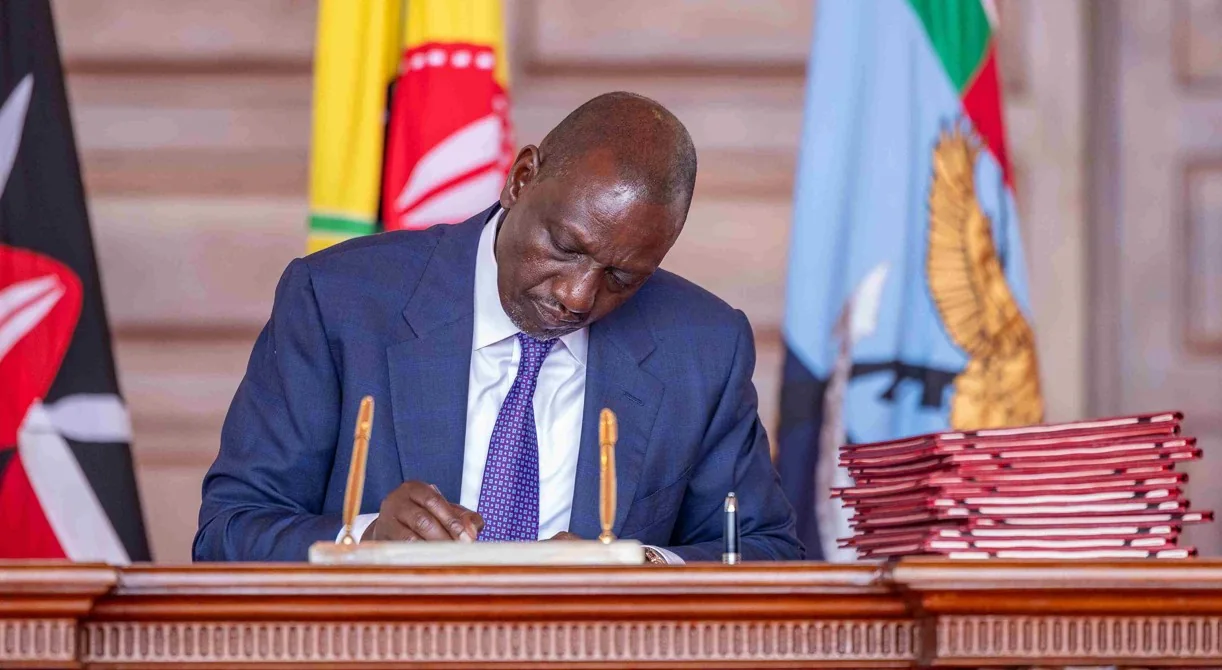
The changes will, however, only apply to legislators who have served two terms, left Parliament for 10 years and later returned after being re-elected. The Bill now awaits President William Ruto’s approval before it becomes law.
Under the new amendments, the pension payable to an MP who returns to Parliament will be adjusted based on their earlier period of service, with the total period considered not exceeding four terms.
“Where an MP is re-elected to Parliament and any pension previously payable to that member ceased by reason of such re-election, the pension payable to that member upon retirement in respect of the new period of service shall be subject to an adjustment at the rate of 2.5 per cent per annum for each year of the member’s prior reckonable service, provided that the total cumulative period shall not exceed four terms of Parliament,” read the adopted amendments.
Mulu said the changes were meant to correct what legislators consider unfair treatment of MPs who serve two terms, leave Parliament and later return, as their earlier years of service are currently not considered when calculating their pension.
“If a member serves two terms and is eligible for a pension, then goes out and returns after 10 years, like Wafula Wamunyinyi of Kanduyi, for instance, they realise that upon returning, they will only receive pension for the last two terms,” Mulu said.
“To acknowledge the first two terms before returning to Parliament, we consulted an actuarial firm, which devised a formula that considers these members’ four terms. This is to accommodate the earlier service. This does not affect many members, but it would be unfair not to factor in the service of four terms and only consider two.”
The amendments were agreed on during a closed-door session at the fourth Naivasha retreat in February, where legislators settled on a 2.5 per cent factor to be used in calculating pension for MPs who have served three or four terms, even when the terms were not consecutive.
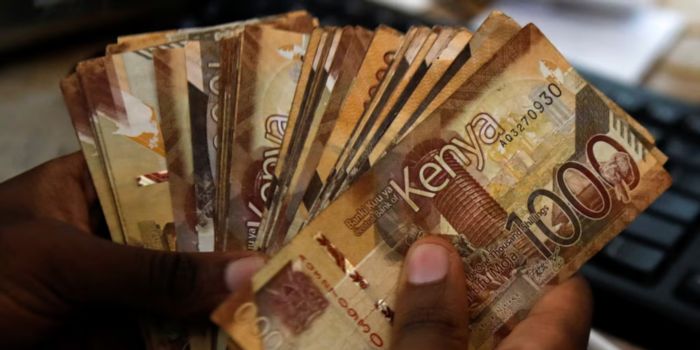
Currently, an MP who has served four consecutive terms receives a monthly pension of about Sh255,000. If the Bill is signed into law, legislators who return to Parliament and serve for more than two terms will receive about Sh217,000 per month.
The legislators said the changes would ensure members receive what they described as their fair share of pension after leaving Parliament.
The amendments also provide for MPs aged 45 and below who have served two terms to access a pension on medical grounds.
“Where an MP is unable to perform the functions of the office by virtue of a medical condition, and the condition is certified by a medical board appointed by the Director-General, the committee shall grant pension or gratuity notwithstanding that the member may not have attained the age of 45,” reads part of the adopted changes.
Mulu said Parliament wanted to allow payment of pension to members who are certified as unwell.
The changes also remove the option for second-term legislators to choose between gratuity and pension, following advice from the Salaries and Remuneration Commission (SRC). MPs serving their second term will automatically be placed under the pension scheme.
“We are deleting the option of gratuity or pension. Initially, we had proposed that one could choose, but now Parliament will not allow second-timers to choose gratuity,” Mulu said.
“When you come as a second-timer, you become pensionable. This is important, especially when one retires.”
According to Mulu, the Bill seeks to address discrimination in the Parliamentary Pensions Act Cap 96, which was passed in 1983 and amended in 2002 before the Constitution was promulgated in 2010.
“I am not doing this for selfish gain just because I have served for three consecutive terms. I am going for the Kitui governor seat, so I won’t be a beneficiary,” Mulu said.







































Comments
Sign in with Google to comment, reply, and like comments.
Continue with Google