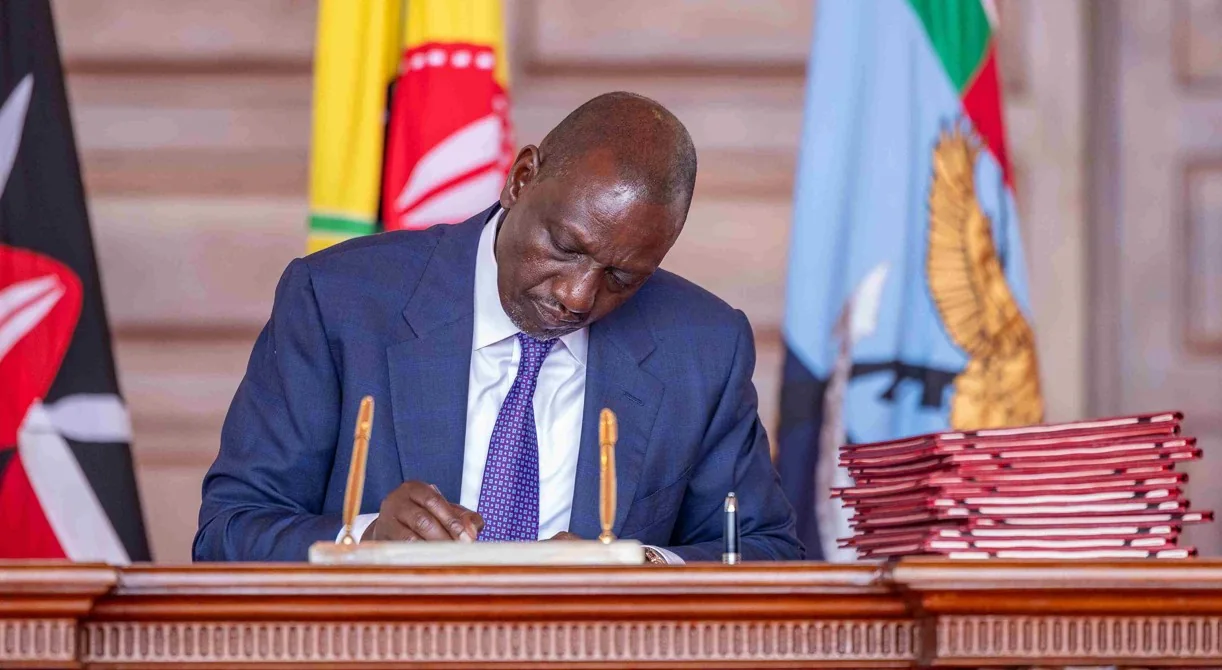
President William Ruto has signed the Sovereign Wealth Fund Bill, 2026, into law, establishing a national fund that will manage revenues from minerals, petroleum resources, public investments and privatisation proceeds while setting aside 30 per cent of deposits for future generations.
The law creates a framework for saving and investing part of the country’s natural resource wealth, supporting strategic infrastructure projects and cushioning the economy against future financial shocks.
It establishes the Kenya Sovereign Wealth Fund (KSWF), a special government fund owned by the National Treasury and held in trust for Kenyans.
According to the Sovereign Wealth Fund Act, 2026, the fund will have three components: the Stabilisation Component, the Strategic Infrastructure Investment Component and the Future Generations Component.
The Stabilisation Component will provide resources to the national government during periods of extraordinary shocks that may affect economic stability, including events such as the Covid-19 pandemic and disruptions to global oil supply.
The Strategic Infrastructure Investment Component will finance key infrastructure projects aligned with national development plans and will also be used to attract private sector financing for strategic investments.
The Future Generations Component will create a savings base for future generations by establishing an endowment, generating alternative income streams to support capital projects when mineral and petroleum revenues decline, and ensuring wealth is shared across generations.
The law guarantees that 30 per cent of all mineral and petroleum revenues deposited into the fund will be transferred to the Future Generations Component.
The allocation was increased from the government’s earlier proposal of 10 per cent after Members of Parliament approved amendments to safeguard the savings component of the fund.
The National Assembly Finance and National Planning Committee pushed for the changes, which also prevent the Future Generations Component from being used for advances, loans, credit facilities or as collateral for government borrowing.
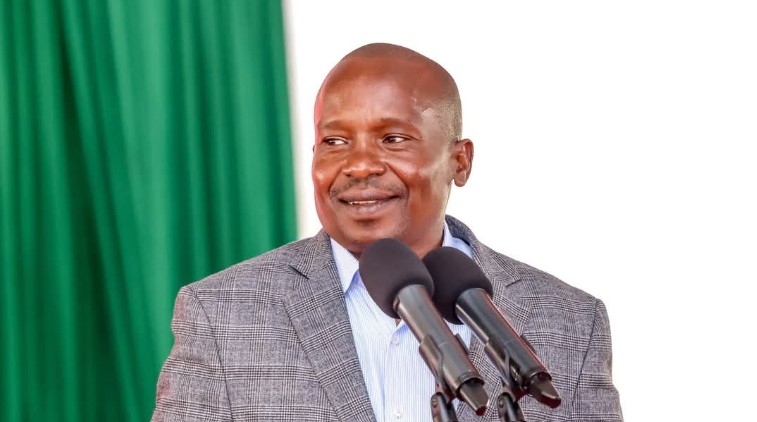
Committee chairperson Kuria Kimani amended the Sovereign Wealth Fund Bill, 2026, to require that 30 per cent of the amount deposited into the Holding Account at the Central Bank of Kenya be transferred to the Future Generations Component.
The remaining 70 per cent of deposits will be transferred to the Stabilisation Component and the Strategic Infrastructure Investment Component in proportions determined by the National Treasury Cabinet Secretary in consultation with the Board of the Sovereign Wealth Fund at the start of every financial year.
The amendment changed an earlier provision that gave the Treasury Cabinet Secretary the power to determine how revenues from minerals and petroleum activities would be shared among the three components.
“Any deposits into the Holding Account shall be transferred into the respective components of the Fund in proportions specified by the Cabinet Secretary in consultation with the Board at the beginning of each financial year, considering conditions specified under section 5(2),” the original Bill stated.
While moving amendments to the Bill during the Committee of the Whole House on July 2, 2026, Kimani said the changes were aimed at providing clarity on how funds would be distributed among the components.
“As currently drafted, the Bill gives the Cabinet Secretary discretion to determine proportions into each of the three components,” Kimani said.
Kimani also introduced a new section under Clause 46 on prohibiting advances, credit and collateralisation of the Stabilisation Component and the Strategic Infrastructure Investment Component, while specifically protecting the Future Generations Component.
“The Future Generation Component shall not be used to make advances or loans or provide any other form of credit to a government entity or any person, or as collateral for borrowing by a government entity or any person,” a new clause to the Bill states.
“The amendment seeks to clarify prohibitions against using the Future Generations Component as collateral for borrowing by a government entity.”
Manyatta MP Gitonga Mukunji said the safeguards were necessary to prevent future administrations from misusing the savings set aside for future generations.
“We know the country has gotten a new way of borrowing through securitisation. We must make sure the Sovereign Wealth Fund is safeguarded in a way that it cannot disappear after it is securitised. We should do the same with a number of funds passed by this House to ensure that a rogue regime does not seize the Future Generation Component,” Mukunji said.
The Sovereign Wealth Fund Bill, 2026, was sponsored by the Majority leader and Kikuyu MP Kimani Ichung’wah and published on February 25, 2026, through Kenya Gazette Supplement No. 25.
It was introduced in the National Assembly on March 11, 2026, passed through the Second Reading on June 24 and 25, 2026, and considered by the Committee of the Whole House before being approved with amendments on July 2, 2026.
The fund is expected to begin with an estimated Sh200 billion, mainly sourced from natural resource revenues, profits from petroleum operations, mining and oil royalties, and proceeds from the sale of government interests in energy and mineral enterprises.
The law requires all funds meant for the Sovereign Wealth Fund to first be deposited into a special Holding Account at the Central Bank of Kenya before being allocated to the three components.
The fund will also restrict investments in speculative derivatives, unlisted real estate in Kenya, private equity, art, commodities and securities issued by Kenyan issuers to ensure the fund remains secure and supports wealth creation across generations.





























Comments
Sign in with Google to comment, reply, and like comments.
Continue with Google