Khat serves as an indispensable economic lifeline in Ethiopia, functioning as both a leading foreign currency earner for the national economy and a source of year-round financial security for millions of rural households.
The depth of this dependence was laid bare between October and November 2018, when, for the first time on record, official export reports indicated that khat briefly overtook coffee as the country’s top source of foreign currency - a symbolic rupture in Ethiopia’s long-established economic order.
Though khat’s export volumes remain modest when compared with the nation’s more established cash crops, recent trade data nonetheless underscore its growing significance: the sector generated approximately $80 million (Sh10.3 billion) in export revenue, placing it roughly ninth among Ethiopia’s leading export commodities. This figure, while not overwhelming in isolation, is telling when considered alongside the crop’s profound domestic footprint - both as a daily consumer good and as a rural livelihood anchor.
Yet for all its status as the country’s celebrated “green gold”, khat occupies a far more troubled position at the nexus of Ethiopia’s most contentious political, economic, and social struggles. The very crop that replenishes state coffers, sustains rural households, and fortifies family incomes has become inextricably bound up with a host of mounting challenges - social dislocation, economic distortion, and governance failures - whose consequences are increasingly felt not in export markets abroad but within the homes and communities of the country itself.
Chewing prosperity, eroding futures
Once a deeply rooted cultural staple, khat has transformed into a lucrative national revenue source that now fuels profound social and economic adversity across the country. Traditionally, chewing khat was confined to communal settings, sacred religious ceremonies, social gatherings, and as a stimulant for labour endurance.
Consumption has moved past traditional ceremonies and into daily youth culture across urban centres, where young people frequently gather for Barcaa sessions. While students and professionals turn to khat for focus, the habit often leads to psychological reliance, post-chew lethargy, and lost motivation.
According to studies, one-third of university students chew khat in Ethiopia. These students use khat to get out of stressful social and academic burdens. This growing addiction is creating a “lost generation” of youth who face shrinking employment prospects and disrupted education, leaving them disconnected from meaningful economic, social, and political participation. In this sense, Ethiopia is not only consuming khat; rather, it is, in many ways, chewing away its own future.
The economic cost of this addiction begins at the dinner table. Some studies suggest that khat chewers in urban centres often divert a staggering 30 per cent or more of their monthly income to sustain their habit, frequently at the expense of basic needs such as food, school fees, and healthcare for their children. This “khat-first” budgeting creates a cycle of poverty that is inherited by the next generation, as limited family resources are chewed away in daily four-hour sessions.
Over the past several decades, khat has become one of the pillars of Ethiopia’s economy, generating hundreds of millions of dollars in export earnings each year. The country produces the crop in vast quantities for both domestic consumption and international markets, and its cultivation and trade sustain the livelihoods of millions of households across rural Ethiopia. Yet this economic success has come with a profound social transformation.
According to studies, khat consumption has risen by an estimated 15.3 per cent nationwide, as the crop has gradually shifted from a substance traditionally reserved for specific cultural and religious settings to one increasingly consumed recreationally. Its use has become especially popular among young people, raising public health, social, and economic concerns that can no longer be ignored.
This shift in khat’s cultural role has, in turn, driven a marked agricultural change: land devoted to the crop has expanded by 160 per cent over the past two decades, a surge that has made Ethiopia the world’s leading producer. The scale of this agricultural commitment is considerable.
According to the latest Agricultural Sample Survey from the Ethiopian Statistical Service (ESS), the country now yields well over three million quintals of khat annually, cultivated across nearly 337,900 hectares of arable land. The full magnitude of this figure becomes clear when one considers that over 3.8 million farmers - roughly one in every four agricultural households - are now engaged in khat cultivation. For countless rural communities, khat is no longer a peripheral commodity; it has become a mainstay of household income, woven into the economic fabric of large parts of the country.
Drawn by the promise of quick returns, smallholder farmers have grown dependent on khat’s fast profits and are increasingly turning to its production in place of traditional food crops, in part because it can be harvested year-round.
In agricultural economics, this kind of monocropping leaves farmers highly exposed to market fluctuations, price drops, policy shifts, and climate shocks. Without crop diversification, these households lose their economic buffer and become wholly dependent on purchased food, since khat offers no nutritional value—a dynamic that threatens both local food security and farmers’ livelihoods.
Together, these dynamics form a systemic, multi-dimensional trap—and a cynical economic contradiction for the state. By prioritising foreign exchange and tax revenue, the government sustains short-term macroeconomic gains and balance-of-payments relief at the expense of microeconomic stability.
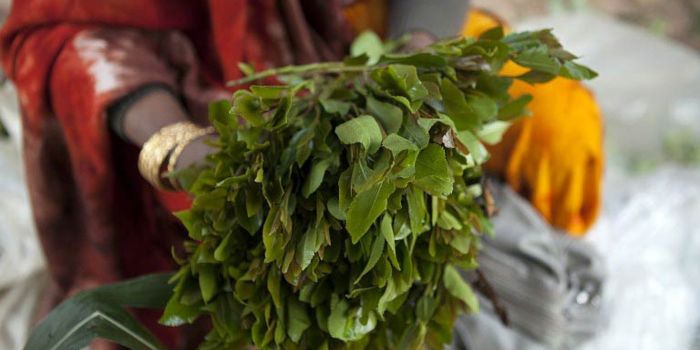 Kenya has the largest miraa market in Somalia, generating millions of dollars from the trade. (Photo: File/AFP)
The result is an uneasy paradox: apparent national prosperity built on personal financial erosion, with state revenue drawn from a product that simultaneously drains household incomes, undermines agricultural resilience, and erodes the economic independence of the very citizens who produce it.
Squeezing taxes, abandoning regulation
Nowhere is the cost of this state abdication clearer than along the nation’s transit corridors. The unique economic architecture of Ethiopia’s khat trade has inadvertently transformed it into the ultimate engine for a predatory war economy, where the commodity’s extreme perishability acts as a weapon against those who transport it. Because the green leaf sheds its value within 24 hours of its harvest, traders are forced to move it quickly.
However, they face multiple unauthorised checkpoint taxes along transport routes. In many khat-producing regions, double taxation has become a major burden for farmers and traders. A single consignment of khat is often taxed repeatedly at checkpoints in different towns and cities.
As a result, transit drivers caught along the highway - particularly on the Hararghe-to-Addis corridor - cannot afford the luxury of patience or negotiation; they must keep moving, or they risk bleeding capital. This biological ticking clock is aggressively exploited by a dual-headed predatory network consisting of armed groups and mafia state-aligned shadow syndicates who use the highway as an unregulated extraction zone.
By escalating their tactics from simple checkpoint bribery to targeted driver abductions and high-value hostage ransoming, these actors have effectively turned the khat supply chain into a hyper-lucrative, mobile ATM. Consequently, the very crop the federal government relies on as an “export gold” lifeline has been weaponised on the domestic front, systematically defunding legitimate rural livelihoods to directly finance local lawlessness and deep-seated institutional extortion.
This crisis is compounded by a profound regulatory vacuum. Ethiopia’s current policy on khat is not a strategy; it is a regulatory schism. The federal government has weaponised its authority to tightly restrict investment and squeeze export taxes, yet it completely abandons its duty to govern production and consumption. By treating this potent stimulant solely as a cash cow while ignoring its societal impact, policymakers have left a dangerous, gaping hole in the nation’s legal framework.
This policy vacuum has turned the domestic khat trade into the Wild West. Without a clear national policy on production and local commerce, internal supply routes have devolved into a gauntlet of arbitrary taxation checkpoints. These stops do not serve the public good; they function as institutionalised extortion hubs, driving corruption and inflating illicit markets.
But the most devastating casualty of this state blindness is Ethiopia’s youth. Because consumption remains entirely unregulated, there is zero legal protection to keep khat out of the hands of children. Underage consumption is no longer a fringe issue - it is being actively normalised.
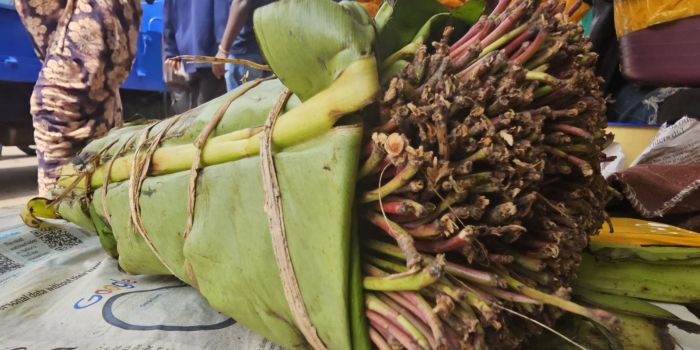
 Miraa on sale. (Photo: Handout)
By refusing to regulate domestic use, the state is trading its future human capital for immediate tax revenue. This growing epidemic of underage use directly undermines educational outcomes, ravages community stability, and threatens the core of Ethiopia’s future workforce. If the government continues to look at khat only through the lens of income generation, the short-term financial gains will be utterly eclipsed by a long-term socio-economic catastrophe.
Reclaiming the future
Ultimately, Ethiopia cannot afford to fund its federal budget by bankrupting its future. The short-term macroeconomic relief offered by “green gold” is an illusion, masking a devastating microeconomic erosion that drains household incomes, creates a healthcare system crisis, fractures agricultural resilience, and bankrolls a predatory shadow economy along the nation’s transit corridors. By treating khat strictly as a fiscal lifeline while abandoning domestic regulation, the state is making a cynical trade: immediate tax revenues today in exchange for a “lost generation” tomorrow.
To break this systemic trap, policymakers must bridge the current regulatory schism by enforcing strict age limits, establishing transparent domestic commerce rules, and creating a coherent national framework for production, distribution, and consumption.
Regulation alone, however, will not be enough. Reducing farmers’ dependence on khat will require sustained investment in agricultural diversification, irrigation, rural credit, market access, and alternative value chains that can provide viable and sustainable livelihoods. Farmers cannot be expected to abandon a profitable crop without realistic economic alternatives.
At the same time, efforts to reduce consumption must address the broader socio-economic conditions that sustain it. For many young Ethiopians, khat is not merely a substance but a response to unemployment, instability, and a lack of opportunity. Addressing these underlying drivers requires serious investment in job creation, skills development, entrepreneurship, and pathways to meaningful livelihoods.
If the government continues to view khat solely through a fiscal lens, the short-term revenue gains will ultimately be eclipsed by long-term social and economic costs. Ethiopia cannot afford to fund its present by bankrupting its future.
















































Comments
Sign in with Google to comment, reply, and like comments.
Continue with Google