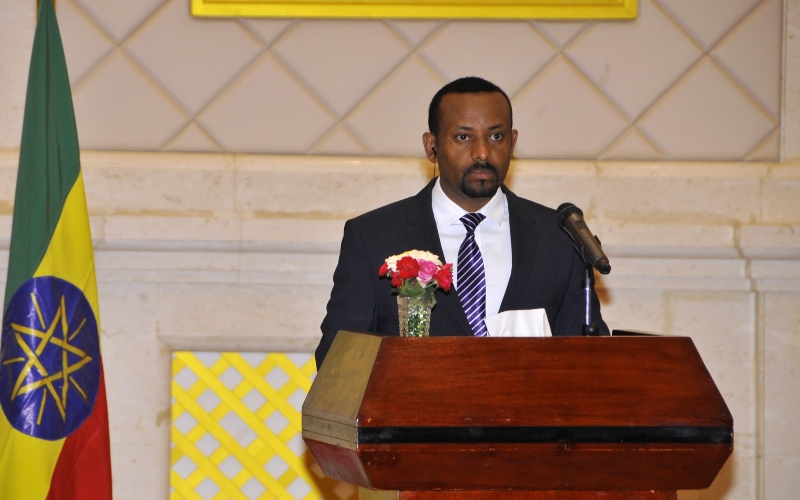
Prime Minister Abiy Ahmed has alleged that Tigrayan youth are being forcibly recruited and sent to fight in neighbouring Sudan, saying the practice is among the most serious challenges in Tigray.
Speaking before the House of Peoples’ Representatives during its 30th regular session, where he responded to questions and comments from lawmakers, Abiy said there are “daily provocations” originating from forces in Tigray, but dismissed an alleged alliance involving the TPLF as posing no threat to Ethiopia’s sovereignty.
Describing what he called the gravest of the current challenges, the Prime Minister alleged that Tigrayan youth are being forcibly taken to Sudan to fight in the country’s ongoing civil war.
“The worst is that Tigrayan youth are being sold into the Sudan war after being taken by force,” Abiy said, adding that young people from Tigray were losing their lives in a conflict “they know nothing about.”
The Prime Minister did not identify the individuals or groups he said were responsible.
PM Abiy made the remarks while defending the Pretoria Agreement, describing it as “a great peace initiative” that has delivered tangible results and should not be viewed as an ordinary political negotiation.
According to him, one of the agreement’s major achievements was the establishment of the Tigray Interim Regional Administration. He also said more than 60,000 former combatants had been processed through the Disarmament, Demobilisation and Reintegration (DDR) program and discharged, while many prisoners and detainees had been released.
“Throughout this entire process, the people of Tigray are not the creators of the problem, but rather the victims of its consequences,” Abiy said.
“What has harmed the people of Tigray even more, and exacerbated their suffering, is the existence of invisible internal wounds, which are not easily healed.”
He further said that “the number of Tigrayan living in peace and moving about without fear in Dessie, Gondar, Addis Ababa, and Adama is greater than those living in Tigray today.”
The Prime Minister also used what he described as an “axe” metaphor to explain the political dynamics involving the TPLF and Eritrea.
He likened the TPLF to the metal blade of an axe, arguing that it acts only as an instrument without an independent objective. He described Eritrea as the wooden handle attached to the blade, while saying the handle itself is directed by unseen actors “holding the axe”.
According to Abiy, focusing only on the blade or the handle would not resolve the problem so long as those controlling them remained active.
A week earlier, Fetlework Gebregziabher, a member of the TPLF Executive Committee and head of the party’s office, accused the federal government of mobilising military forces across Tigray and preparing for renewed conflict.
Speaking at a press briefing, Fetlework claimed Ethiopian military units and allied forces were being deployed in and around Tigray, allegations the federal government has not publicly responded to.
She also said the TPLF would not compromise on what it described as the “fundamental interests” of the people of Tigray and accused Addis Ababa of undermining the implementation of the Pretoria Agreement.
Abiy’s remarks come amid renewed political tensions over the implementation of the Pretoria Agreement, which ended the two-year Tigray war in November 2022.
While the agreement halted large-scale hostilities and paved the way for the establishment of the Tigray Interim Regional Administration and the launch of the DDR process, key provisions, including the withdrawal of non-federal forces from parts of Tigray, restoration of constitutional order, and implementation of transitional justice measures, remained the subject of disagreement between the parties.























Comments
Sign in with Google to comment, reply, and like comments.
Continue with Google