Taxpayers will be spared the burden of covering investor losses under the Rironi-Mau Summit toll road project after the government removed a minimum revenue guarantee from the agreement.
According to the Treasury, investors will bear full demand and revenue risks if traffic volumes or toll collections fall below projections during the 30-year concession period.
The arrangement will allow the government to receive 60 per cent of profits earned above an agreed return threshold, while limiting excessive earnings by private investors. Treasury documents show that the State will take 60 per cent of all earnings above a 16 per cent internal rate of return (IRR) on equity.
The deal will also allow part of the toll revenue collected from the 236-kilometre highway to be used in maintaining and upgrading the road while enabling the government to benefit from additional earnings.
The removal of the minimum revenue guarantee means the government will not compensate investors if toll collections or traffic numbers fall below projections. Instead, private partners will take full responsibility for any revenue shortfalls linked to lower-than-expected demand.
“The distribution ensures that the party with greater technical and operational capacity absorbs the risk,” the Public Private Partnerships (PPP) Directorate read in a recent disclosure.
“It also protects taxpayers from long-term financial exposure by anchoring cost control within the private operator’s obligations. Financial penalties exist for under-performance, delayed milestones and quality failures.”
The Nairobi-Gilgil section of the project will be constructed by a consortium of China Road and Bridge Corporation (CRBC) and the National Social Security Fund (NSSF), while Shandong Hi-Speed Road and Bridge International Engineering (SDRBI) will build the Gilgil-Mau Summit section.
CRBC and NSSF will undertake the Nairobi-Naivasha and Nairobi-Gilgil sections covering 139 kilometres, while SDRBI will construct the remaining 94 kilometres between Gilgil and Mau Summit.
NSSF will invest Sh9.59 billion for a 40 per cent stake in the consortium, with CRBC holding the remaining 60 per cent. The partners will finance the project through Sh23.97 billion in equity and Sh71.89 billion in debt.
The investors expect annual dollar-denominated returns of about 13 per cent from toll collections.
Unlike the Nairobi Expressway concession, where the operator takes on traffic risk but keeps all excess revenue, the Rironi-Mau Summit agreement allows the government to share profits above the agreed return while leaving investors to absorb revenue losses.
The Nairobi Expressway has not recorded a profit since it began operations. Treasury data shows motorists paid Sh7.16 billion in toll fees in the six months to December 2024, an amount that was below the Sh9 billion required to meet loan repayments, operations and maintenance costs.
During the same period, about 12.5 million vehicles used the expressway, while net losses increased to Sh1.84 billion from Sh1.2 billion recorded earlier.
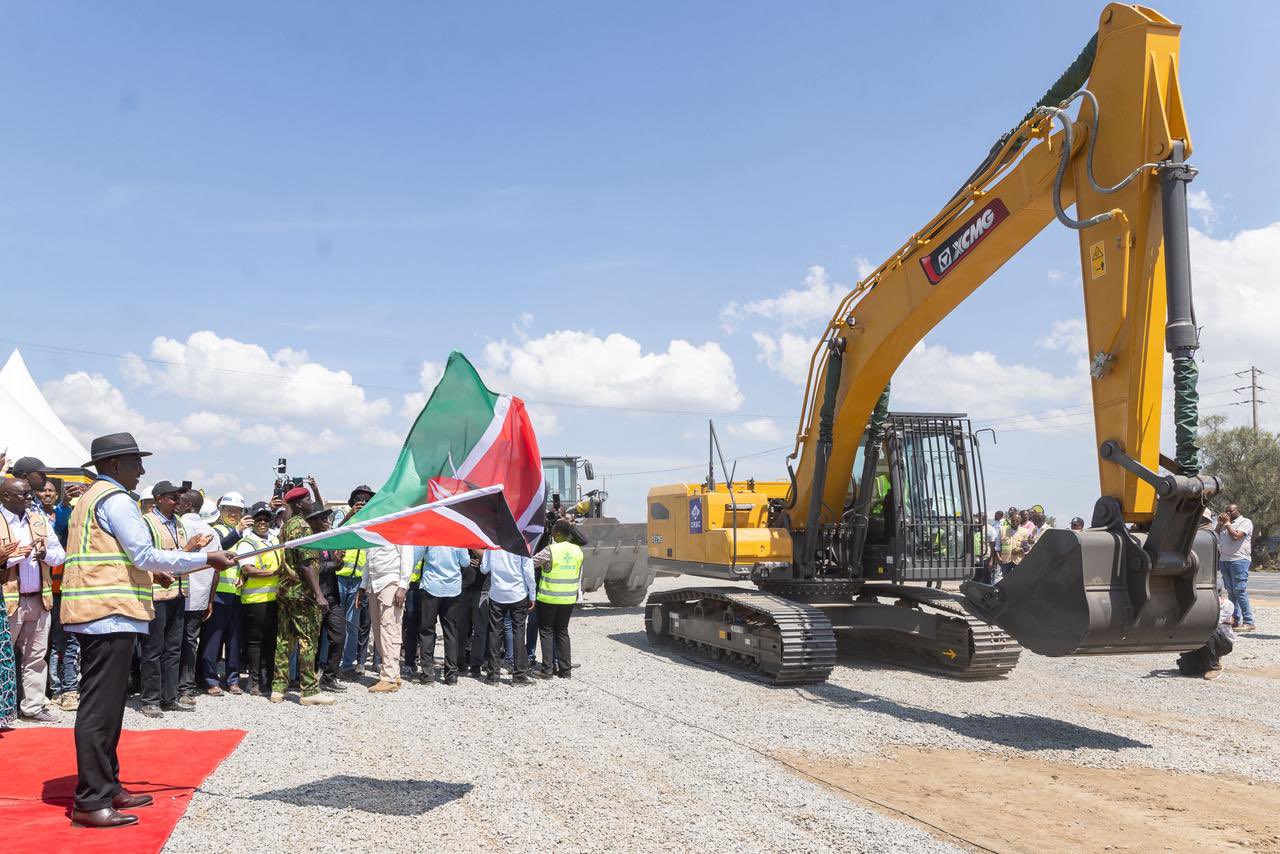
The Rironi-Mau Summit project, launched by President William Ruto in November 2025, is expected to ease congestion along the Northern Corridor, which connects Nairobi to western Kenya and neighbouring Uganda, Rwanda and the Democratic Republic of the Congo.
About 40,000 vehicles currently use the highway every day and are expected to become paying users once tolling begins.
The PPP Directorate said toll charges will not be determined by contractors but will instead be set through a regulatory formula that takes into account economic conditions, traffic volumes and operating costs.
“The contract defines review intervals, escalation rules, exemption categories, and how revenue may be reinvested into upgrades and maintenance,” it said.
The project replaced an earlier Sh197.9 billion agreement awarded to a consortium led by French firm Vinci SA during former President Uhuru Kenyatta’s administration before it was cancelled and subjected to a new tender process.




























Comments
Sign in with Google to comment, reply, and like comments.
Continue with Google