The government spent Sh76.2 billion on office rent over 11 years, with the amount expected to exceed Sh80 billion after the full 2025/26 financial year is accounted for.
According to government records, annual spending on office rent peaked at Sh11 billion in the year ended June 2023 before dropping to Sh9.6 billion last year, even as rent remained one of the fastest-growing recurrent expenses.
Over the five years to June 2025, government spending on office rent averaged Sh9 billion annually, compared with an average of Sh6 billion over the five years to June 2019, showing a steady rise in the cost of leasing office space.
The increase is also reflected in a comparison of two four-year periods, where office rent spending rose by 41 per cent from Sh26.7 billion between July 2016 and June 2020 to Sh37.7 billion between July 2021 and June 2025.
A large portion of the expenditure goes towards privately owned commercial buildings occupied by government institutions in Nairobi’s major business areas, including Upper Hill, the central business district and Westlands.
Several State agencies operate from high-end buildings such as Prism Towers in Upper Hill and CBK Pension Towers in the city centre, raising concerns over the continued cost of leasing private office space.
The rising expenditure has repeatedly attracted scrutiny from oversight bodies, with the Auditor General flagging cases where ministries and government agencies paid millions of shillings in rent without showing value for money.
The State Department for Shipping and Maritime Affairs was among the institutions questioned after it was found to have paid Sh18 million in rent without a lease agreement in the year ended June 2025.
The State Law Office also faced queries over Sh12.3 million paid for office space at CBK Towers that remained unused. Auditor General Nancy Gathungu said the office had spent Sh144 million on partitioning works at the premises and pays annual rent of Sh35 million.
“However, at the time of the audit, only around 65 per cent of the spaces were occupied, leaving about 35 per cent of rented office spaces empty, yet annual rent of approximately Sh12,277,440 (apportioned on a prorate basis) was paid,” Gathungu said.
The audit findings also highlighted the contrast between spending on leased offices and poor working conditions in some government institutions.
At Nairobi West Prison, the Auditor General reported that some administrative offices were operating from temporary iron-sheet structures due to inadequate office space and insufficient funding to construct permanent offices and stores.
She also raised concerns over Sondu Police Station, which was established in 1932 and has not received renovations despite deteriorating conditions.
“Physical verification revealed that Sondu Police Station was established in 1932 and no new structures have been put up at the station except for the ongoing works at the police lines. Further, there have been no improvements or renovations on the existing offices at the station. Some of the offices had developed major cracks that have weakened the structures and resulted in leaning walls,” Gathungu said.
Despite the government’s latest move to control rent costs, at least four State departments and constitutional offices had indicated in their budget documents that they planned to acquire or expand office space during the financial year that started on July 1.
The State Department for Parliamentary Affairs said limited office space was affecting its operations and proposed partitioning existing offices while acquiring additional equipment to accommodate staff.
Other institutions that cited office space challenges include the State Department for Cooperatives, the State Law Office, the Public Service Commission and the Office of the Auditor-General.
“To address these challenges, SLO will prioritise automating all services, recruitment and deployment of additional staff, training of staff on emerging and specialised areas of law, and acquisition and refurbishment of offices,” the State Law Office said in its budget documents.
Efforts to control government spending on office rent began in 2019 when the National Treasury proposed standardising lease rates across the public sector and renegotiating existing agreements.
The reforms, however, had limited impact, with office rent continuing to consume billions of shillings annually.
In January last year, the Treasury introduced stricter controls by directing ministries, State departments and agencies to seek approval from the Attorney General and the Cabinet Secretary responsible for Housing before leasing office space from private landlords or leasing out government buildings.
“Ministries, State Departments and Agencies, intending to procure office accommodation through leases or lease out government buildings to third parties shall require clearance by the relevant CS responsible for Housing and clearance of the Lease Agreement by the Attorney General,” Treasury Cabinet Secretary John Mbadi said in the circular.
The Treasury also raised concerns over expensive leases in Nairobi’s high-end commercial areas and urged government agencies to share office facilities instead of maintaining separate rented premises.
“High leasing costs (where) government agencies have hired offices in high-end areas/buildings in Upper Hill, etc. Consider one stop shop for all Government agencies,” the Treasury said in the 2025 Budget Policy Statement, a recommendation it repeated in this year’s policy document.
The Cabinet has since frozen the leasing of new office space by ministries, State departments and agencies as the government seeks to reduce billions of shillings spent annually on rent while key public programmes remain underfunded.
The directive bars government institutions from acquiring additional office space until an audit of office accommodation and utilisation across the public service is completed.
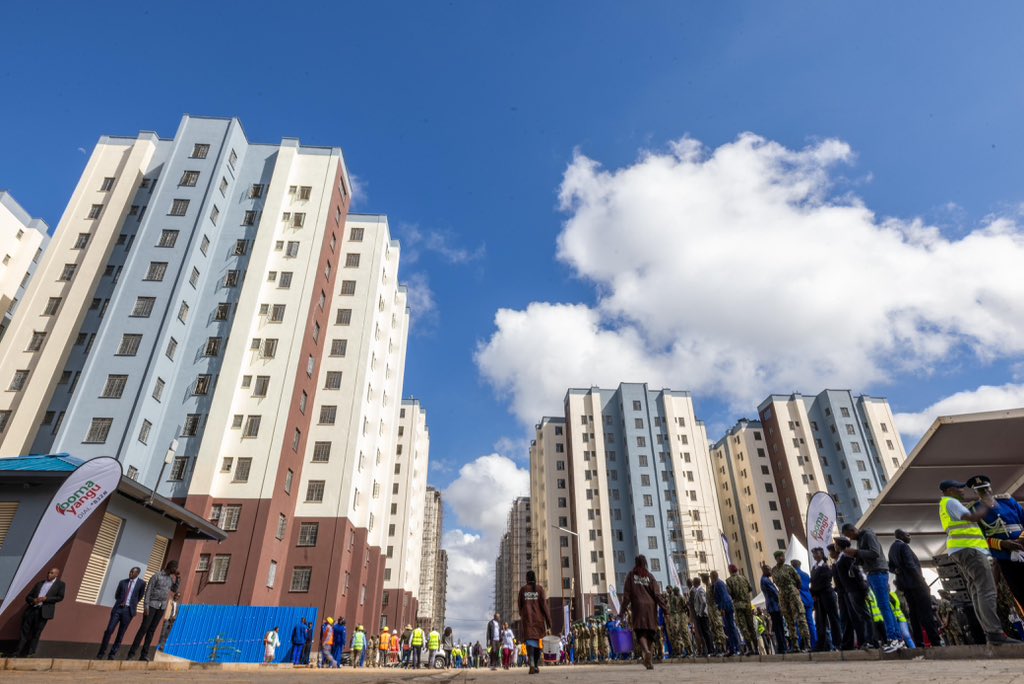
The audit will guide a programme to renovate and expand State-owned buildings to accommodate agencies currently operating from rented premises.












































Comments
Sign in with Google to comment, reply, and like comments.
Continue with Google