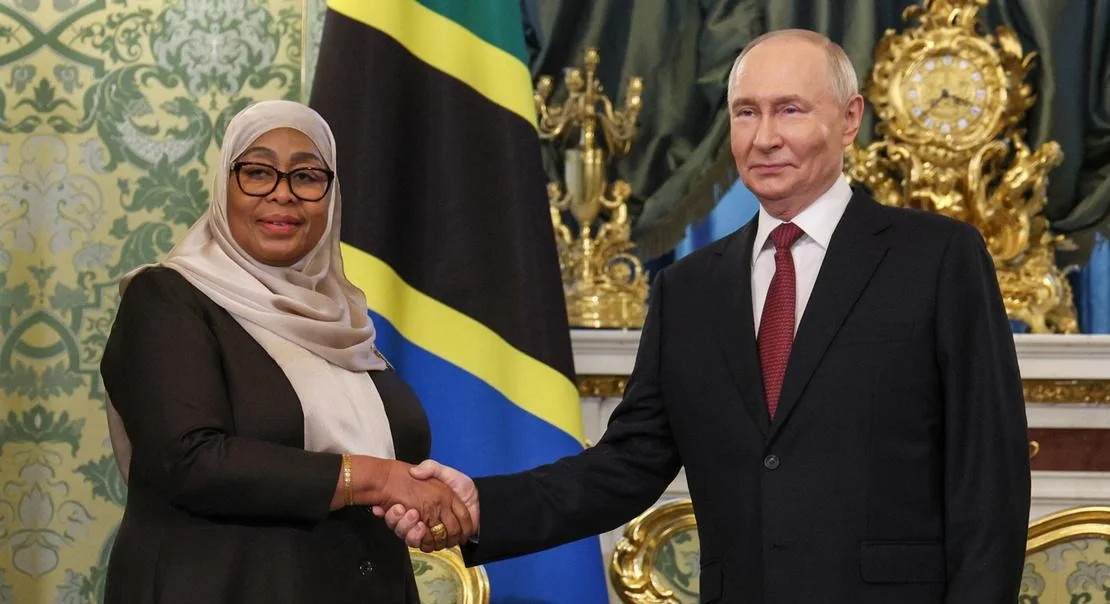
Tanzanian President Samia Suluhu Hassan is on a three-day state visit to Russia, which has included a meeting with President Vladimir Putin.
This is the first time since 1969 that a Tanzanian leader has visited Moscow. Back then, it was Julius Nyerere, whose socialist policies shaped Tanzania in the 1960s, 1970s and 1980s.
Russian efforts to build a relationship with Samia's government began shortly after her disputed 2025 reelection, when she received 98 per cent of the vote. A Russian delegation met with Samia after the October vote, reportedly with a personal message from Putin.
Samia has brought a Tanzanian business delegation to Russia, which is hoping to sign trade, tourism and minerals deals. Currently, the balance of trade between Tanzania and Russia is around $307 million (Sh40.2 billion) per year, but a new Russia-Tanzania Business Council created in January aims to boost this figure. Air Tanzania has said it would start flights from Dar es Salaam to Moscow by the end of 2026.
"Russia has long been a major partner of Tanzania," said Godwin Gonde, a lecturer at the Dr Salim Ahmed Salim Centre for International Relations in Tanzania. "It is a country that does not pay much attention to the internal affairs of the countries it chooses to cooperate with."
He told DW that choosing to visit Russia "carries significant diplomatic weight, because many Western countries have imposed sanctions on Tanzania and certain leaders," thereby depriving them of the chance to visit those nations.
In recent years, Russia has sought to reestablish ties with former Cold War partner nations. Since the fall of the Soviet Union, many of those relationships had receded in importance. Russia has attempted to strike trade deals, engage multilaterally through BRICS and offered military deals in Sahel countries like Mali, Niger and Burkina Faso.
"By welcoming Tanzania, especially at this time, it sends a message to Western nations that [Russia] still has a place among African nations," said Gonde, adding that Russia is working to eclipse Western influence on the continent.
Mixed response to Samia's visit
Aside from meeting Putin, Samia is also expected to take part in the St. Petersburg International Economic Forum.
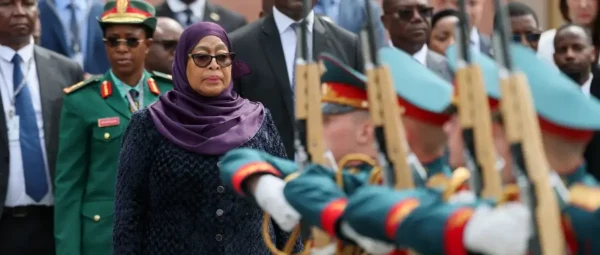 President Samia Suluhu Hassan's visit is the first time since 1969 that a Tanzanian leader has made the trip to Moscow. (Photo: Ramil Sitdikov/Reuters via DW)
Paternus Niyegira, a political analyst based in Dar es Salaam, told DW that this is Samia's opportunity to "convince the investors and the people around the globe that Tanzania remains a secure country in East Africa, in Africa, south of Saharan Africa, where you can invest."
Samia is also set to receive an honorary degree from the People's Friendship University of Russia in recognition of her diplomatic efforts and contribution to Tanzania's profile.
Back at home, Niyegira said there has been a mixed response to the president's visit. Some in Tanzania, including the opposition, have criticised Samia for "falling back to the very same system" when Russia was still a communist country. The ruling Chama Cha Mapinduzi party, on the other hand, has greeted the visit with "jubilation", due to what Niyegira said was the potential for trade and investment.
Niyegira added that Samia's visit is consistent with Tanzania's foreign policy of nonalignment, "informing the world that Tanzania does not subscribe to one nation or the other."
US sanctions Tanzanian police official
Samia's visit to Russia comes as Tanzania's reputation among Western democracies has been badly tarnished, with Gonde saying it could be an attempt to transform the country's image and "wash away the disgrace it endured after the election."
Western diplomats and rights groups have accused Samia's government of killing hundreds of people during election unrest in October. Samia has not publicly condemned the crackdown on dissenting voices in Tanzania. A government report into the election violence said 518 people were killed, but did not say who was responsible.
In response, the European Union reportedly froze €156 million (Sh23.4 billion) in development funding after an EU delegation was denied entry to Tanzania in the aftermath of the election violence.
Late last year, US Secretary of State Marco Rubio said Washington was reviewing ties with Tanzania over repression and election violence. In May, US senators Ted Cruz and Jeanne Shaheen introduced a bipartisan bill that would reassess the US-Tanzania bilateral relationship, withhold aid and hold senior officials accountable for human rights abuses.
Days later, Rubio announced sanctions against Tanzania's senior assistant commissioner, Faustine Jackson Mafwele, based on credible information that Mafwele was involved in rights violations.
Rubio made specific references to the detention and torture of Ugandan activist Agather Atuhaire and Kenyan activist Boniface Mwangi, who were in Dar es Salaam to attend the judicial trial of detained opposition leader Tundu Lissu.






















Comments
Sign in with Google to comment, reply, and like comments.
Continue with Google