A new State of the Media Report reveals that one journalist was killed, while others faced arbitrary arrests, intimidation, legal harassment and obstruction in their work—violations that underscore how the space for independent journalism in Somalia remains perilously constrained.
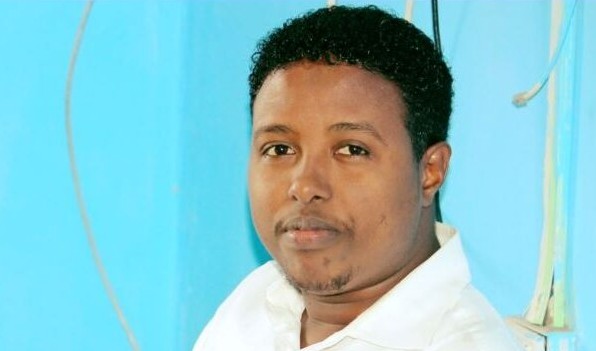
Journalist Mohamed Abukar Mohamed (Dabaashe) was killed in March during an al-Shabaab bomb attack targeting a convoy carrying Somalia’s President, Hassan Sheikh Mohamud, in Mogadishu’s Hamar Jajab district. The incident highlighted the grave risks journalists continue to face in the country.
The freelance journalist, who was later linked with Sirta TV, was on his way to work when the explosion occurred.
Covering the period between January 1 and December 31, the report documents at least 72 media freedom violations, painting a stark picture of the harsh conditions under which journalists operate. It confirms that repression of journalism in Somalia remains widespread, systematic and deeply entrenched.
Of the recorded cases, 70 targeted individual journalists while two were directed at media houses, indicating sustained pressure on both practitioners and institutions.
The report notes that violations were concentrated in key regions and spiked during sensitive periods, with May accounting for 20.8 per cent and September 15.3 per cent of all cases—pointing to a clear link between attacks and critical reporting.
Banadir region recorded the highest number of cases at 39, representing 54.2 per cent of all violations. Somaliland followed with 31.9 per cent, while the rest were spread across Puntland, Galmudug, Jubaland and Southwest.
“A central and deeply disturbing finding is the role of security forces. Accounting for 54.2 per cent of all documented violations, Banadir Regional Police have emerged as the leading perpetrators and the single greatest predator of press freedom in Somalia. Across the country, police forces are repeatedly identified as responsible for attacks on journalists. Despite this, not a single police officer or security official has been held accountable, reinforcing a culture of impunity that continues to fuel violations,” NUSOJ says in a statement.
Women journalists face heightened risks, with 29 cases of sexual and gender-based violence documented. Of these, 58.6 per cent occurred in newsrooms, while 41.4 per cent took place online.
“These violations, often perpetrated by colleagues, authorities and public actors, are designed to intimidate, silence and push women out of the profession, limiting diversity and weakening public discourse,” it explains.
The report also highlights the precarious working conditions of journalists in Somalia, noting that many operate without contracts, protections or adequate pay. Some earn less than USD100 per month, while others receive no pay at all.
“These conditions expose journalists to exploitation and external influence, weakening editorial independence and affecting the quality of journalism. The fact that the majority of journalists are young further underscores the urgency of addressing these structural challenges,” the report that is based on systematic monitoring, investigation, verification, and documentation of media freedom violations across Somalia, and published by the National Union of Somali Journalists (NUSOJ) says.
NUSOJ warns that the impact of these violations extends beyond the media sector, undermining transparency, accountability and access to information, and weakening the foundations of democratic governance. This, it says, threatens Somalia’s progress towards achieving the Sustainable Development Goals (SDGs).
The report further notes that successive governments have used legal frameworks to repress media freedoms, leading to the criminalisation of journalism—particularly reporting on governance and security issues.
Journalists covering land evictions, protests and corruption were frequently targeted, as such reporting exposes abuses of power and raises public awareness.
Similarly, coverage of political disputes and security incidents often placed journalists at risk, especially in environments where information is tightly controlled. The same pattern extends to social media, which has emerged as a growing area of vulnerability.
According to the report, journalists using platforms such as Facebook to share commentary or report on political developments faced threats, harassment and, in some cases, arrest.
Journalists conducting interviews with or covering opposition figures were also frequently targeted, reflecting sensitivities around political plurality and efforts to restrict diverse viewpoints.
“This report reveals a harsh truth: media freedom in Somalia is under constant assault, and those responsible continue to act without consequence, making impunity the greatest enemy to media freedom in this country,” NUSOJ Secretary-General Omar Faruk Osman said.
He added that the killing of Mohamed was a stark reminder that the risks journalists face are real and can be fatal.
“When more than half of all violations are attributed to a single police force and no one is held accountable, it sends a dangerous message that attacks on journalists are tolerated. Ending impunity is not optional. It is the only way to protect journalism and defend the public’s right to information,” he said.
The union called for urgent action to end impunity through credible investigations and prosecution of perpetrators, reform laws that criminalise journalism, improve working conditions for journalists, and fully implement the National Action Plan on the Safety of Journalists adopted in 2022.
“Without urgent and sustained action, the continued erosion of media freedom will have serious consequences for the transition to democracy, accountability, and the future of peaceful Somalia, where just rules of law prevail,” the union said.

























Comments
Sign in with Google to comment, reply, and like comments.
Continue with Google