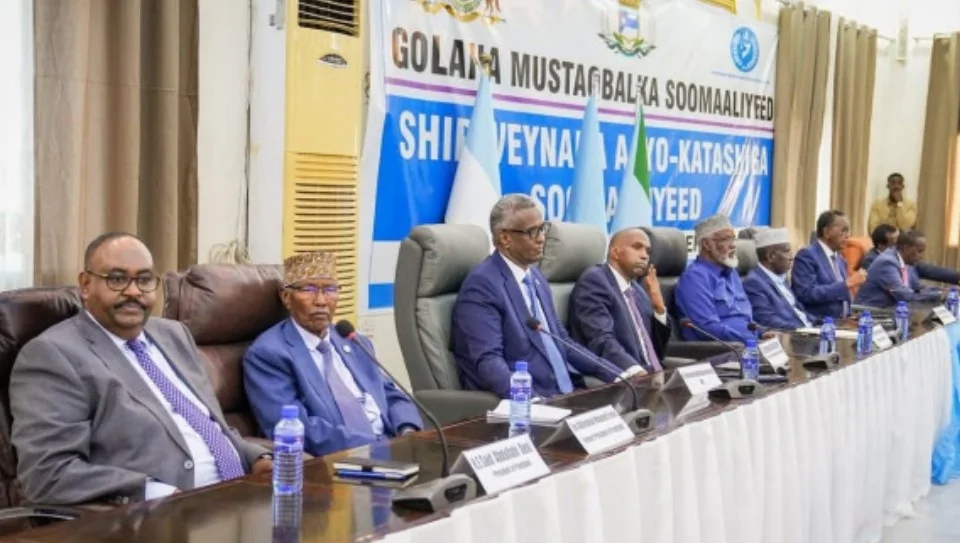
The Somalia Future Council, a coalition bringing together the Puntland and Jubaland administrations and Somali opposition figures, has announced a new electoral proposal it says could break the country’s long-running electoral deadlock by introducing a transitional system that blends direct voting with the country’s existing 4.5 clan power-sharing arrangement.
In a statement on Saturday, the group said the proposal is aimed at resolving the country’s ongoing electoral dispute and establishing a framework for what it described as inclusive and consensual elections.
Under the plan, Somali citizens would vote directly for their representatives, while the 4.5 system, which distributes political representation among clans, would remain in place as part of the transitional arrangement.
According to the Council, the initiative is designed as a political compromise to prevent further escalation of tensions over the country’s electoral process
“The decision of the Somali Future Council is based on political compromise and the desire of the Somali people to quickly resolve the electoral dispute,” the Council said.
“This new system is consistent with the right of Somali citizens to freely and directly elect their representatives, while preserving the 4.5 clan representation system.”
The Somalia Federal Government has been pursuing a one-person, one-vote electoral model based on political parties, arguing it is necessary for democratisation. However, opposition groups have rejected the process, saying it has proceeded without sufficient consensus on the rules governing the vote.
The Council subsequently called for the suspension of the current electoral process being implemented by the government, which it said lacks agreement among key political stakeholders and risks producing disputed outcomes.
“The Council urges an end to the one-sided elections with predetermined results being conducted by the outgoing President, to facilitate the negotiation of a direct electoral process, which can ensure that the voice of the Somali people is the basis of political legitimacy,” it said.
The Council added that full details of the proposed model, including implementation mechanisms, would be presented during formal negotiations on the electoral framework and political transition.

































Comments
Sign in with Google to comment, reply, and like comments.
Continue with Google