Africa's 2026 FIFA World Cup campaign will be remembered as the tournament that redefined the continent's place on football's biggest stage.
Never before had so many African nations advanced beyond the group phase, with Morocco, Senegal, Ghana, Algeria, Egypt, South Africa, DR Congo, Cabo Verde and Côte d'Ivoire all reaching the knockout rounds in an unprecedented show of the continent's growing strength.
The expanded 48-team format provided more opportunities, but African teams justified their places through performances that consistently challenged football's traditional powers.
Yet as remarkable as that achievement has been, an equally striking pattern has emerged. Time and again, African sides have found themselves within touching distance of famous victories only to see those dreams disappear in the closing minutes, exposing a weakness that has repeatedly proved costly when the margins are at their smallest.
Côte d'Ivoire looked to have rescued themselves against Norway after substitute Amad Diallo cancelled out Antonio Nusa’s opener. Still, their resistance lasted only briefly before Haaland struck in the 86th minute to send the Scandinavians through.
Algeria suffered an equally cruel ending in their group stage match after Riyad Mahrez completed his brace in the third minute of stoppage time to hand the Desert Foxes a dramatic 3-2 lead over Australia, only for the Socceroos to snatch an equaliser three minutes later.
Ghana also found themselves on the wrong side of another late twist after Derrick Luckassen cancelled out Croatia's opener before Nikola Vlašić restored the Europeans' advantage in the closing stages to secure victory.
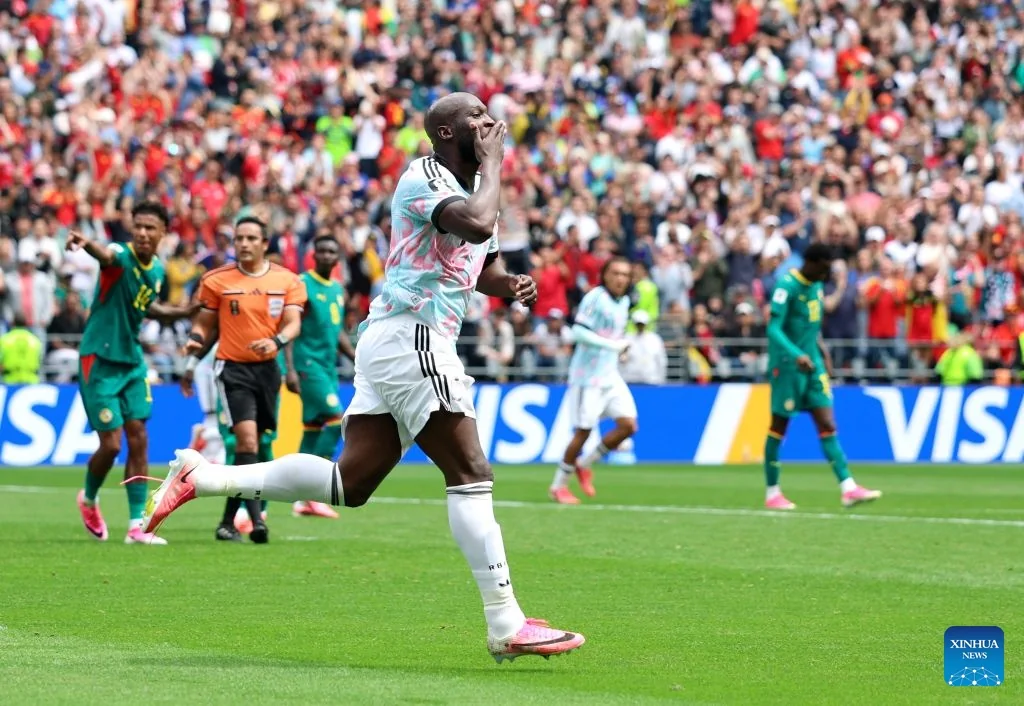
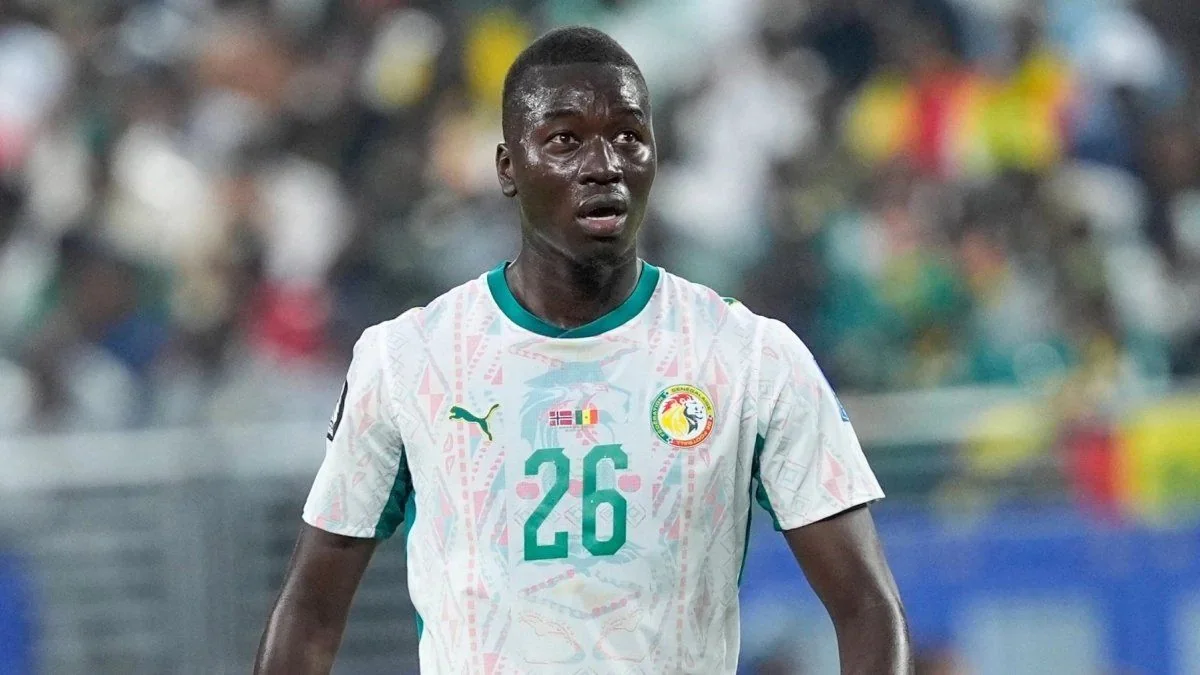
Perhaps no match illustrated the issue more painfully than Senegal's dramatic exit against Belgium.
The Lions of Teranga had looked destined for the Round of 16 after racing into a commanding 2-0 lead through Habib Diarra and Ismaïla Sarr. Their aggressive pressing, quick transitions and physical intensity overwhelmed Belgium for much of the contest. However, rather than continuing with the approach that had put them in control, Senegal gradually retreated into a defensive shell, allowing Belgium to dominate possession and dictate the tempo.
The Europeans responded by introducing Romelu Lukaku from the bench, and the experienced striker inspired a remarkable comeback as Belgium scored twice late on before completing a 3-2 victory in extra time.
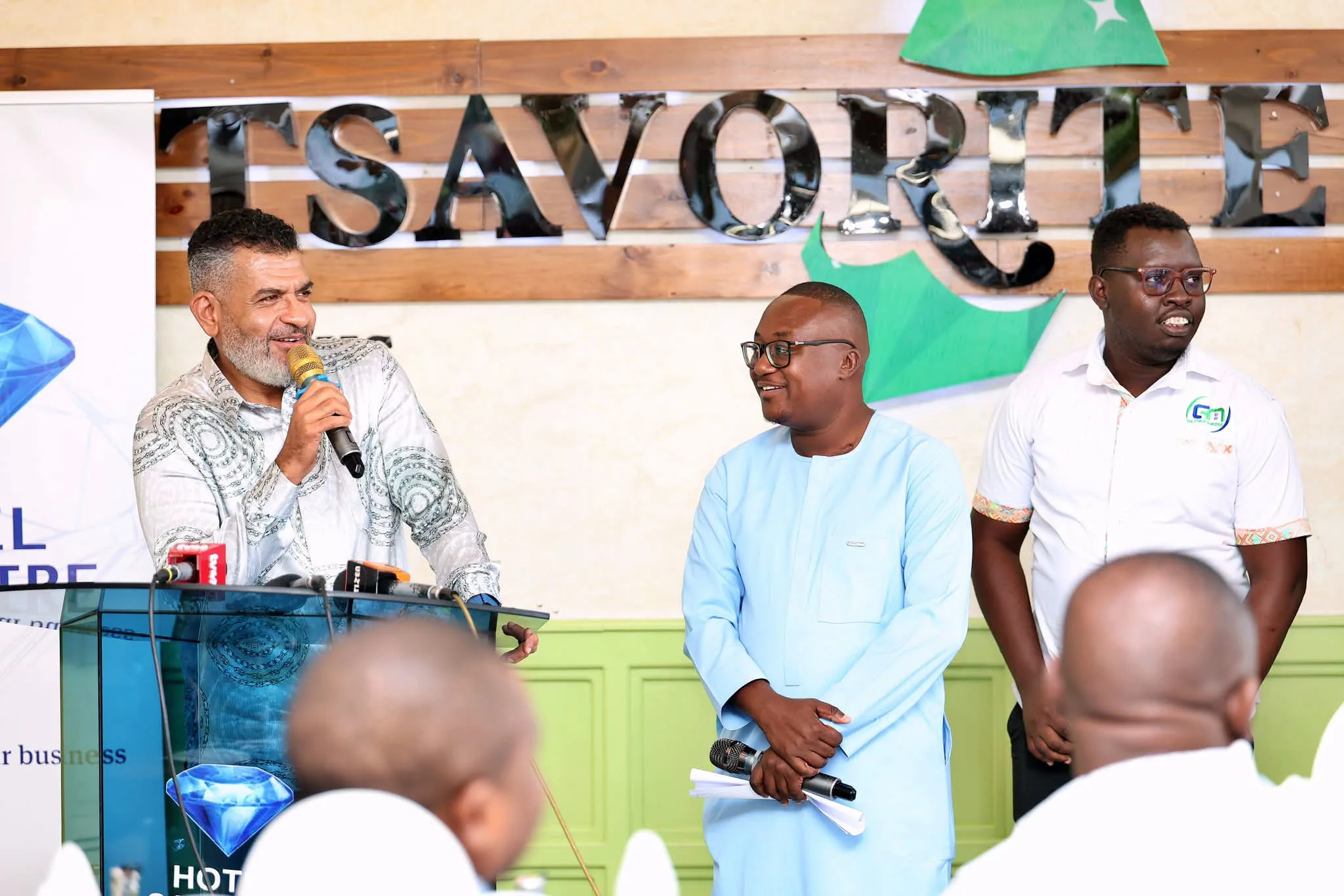
Sports journalist Joseph Okwisia believes that tactical conservatism has become one of the biggest reasons behind Africa's late collapses.
"When African teams secure a lead, a recurring tactical flaw is the premature decision to drop deep and sit back, essentially surrendering possession and handing control of the tempo over to their opponents. This passive approach forces them into a style of heavy, low-block defending that they structurally and mentally struggle to sustain under prolonged pressure. A heartbreaking example unfolded against Belgium, where Senegal abandoned the high-pressing rhythm that had earned them a two-goal lead. The manager's late-game adjustments completely backfired, disrupting team cohesion instead of stabilising the defence, and Belgium punished them through Romelu Lukaku before completing the turnaround in extra time," Okwisia said.
His observations mirror what unfolded in several other fixtures.
DR Congo, making their first World Cup appearance since 1974, produced one of the tournament's bravest performances against England. Brian Cipenga stunned the Three Lions with an early goal before the Leopards defended resolutely for more than an hour.
England manager Thomas Tuchel responded by introducing Anthony Gordon and Bukayo Saka, immediately increasing the pace and attacking threat. Harry Kane eventually struck in the 75th and 86th minutes as England's superior squad depth turned the match around and ended DR Congo's dream run.
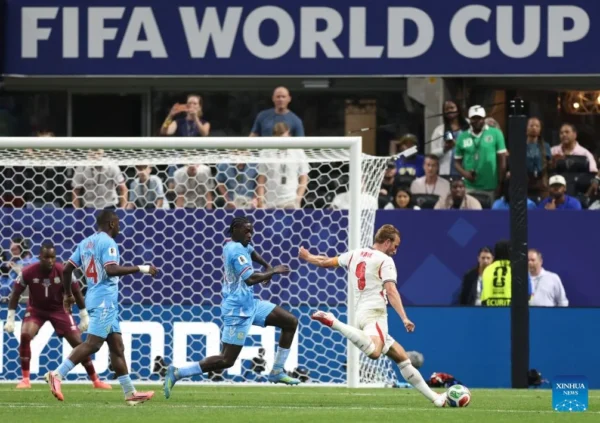 Harry Kane (1st R) of England shoots and scores during the round of 32 match between England and the Democratic Republic of the Congo (DRC) at the 2026 FIFA World Cup at Atlanta Stadium in Atlanta, the United States, July 1, 2026. (Photo: Xinhua/Xu Zijian)
For sports radio presenter Hesbon Nyamari, the issue extends beyond tactics into the psychological demands of protecting a lead on football's biggest stage.
"I feel like the reason most African teams fail to either maintain their lead or concede in the dying minutes is because of mental toughness and mental pressure. They become too defensive and lose their tactical discipline, allowing opponents to exploit spaces and create scoring opportunities. But I won't be too harsh on them because most of these teams are experiencing the knockout stages of the World Cup for the first time. They are learning on the job, and I believe they will come back stronger at the next World Cup," Nyamari explained.
One of the clearest differences between African teams and the established football powers has been the impact of the substitutes' bench. Nations such as England, Belgium and Norway have repeatedly transformed matches by introducing elite players capable of maintaining or even raising the intensity after the hour mark. Fresh legs combined with world-class quality inevitably tilt the balance against defenders who have already spent over 80 minutes coping with relentless pressure.
Sports enthusiast Bevon Ngoge believes the reasons are both physical and structural.
"In the 2026 World Cup, African teams have displayed a pattern of strong performances undermined by late collapses. Physical fatigue from demanding club schedules, travel and recovery affects intensity late in matches. Mentally, concentration lapses emerge under pressure, while tactically poor game management and limited squad depth have also contributed. Structurally, differences in domestic football development, infrastructure and experience continue to influence consistency despite the enormous progress African football has made," he observed.
Game management has equally come under scrutiny.
Sports enthusiast Alfred Onyango argues that several African coaches have become overly reactive instead of remaining proactive once their teams establish leads.
"Game management for African countries at the ongoing World Cup is a concern. Several coaches have made conservative decisions that have cost their teams dearly in the closing stages of matches. Poor substitution timing, defensive retreats, and an inability to close out games have all contributed to dramatic shifts in momentum. Teams that looked firmly in control for long periods have ended up surrendering victories because they stopped imposing themselves on the game," Onyango said.
Football history shows that protecting a narrow advantage often requires more than simply defending deeper. The world's most successful teams understand when to slow the game, retain possession, draw tactical fouls, disrupt rhythm and force opponents to chase the ball instead of inviting sustained pressure. That experience has been built over decades of competing in the latter stages of major tournaments.
For many African nations, however, these knockout matches represent relatively new territory.
This does not diminish the remarkable progress made by the continent in North America.
Morocco, Ghana, Algeria, Egypt, South Africa, Senegal, Cabo Verde, DR Congo and Côte d'Ivoire all demonstrated that they possess the technical quality, tactical organisation and individual brilliance to compete with football's elite. DR Congo recorded a historic World Cup victory. Cabo Verde reached the knockout stages on their tournament debut. Senegal became the first African nation to score five goals in a single World Cup match, while several African teams matched or outplayed higher-ranked opponents for significant periods.
The evidence suggests that Africa no longer has a talent deficit. The continent's leading players feature for Europe's biggest clubs, its coaches are becoming increasingly sophisticated, and its teams have shown they can dominate some of the world's strongest nations for long stretches of matches.
The remaining challenge lies in mastering football's most unforgiving moments.
World Cups are rarely decided by talent alone. They are won through composure under pressure, intelligent substitutions, tactical flexibility and the ability to manage matches when fatigue begins to influence decision-making. Africa has already shown that it belongs among football's elite. The next step may simply be learning how to turn commanding 80-minute performances into complete 90-minute victories.
If that final lesson is learned, the dream of seeing an African nation lift the FIFA World Cup may no longer be a distant ambition. It may simply be a matter of time.






















Comments
Sign in with Google to comment, reply, and like comments.
Continue with Google