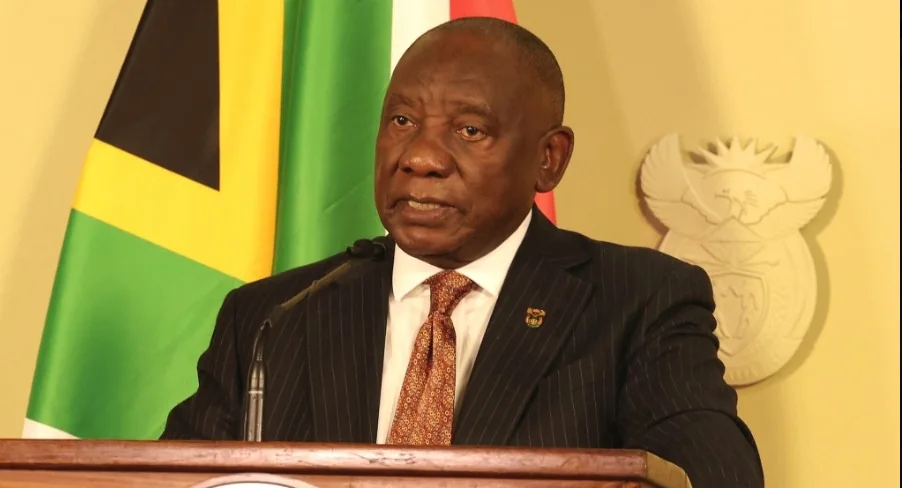
South African President Cyril Ramaphosa has unveiled a sweeping package of immigration reforms aimed at tightening border control, strengthening law enforcement, and combating corruption, as the government moves to curb illegal migration while warning against xenophobia and vigilante action.
Speaking on Sunday, Ramaphosa said the reforms are intended to restore order in the immigration system while upholding constitutional values.
“We want a South Africa where every person who enters the country does so lawfully,” he said, adding that immigration laws must be respected and enforced consistently.
He cautioned citizens and groups against taking enforcement into their own hands.
“I must make it clear that only the authorised government officials may act against violations of the law, including violation of our immigration laws,” he said.
Under the new measures, authorities will intensify crackdowns on employers who hire undocumented foreign nationals, introducing tougher penalties for repeat offenders, including possible imprisonment. Ramaphosa said fines alone are no longer a sufficient deterrent, particularly in cases involving exploitation of vulnerable workers.
Workplace inspections will also be expanded, especially in sectors such as transport and logistics, as part of a coordinated approach involving industry stakeholders and labour organisations.
On border security, the government plans to boost investment in infrastructure, personnel, and surveillance technology to strengthen control at entry points while still facilitating legitimate trade and movement. Refugee reception centres will also be relocated closer to border posts, starting with Tshwane.
Ramaphosa said South Africa will also work with other countries to address migration challenges beyond its borders.
“We will continue to engage other countries, including our sister countries on the African continent, to forge a broader response to migration challenges across our region and the continent,” he said.
The president further announced a strengthened anti-corruption drive within immigration services, targeting officials accused of selling documents or facilitating illegal entry.
“Corruption undermines our efforts and betrays the trust of our people,” he said.
Key reforms also include the introduction of a biometric-based Intelligent Population Register and the gradual phasing out of green ID books, which authorities say have been exploited for identity fraud, alongside tighter controls on the use of traffic registration numbers.



































Comments
Sign in with Google to comment, reply, and like comments.
Continue with Google