Kenyans invited to give views on proposed partial sale of government’s Safaricom stake
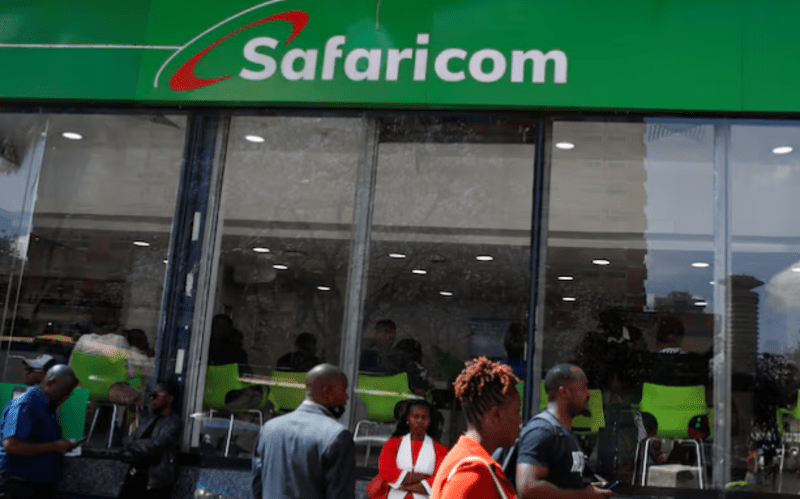
In a notice, National Assembly Clerk Samuel Njoroge said the submissions will guide parliamentary committees as they scrutinise the plan, ensuring transparency and public participation.
Kenyans have been invited to submit their opinions on a proposed sale of government-held Safaricom shares, a move aimed at raising billions to finance key development projects.
The plan, outlined in Sessional Paper No. 3 of 2025, seeks to offload 15 per cent of the government’s stake while retaining a strategic 20 per cent, with proceeds earmarked for infrastructure, digital transformation and other priority sectors.
More To Read
- Ndindi Nyoro questions government’s decision to sell 15 per cent Safaricom stake
- Government offloads 15 per cent Safaricom stake to Vodacom in Sh244 billion deal
- Safaricom rolls out Daraja 3.0 in major M-Pesa API redesign
- Safaricom announces early-morning Fuliza system upgrade on November 17
- Kenya eyes wider telecom connectivity in next decade
- Kenyans borrowed Sh629.2 billion in six months through Safaricom’s Fuliza service
In a notice, National Assembly Clerk Samuel Njoroge said the submissions will guide parliamentary committees as they scrutinise the plan, ensuring transparency and public participation.
The Sessional Paper, submitted by the Cabinet Secretary for the National Treasury, was referred to the Departmental Committee on Finance and National Planning and the Public Debt and Privatisation Committee for consideration and reporting to the House.
Safaricom PLC is listed on the Nairobi Securities Exchange, with a six-month volume-weighted average share price of approximately Sh27.50, giving the company a market capitalisation of about Sh1.158 trillion (USD 8.979 billion).
The plan proposes divesting 6,009,814,200 shares, representing 15 per cent of Safaricom, while retaining 8,012,758,380 shares, equivalent to 20 per cent. The sale is expected to generate roughly Sh204.3 billion (USD 1.5 billion) based on a Sh34 share price, a 17 per cent premium over the six-month average. Vodacom Group will also make an upfront payment of Sh40.2 billion (USD 309 million) in lieu of future dividends from the government’s remaining stake.
The proceeds are intended to support critical infrastructure projects in energy, roads, aerospace, water and digital transformation, reduce reliance on debt, expand fiscal space, and shift the government’s role to policy and regulation. The plan also aims to maintain Safaricom’s competitiveness, safeguard national interests, and ensure continuity in governance. Vodacom has committed to avoiding redundancies for three years, keeping the chairman and independent directors Kenyan, and continuing to support the Safaricom Foundation.
“In compliance with the Constitution, the public and stakeholders, including shareholders, management, employees, customers, and regulators, are invited to submit memoranda to the Clerk of the National Assembly by post, hand delivery, or email at [email protected] by 5.00 p.m. on Thursday, 8 January 2026. Copies of the Sessional Paper are available at the National Assembly Table Office and online at www.parliament.go.ke,” Njoroge said.
The proposed sale has, however, attracted scrutiny. Kiharu MP Ndindi Nyoro urged that the shares be sold through a competitive bidding process rather than directly to Vodacom, expressing concern that the planned sale undervalues the shares.
“Let us not rush the sale of a 15 per cent share in Safaricom. Let’s give people a chance to compete. Let’s open a competition of bids so that we can have many companies bidding to buy that stake of Safaricom so that Kenyans can get full value for the stake we have in Safaricom, the 35 per cent the government has in Safaricom, we own all of as Kenyans,” Nyoro said.
He questioned the credentials of the government representatives handling the deal, implying that some may not be officially contracted to negotiate on behalf of the state, potentially affecting the fairness and transparency of the transaction.
“I have experience in the capital market. The people who represented the government in this deal, probably some of them are not government employees, and some of them are not contracted to negotiate on behalf of the government, and maybe those people there are doing things they do with the buyers,” he said.
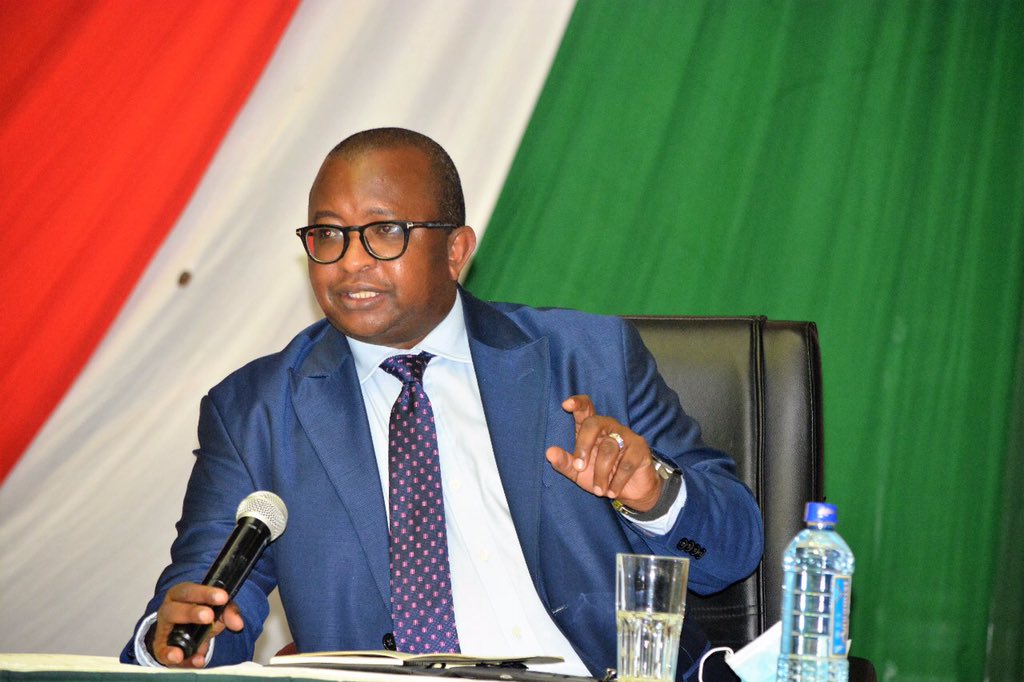
Treasury CS John Mbadi responded by dismissing Nyoro’s concerns, clarifying that the MP was conflating the value of the company with the value of its shares.
“The value of a company as an entity is not the same as the value of its shares. The government is selling shares, not the entire business,” Mbadi said.
Top Stories Today