Consumers are looking up to elevated relief in 2026 as global commodity prices are projected to reach their lowest levels in six years, marking the fourth consecutive year of decline.
World Bank’s commodity market outlook indicates that subdued global economic activity, elevated trade tensions, and policy uncertainty are combining with ample supply conditions to push prices downward.
According to the lender, the global benchmark index of commodity prices is expected to drop by seven per cent in 2025 and to fall by a further seven per cent in 2026.
If these projections materialise, the trend will reflect a cumulative 36 per cent decline from the most recent peak in 2022, which followed a surge of about 125 per cent from 2020 to 2022.
“The forecast for 2026 is predicated on the continuation of two major forces, subdued global economic growth and an oversupplied global oil market, as well as on the assumption of generally ample supplies of agricultural and metal commodities,” the lender said.
Despite the multi-year decline, prices are expected to remain roughly 14 per cent higher than pre-pandemic levels in 2019.
Energy commodities are expected to remain the main driver of this global disinflation.
The energy price index is projected to fall by 12 per cent in 2025 and by an additional 10 per cent in 2026, before rising modestly in 2027.
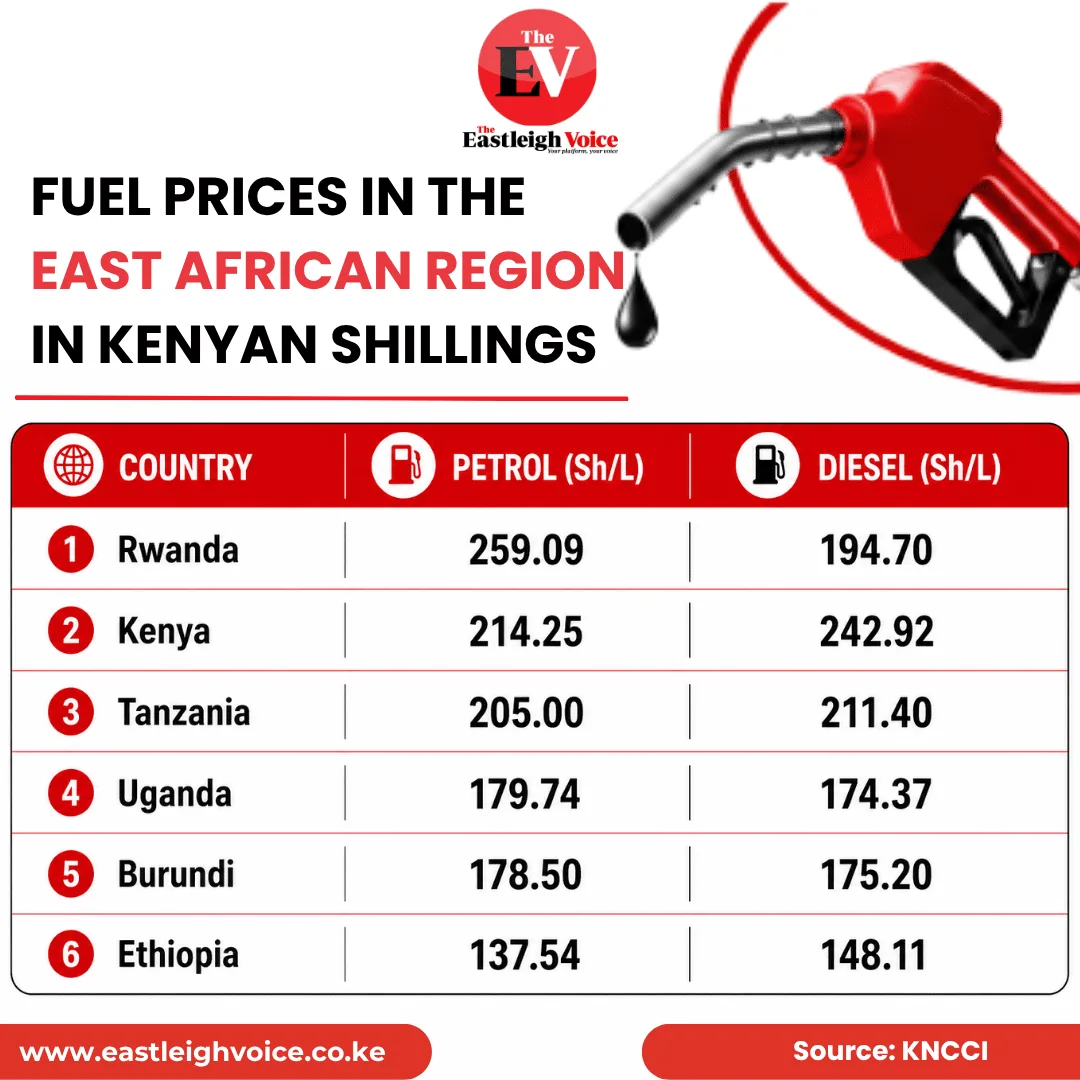
Brent crude oil, the global benchmark, is forecast to average $68 (Sh8,830) per barrel in 2025, a sharp drop from $81 (Sh10,500) per barrel in 2024, and to slide further to $60 (Sh7,790) per barrel in 2026.
The bank attributes this trend to a combination of weak demand growth in China, continued rapid adoption of electric and hybrid vehicles, and a further rise in global oil supply.
On the food side, World Bank projects a two per cent drop in the agricultural commodity index in 2026, with food commodity prices such as grains, oils, meals and other foods fluctuating within narrow ranges.
Soybean prices, impacted by trade tensions between major economies, are anticipated to remain stable, while beverage prices, including coffee and cocoa, are expected to decline by seven per cent due to improved supply conditions.
Fertiliser prices, which surged 21 per cent in 2025 due to strong demand, trade restrictions, and isolated supply shortfalls, are forecast to ease by around five per cent in 2026, though they will remain well above pre-pandemic levels.
Specifically in Kenya, the outlook offers tangible benefits, particularly in the agricultural sector, which is central to the economy and food security.
President William Ruto highlighted that his administration has successfully stabilised inflation, bringing it down from an average of nine per cent in 2022 to lows of four per cent, below the statutory midpoint target of 5 per cent.
“Inflation, which stood at 9.6 per cent in 2022, has steadily declined to 4.6 per cent as of last month, bringing much-needed relief to households,” Ruto said during his State of the Nation address in November 2025.
The president attributed this improvement to policy measures and administrative steps aimed at stabilising food costs and supporting farmers.
Key interventions include a digital farmer registration system, which has expanded the national database from fewer than 300,000 farmers in 2022 to over 7.1 million.
This system enhances visibility and enables targeted interventions while minimising exploitative practices by intermediaries.
The government’s fertiliser subsidy programme has also been scaled up, with more than 21 million bags of affordable fertiliser distributed, saving farmers an estimated Sh105 billion.
“This year alone, we delivered seven million bags of fertiliser and 35 million kilos of certified seed, and in 2026, we will distribute 12.5 million bags across all 1,450 wards, ensuring every farmer has access to affordable inputs,” Ruto added.
These measures have already translated into higher productivity, with national maize harvests rising from 44 million bags in 2022 to 67 million in 2024, and a projected 70 million bags in 2025.
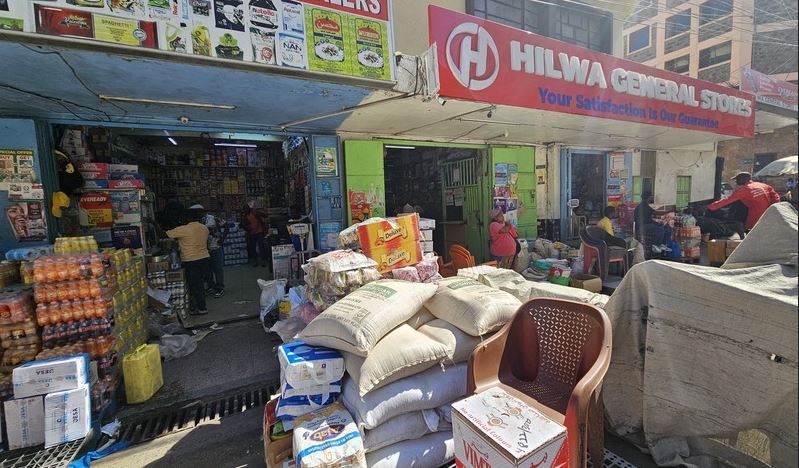
The impact of falling global commodity prices is also visible in domestic food prices. The price of a 2kg packet of flour, for instance, has dropped from Sh250 in 2022 to as low as Sh130.
While Kenya’s inflation rate has inched upward in 2025, rising from 3.3 per cent in January to 4.6 per cent in October, the overall trajectory remains favourable when compared to the pressures of earlier years.
Risks to the baseline commodity price projections remain tilted to the downside.
Slower-than-expected global output growth stemming from resurgent trade tensions, renewed policy uncertainty, or weaker-than-expected economic conditions in major economies, remains a substantial risk that could weigh on the demand for energy and metals, pushing prices below baseline forecasts.
Further oversupply in the oil market is another key downside risk.
There are also upside risks to the commodity price outlook, including a deterioration in geopolitical conditions or increased sanctions, both of which could disrupt supplies of oil and other commodities.
Other upside risks include new trade restrictions and supply disruptions.
For agricultural commodities, weather remains a crucial determinant of price volatility.
Extreme events, such as a stronger-than-anticipated La Niña, could trigger sudden price spikes across energy and food commodities, while more favourable conditions would reinforce the downward trend in 2026.
Notably, countries reliant on imported commodities, such as Kenya, stand to benefit from this easing in prices, as it reduces the cost of essential goods and enhances fiscal space for other priorities.
Overall, the World Bank’s outlook portrays a cautiously optimistic picture for 2026.












































Comments
Sign in with Google to comment, reply, and like comments.
Continue with Google