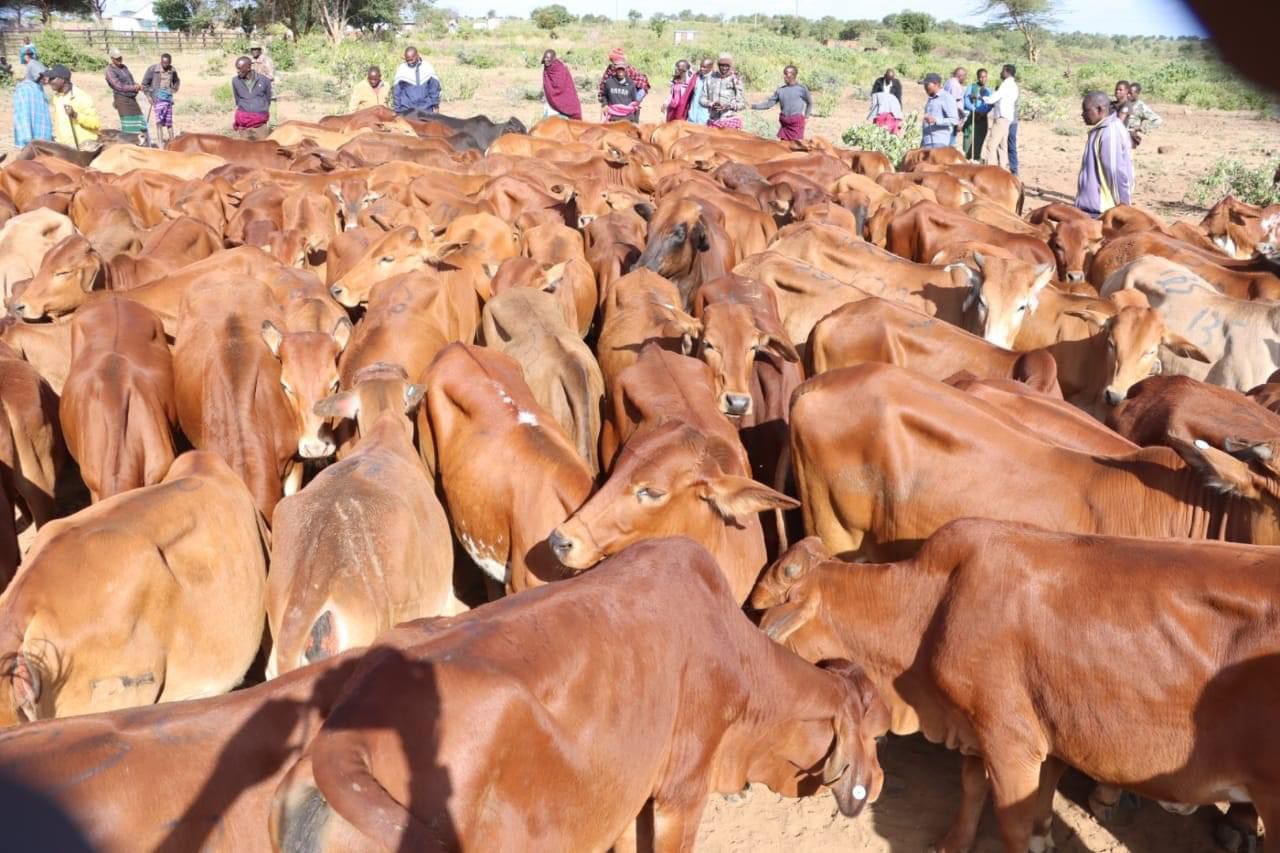
Livestock has emerged as the fastest-growing component of global agriculture, driven largely by rising demand for animal-source foods such as poultry, eggs and pork.
According to the new study by the Food and Agriculture Organisation (FAO), the global supply of the terrestrial animal source food (TASF) has expanded sharply over the past six decades.
This growth has positioned livestock ahead of other vibrant segments such as crop production, fisheries and aquaculture, forestry, agribusiness, agricultural inputs and services, finance, and research-related sectors in terms of growth momentum.
Most rapid expansion has been recorded in poultry meat, which has increased nearly fivefold since 1961.
Eggs and pig meat have also nearly doubled over the same period, while bovine meat has remained largely stable or declined in several regions.
The study, which assesses global supply and demand for animal-source foods derived from mammals, birds and insects, further shows that overall TASF production has risen significantly between 1961 and 2022, reflecting both population growth and changing dietary patterns.
By 2022, global production had reached 361 million tonnes of meat, up from about 71 million tonnes in 1961, while milk production climbed to 930 million tonnes from 342 million tonnes, and egg output rose to 94 million tonnes from 15 million tonnes over the same period.
Despite this growth, the report notes sharp regional disparities, with Asia now the largest producer of animal-source foods, followed by Europe, while per capita availability remains highest in North America.
In contrast, sub-Saharan Africa has seen only modest gains, with stagnant per capita supply in most countries.
Additionally, FAO warns that food loss and waste, estimated at around one-third of global food production, including roughly 14 per cent of animal-source foods, remains a major constraint.
This is driven by weak cold-chain infrastructure, poor storage systems and the perishable nature of livestock products, particularly in developing economies.
Commenting on emerging challenges, the report notes that many livestock breeds and species can thrive in a wide range of environments, particularly in areas less suited or unsuitable for crop production, while also contributing to diverse and nutritious diets.
However, it stresses that to fully optimise this contribution to human and planetary health, the livestock sector must address a range of structural and environmental challenges.
“These challenges span environmental pressures, such as deforestation, land-use change, greenhouse gas emissions, unsustainable use of land and water, pollution and competition between food and feed, as well as herd management issues, including low productivity, overgrazing and poor animal welfare,” reads the report.
“They also encompass animal health and welfare concerns, alongside broader social challenges, such as inequity, and risks linked to human–livestock interactions, including zoonotic and foodborne diseases and antimicrobial resistance.”














































Comments
Sign in with Google to comment, reply, and like comments.
Continue with Google