More than 350,000 Kenyans living and working in Saudi Arabia will benefit from strengthened labour protection measures after Kenya and the Kingdom signed a new Labour Recruitment and Employment Agreement aimed at improving recruitment processes, working conditions and welfare of migrant workers.
Among the key areas covered by the agreement are worker protection, fair employment practices and enhanced support for Kenyans abroad.
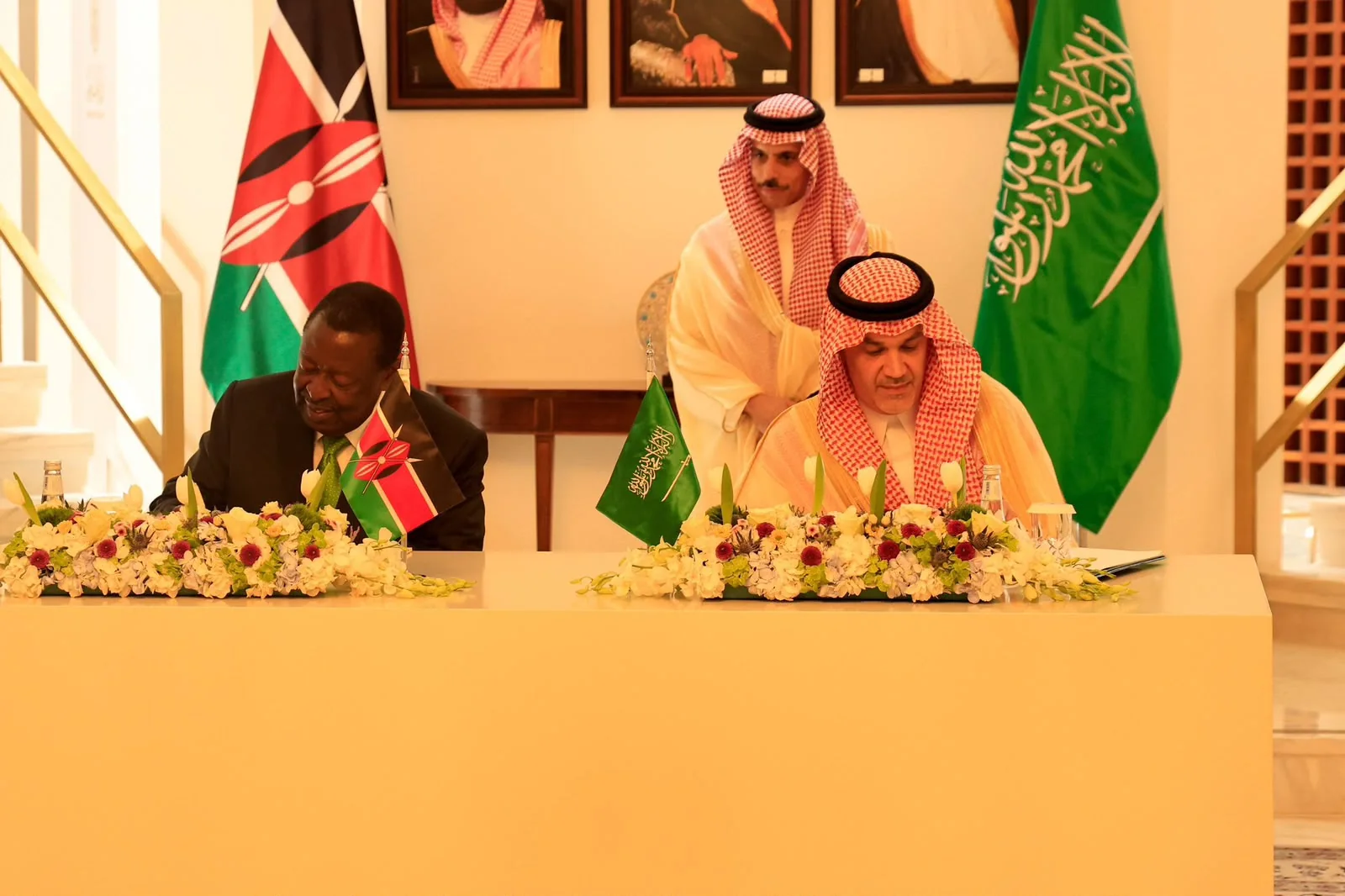
The agreement was among four key bilateral instruments signed during the first Kenya–Saudi Arabia Political Consultations Meeting held in Riyadh, where Prime Cabinet Secretary Musalia Mudavadi led Kenya’s delegation.
The meeting, co-chaired by Mudavadi and Saudi Minister of Foreign Affairs Prince Faisal bin Farhan Al Saud, focused on strengthening political cooperation, expanding trade and investment and enhancing relations between the two countries.
The Labour Recruitment and Employment Agreement was signed by the ministries responsible for labour in both countries and provides a framework for ethical recruitment, recognition of skills, improved working conditions and better welfare for Kenyan migrant workers in Saudi Arabia.
The agreement also seeks to ensure Kenyans working in the Kingdom are engaged through safe, orderly, regular and dignified migration arrangements.
During an engagement with Kenyans living in Riyadh, Mudavadi reaffirmed the government’s commitment to protecting the rights, dignity and welfare of citizens living abroad.
He assured the diaspora community that the government would continue strengthening bilateral labour agreements and expanding consular services to support Kenyans working overseas.
Saudi Arabia hosts Kenya’s largest diaspora community outside the United States, with more than 350,000 Kenyans living and working in the Kingdom, making it a key partner in labour mobility, diaspora engagement and remittance inflows.
The visit also resulted in the signing of three Memoranda of Understanding covering investment promotion, customs cooperation and financing for development projects.
The Memorandum of Understanding on the Promotion of Direct Investment seeks to encourage increased Saudi investment into Kenya while creating opportunities for partnerships between businesses from both countries.
Another agreement on Cooperation and Mutual Assistance in Customs Matters aims to improve customs administration, facilitate trade and strengthen cooperation between customs authorities in Kenya and Saudi Arabia.
The third Memorandum of Understanding, signed between the Saudi Export-Import Bank and the Kenya Development Corporation, is expected to improve access to financing for strategic development projects and support increased trade and investment.
Mudavadi said the agreements would help transform the strong political relationship between Nairobi and Riyadh into practical economic opportunities.
“These consultations reaffirm that Kenya's diplomacy is delivering tangible results by expanding opportunities for our workers, businesses and investors while strengthening our country's strategic partnerships,” he said.
He also addressed the Kenya–Saudi Arabia Business Roundtable attended by senior government officials, the Federation of Saudi Chambers, Saudi investors and representatives from Kenya’s private sector.
Delivering President William Ruto’s message to investors, Mudavadi said, “Kenya is open, Kenya is ready, and Kenya means business.”
He said Kenya’s foreign policy is increasingly focused on economic diplomacy that creates jobs, expands exports, attracts quality investments and opens new markets for Kenyan enterprises.
He challenged both governments and the private sector to work together to increase Kenya’s exports to Saudi Arabia, noting that trade between the two countries remains heavily in favour of the Kingdom.
The Prime CS identified tea, coffee, horticultural produce, cut flowers, fish and marine products, fruit concentrates and other value-added agricultural products as areas where Kenya can increase exports.
He further invited Saudi investors to explore opportunities in agriculture, manufacturing, renewable energy, technology, logistics, infrastructure, healthcare, tourism, financial services and Special Economic Zones.
He said Kenya provides a stable macroeconomic environment, a skilled workforce and access to regional and continental markets through the East African Community and the African Continental Free Trade Area.
Mudavadi also highlighted the link between Kenya’s Bottom-Up Economic Transformation Agenda and Saudi Arabia’s Vision 2030, saying the two development strategies offer a foundation for long-term investment partnerships.
The visit, according to the government, renewed confidence among Saudi investors and business leaders, with commitments to speed up the implementation of existing agreements and pursue new commercial opportunities.











































Comments
Sign in with Google to comment, reply, and like comments.
Continue with Google