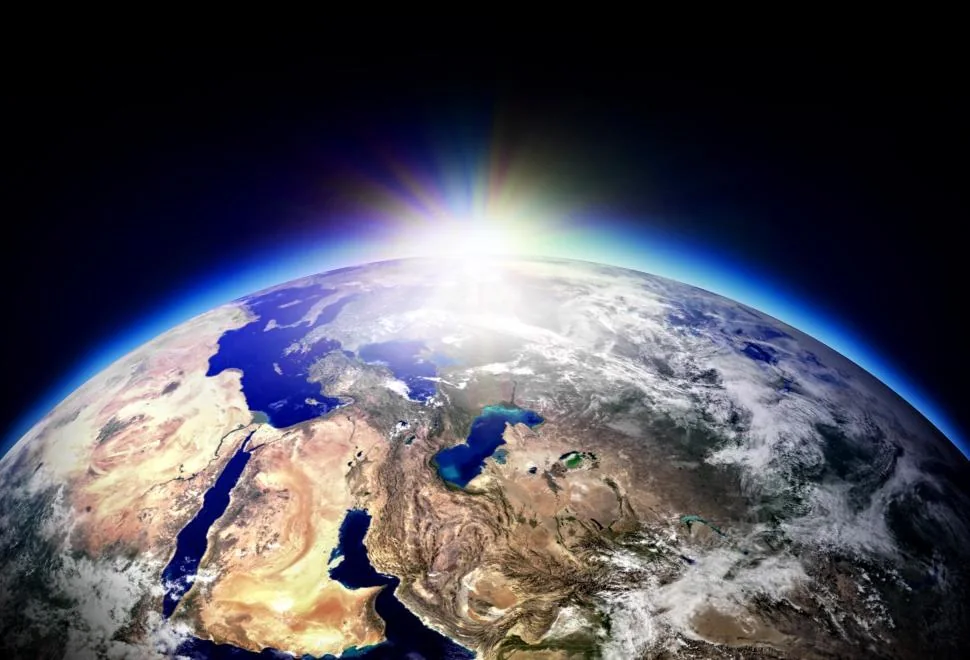
For about one minute on Wednesday afternoon, billions of people living in different parts of the world will be experiencing the same natural event as the Earth reaches a point where nearly all of humanity is either in daylight or twilight.
The moment is expected at around 2:10 pm East Africa Time (11:10 GMT), when an estimated 8.2 billion people, representing about 99 per cent of the world's population, will be on the sunlit side of the planet or within one of the twilight periods.
Only a small share of the global population will remain in complete darkness.
Unlike a solar eclipse or another astronomical event that can be seen only from certain locations, this occurrence is created by the Earth's normal movement around the Sun. It does not require special equipment to observe because, for most people, the sky will appear no different from any other day. What makes it unusual is the number of people experiencing natural light at the same time.
Astronomers say the event is made possible by two factors working together. The first is the Earth's tilt, which changes the amount of daylight received by different parts of the planet throughout the year. The second is the distribution of the world's population, with most people living in regions that receive long daylight hours during early July.
The Northern Hemisphere is currently in summer, meaning countries across Asia, Europe, North America, and much of Africa receive more hours of sunshine than at other times of the year. Since almost nine out of every ten people live north of the Equator, a large majority of the global population is already on the daylight side of the Earth during this period.
The remaining people included in the 99 per cent are not necessarily in full sunshine. Many will be experiencing twilight, which is the period shortly before sunrise or after sunset when sunlight continues to brighten the atmosphere even though the Sun is below the horizon. Depending on the Sun's position, twilight is classified as civil, nautical or astronomical.
The few places expected to be in full darkness during the event are mainly found in parts of the Pacific region, eastern Australia, New Zealand and Antarctica. Compared with the rest of the world, these areas account for a relatively small population, allowing the percentage of people experiencing daylight or twilight to rise to almost the entire global population.
Although the event has attracted attention because of the large number of people involved, researchers note that it is not limited to a single day. A similar alignment occurs over several days each year during the Northern Hemisphere summer, although the exact time and percentage vary as the Earth continues its orbit around the Sun.
The timing also changes from year to year because the Earth's orbit is slightly elliptical rather than perfectly circular. As the planet moves through space, the position of the Sun relative to different parts of the Earth shifts by small amounts each day, affecting the moment when the greatest share of the world's population experiences natural light simultaneously.
Scientists say the event demonstrates the connection between astronomy and human geography. While one half of the Earth is always illuminated by the Sun, the world's population is concentrated in specific regions rather than spread evenly across the planet. That population pattern, combined with the current season, creates a brief period when almost everyone on Earth is under daylight or twilight.
For most people, the event will pass unnoticed because it will look like an ordinary afternoon or the usual light seen around sunrise or sunset.
Even so, for one minute on Wednesday, billions of people across different continents, countries and time zones will share the same natural condition, making it one of the moments each year when the largest proportion of humanity experiences daylight at the same time.















































Comments
Sign in with Google to comment, reply, and like comments.
Continue with Google